Start Here · Best matcha starter kit
The matcha starter kit
Matcha is a suspension, not an infusion. That one fact explains every tool in the kit and which of them you can do without.
We earn a commission if you buy through the links on this page, at no extra cost to you. It does not change which products we name or what we say about them — how this is funded.
Buy the bamboo whisk. It is the only piece of matcha equipment with no real substitute, and it is cheap. The sifter is a few dollars that removes the most common beginner complaint. The bowl is the most substitutable object on this page - a wide cereal bowl with a flat base does the same job. Buy the whisk first and decide about the rest afterwards.
| # | Product | Best for | Role in the kit | Price |
|---|---|---|---|---|
| 1 | No image Various Bamboo Matcha Whisk and HolderTop pickA bamboo chasen is the only piece of matcha equipment a spoon cannot replace. Buy one with a holder and stop there for now. | The one matcha tool with no substitute | not verified | Check price#ad |
| 2 | No image Various Fine Stainless Matcha SifterMatcha clumps in the tin, and a whisk fights clumps rather than dissolving them. Sifting first is a few seconds and it removes most of the problem. | The cheap fix for lumpy matcha | not verified | Check price#ad |
| 3 | No image Various Ceramic Matcha Bowl (Chawan)A wide, flat-bottomed bowl gives the whisk room to move. That is the entire functional requirement, and any bowl that shape will do it. | Width, which is the only spec that matters | not verified | Check price#ad |
| 4 | 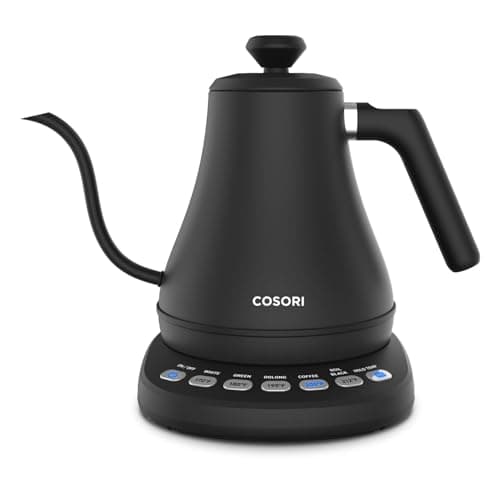 COSORI Original Electric Gooseneck Kettle (CO108-NK)Five presets that map to actual tea types, a 60-minute hold, and no plastic in the water path. This is the value pick and it is not close. | The sensible first variable-temperature kettle | 0.85 qt / 0.8 L |
image
Top pick · The one matcha tool with no substitute
Various Bamboo Matcha Whisk and Holder
A bamboo chasen is the only piece of matcha equipment a spoon cannot replace. Buy one with a holder and stop there for now.
#ad · how this is funded · price checked October 20, 2026
Published specifications
- Prong count
- Not verifiedAround 100 prongs is the usual figure for whisks sold to beginners, and finer prongs raise foam more easily. No maker in this category publishes a verifiable count.
- Material
- Not verifiedBamboo is standard. Madake bamboo is the name that appears most often on listings, unverified from any manufacturer page.
- Care
- Not verifiedRinse in water only and dry on a holder so the prongs keep their shape. Published nowhere consistently, and it is the advice every seller repeats.
What the numbers mean
Matcha is a suspension rather than an infusion. The powder does not dissolve, so something has to break the clumps and hold the particles in the water, and a bamboo whisk with dozens of fine prongs is the tool built for exactly that.
This is the category where we can verify least. Matcha tools are made by hundreds of small producers and sold as unbranded bundles, so there is no manufacturer page to cite for a prong count or a bamboo species. We have said so rather than borrowing a number from a listing.
A metal kitchen whisk does not work well here, and an electric frother works better than people expect. If you own a frother, try it before buying anything.
Good for
- The one matcha tool with no real substitute
- Cheap enough that a bad one is not an expensive mistake
- Holders genuinely extend the life of the prongs
Against it
- No manufacturer publishes verifiable specifications
- Bamboo prongs break eventually, and it is a consumable
- Cannot go in a dishwasher
Skip it ifSkip it if you already own a handheld milk frother and only want matcha occasionally. It will raise a decent foam and it is already in your drawer.
image
Pick 2 · The cheap fix for lumpy matcha
Various Fine Stainless Matcha Sifter
Matcha clumps in the tin, and a whisk fights clumps rather than dissolving them. Sifting first is a few seconds and it removes most of the problem.
#ad · how this is funded · price checked October 20, 2026
Published specifications
- Mesh
- Not verifiedFine stainless mesh is the standard. No maker in this category publishes a gauge, so buy on visible mesh density rather than a stated figure.
- Dimensions
- Not verifiedNot published. Match it to the width of the bowl you sift into.
What the numbers mean
Matcha is ground fine enough that it compacts and clumps in storage, and a clump in the bowl becomes a lump in the drink that no amount of whisking fully clears.
This is a genuinely optional purchase and it is on this page because it is the cheapest of the three and the one that most improves a beginner's first attempts.
A fine kitchen sieve you already own does the same job. Only buy a dedicated one if your sieve is too coarse or too wide for the bowl.
Good for
- Removes the most common beginner complaint for very little money
- Takes seconds and needs no technique
- Useful for cocoa and powdered sugar too
Against it
- No published mesh specification anywhere in the category
- Genuinely optional if you own a fine sieve
- One more small thing to wash and store
Skip it ifSkip it if you own a fine-mesh kitchen sieve. It is the same tool and you already paid for it.
image
Pick 3 · Width, which is the only spec that matters
Various Ceramic Matcha Bowl (Chawan)
A wide, flat-bottomed bowl gives the whisk room to move. That is the entire functional requirement, and any bowl that shape will do it.
#ad · how this is funded · price checked October 20, 2026
Published specifications
- Typical capacity
- Not verifiedBowls sold for matcha commonly run around 350-450 ml, which is far larger than the drink because the whisking needs the space. Not published by any single maker.
- Material
- Not verifiedGlazed ceramic is standard and is what we would buy. Glass versions exist. No manufacturer page to cite in this category.
What the numbers mean
The reason a matcha bowl is wide and shallow rather than tall is mechanical: a whisk needs lateral room to move across a flat base. A mug pushes the whisk into a curve and the foam suffers.
This is the most substitutable item on the page. A cereal bowl with a flat base and straight-ish sides is functionally the same object, and if you have one, use it and spend the money on better matcha.
As with the whisk and the sifter, nobody in this category publishes specifications. We would rather say that than quote a capacity from a marketplace listing.
Good for
- Width and a flat base are the only things that matter, and both are visible in a photo
- Inexpensive
- Makes whisking noticeably easier than a mug does
Against it
- No published specifications from any maker
- Largely substitutable with a bowl you already own
- Takes cupboard space for one use
Skip it ifSkip it if you own a wide cereal bowl with a flat base. That is the same tool, and the matcha cannot tell the difference.
Pick 4 · The sensible first variable-temperature kettle
COSORI Original Electric Gooseneck Kettle (CO108-NK)
Five presets that map to actual tea types, a 60-minute hold, and no plastic in the water path. This is the value pick and it is not close.
Published specifications
- Capacity
- 0.85 qt / 0.8 LSource: COSORI — Original Electric Gooseneck Kettle (CO108-NK)
- Presets
- 170F white, 180F green, 195F oolong, 205F coffee, 212F blackSource: COSORI — Original Electric Gooseneck Kettle (CO108-NK)
- Hold
- Keeps water warm for up to 60 minutesSource: COSORI — Original Electric Gooseneck Kettle (CO108-NK)
- Power
- 1200 W (AC 120 V, 60 Hz)Source: COSORI — Original Electric Gooseneck Kettle (CO108-NK)
- Water contact
- 304 food-grade stainless steel kettle, lid and spoutSource: COSORI — Original Electric Gooseneck Kettle (CO108-NK)
- Warranty
- 2-year limitedSource: COSORI — Original Electric Gooseneck Kettle (CO108-NK)
What the numbers mean
The presets are the reason to recommend this to someone new. You do not have to know that sencha wants roughly 180F; you press the button that says green. That is one fewer thing to learn on week one.
Presets are also its limit. If you later want 165F for a delicate gyokuro, the button for it does not exist. Most people never get there, and the ones who do have already stopped being beginners.
It publishes 304 stainless for everything the water touches. That is the single spec worth checking on any cheap kettle, and plenty of them will not tell you.
Good for
- Presets named after teas, not temperatures
- 60-minute hold, longer than several kettles that cost more
- Stainless kettle, lid and spout published, not implied
Against it
- Preset steps only — no arbitrary target temperature
- 0.8 L is the smallest capacity here
- The gooseneck is slower to fill under a tap than a wide-mouth kettle
Skip it ifSkip it if you want to dial an exact number. Buy the OXO or the Stagg for that; this one gives you five good answers instead of infinite ones.
Why matcha needs different tools at all
Every other tea on this site is an infusion: leaves sit in water, soluble compounds move into the water, and the leaves come out. That is why the rest of our gear pages are about baskets, strainers and pots - objects for holding leaves and then removing them.
Matcha is a suspension. The leaf is stone-ground to a powder and you drink the powder, so nothing gets removed and nothing dissolves. The whole preparation problem changes from holding leaves apart from water to getting powder evenly distributed through water and keeping it there.
That is why the tools look nothing like the rest of the category, and it is why a basket infuser - the object we recommend on nearly every other page - is completely useless here.
The honest problem with this category
We could not verify a published specification for a single matcha tool from a manufacturer, and it is worth saying that plainly at the top rather than burying it.
Matcha tools are made by a large number of small producers and sold overwhelmingly as unbranded or lightly branded bundles. There is no maker page publishing a prong count, a bamboo species, a mesh gauge or a bowl capacity that we could cite the way we cite Hario, finum or Chantal elsewhere on this site.
So every product card on this page marks its specifications unverified, with a note explaining what the common figures are and that they come from listings rather than makers. That is the same treatment we give gaiwan and instant-read thermometers, for the same reason. The alternative would be to quote a prong count from a marketplace listing as though a manufacturer stood behind it, and we will not do that.
1. The whisk, which has no substitute
A chasen is a bamboo whisk with dozens of fine split prongs. Its job is to break up clumps and drive the powder into suspension, and its shape is built for that: many thin tines moving through a shallow volume of water.
Around 100 prongs is the figure that appears on listings aimed at beginners, and the reasoning behind it is sound - more, finer prongs raise foam more readily and fight clumps better than fewer stiff ones. We cannot verify a count from any maker, so treat it as a shopping heuristic rather than a specification.
A metal kitchen whisk is the obvious substitute and it works poorly: too few tines, too stiff, and the wrong shape for a shallow bowl. A handheld milk frother, on the other hand, works better than most people expect, and if you own one you should try it before buying anything at all.
2. The sifter, which fixes the usual complaint
Matcha is ground finely enough that it compacts in the tin, and clumps that go into the bowl become lumps in the drink that whisking does not fully clear. Sifting the powder before adding water takes a few seconds and removes most of that problem.
This is the cheapest item on the page and the one that most improves a beginner's first few attempts, which is why it ranks second rather than last.
It is also entirely optional if you own a fine-mesh kitchen sieve, because that is the same tool. Only buy a dedicated one if your sieve is too coarse to hold the powder or too wide to sit over the bowl.
3. The bowl, where only one property matters
Width, and a flat base. A whisk needs lateral room to move across a flat bottom, and a mug forces it into a curve where the tines cannot travel. That is the entire functional requirement of a chawan.
Bowls sold for matcha commonly run around 350 to 450 ml, which is far larger than the drink itself. That is not an error - the extra volume is whisking room, and a bowl filled to the brim cannot be whisked without making a mess.
It is also the most substitutable item here. A cereal bowl with a flat base and reasonably straight sides is functionally the same object. If you own one, use it and put the money into better matcha, which will change your drink far more than the vessel does.
Water temperature, which is the free upgrade
Matcha is a green tea and it does not want boiling water. Art of Tea publishes 160-180F for green tea, and boiling water on matcha produces the same harsh, flat result it produces on any unoxidized leaf - with the difference that you are drinking the leaf itself rather than an infusion of it, so there is nowhere for the harshness to hide.
That is why a temperature-controlled kettle is on this page as the fourth pick. COSORI publishes presets at 170F for white and 180F for green, both inside the published band, with up to 60 minutes of keep-warm.
It is also the pick to skip if money is tight, and the reason is on our accessories page: a fifteen-dollar instant-read thermometer does the same job with one extra step, using the kettle you already own.
What the kits include, and what to ignore
| Item | Worth having? | Why |
|---|---|---|
| Chasen (bamboo whisk) | Essential | No real substitute for putting powder into suspension |
| Whisk holder | Yes | Keeps the prongs in shape; extends a consumable |
| Sifter | Yes, or use your sieve | Removes clumps before they become lumps |
| Chawan (bowl) | Useful, substitutable | Only width and a flat base matter |
| Chashaku (bamboo scoop) | Optional | A measuring spoon does the same job |
| Tea towel / cloth | Filler | You own cloths |
| Wooden presentation case | Filler | Raises the price, not the quality |
The bottom three rows are how a three-object kit becomes a seven-piece gift set. None of them is bad; they are just not the reason the drink improves, and a bundle priced for the case rather than the whisk is a worse buy than the pieces separately.
How we picked
By how much each object changes the drink, which is why the cheapest item is not last and the most photographed item is third. Where a maker publishes a specification we cite it - which on this page means only the kettle. Everything else is marked unverified with an explanation. Our full method is on the how we pick page.
What we did not do
We have not whisked any matcha. No comparison of prong counts, no test of which sifter clears clumps best, no measurement of foam. There is no test kitchen behind this site. The reasoning above is about suspension versus infusion and about the shapes of the tools, and you can check the temperature figures against the source below.
Questions
What do you need in a matcha starter kit?
A bamboo whisk, ideally with a holder. A sifter and a wide flat-bottomed bowl help but are substitutable - a fine kitchen sieve and a cereal bowl do the same jobs. The whisk is the only piece with no real substitute.
Can I make matcha without a bamboo whisk?
A handheld milk frother works better than most people expect. A metal kitchen whisk works poorly - too few tines, too stiff, wrong shape for a shallow bowl. The bamboo whisk exists because the tool shape genuinely matters here.
What temperature should matcha water be?
Matcha is a green tea, and Art of Tea publishes 160-180F for green. Boiling water makes it harsh and flat, and because you drink the powder rather than an infusion of it there is nowhere for that harshness to hide.
Why do you not list specifications for matcha tools?
Because no manufacturer in this category publishes verifiable ones. Matcha tools are made by many small producers and sold as unbranded bundles, so figures like prong counts come from listings rather than makers. We mark them unverified instead of quoting them as facts.
Sources
Every figure on this page came from one of these, retrieved during the research pass for this article. Where a maker publishes nothing we could verify, the page says so instead of substituting a number.
Read next
- The loose-leaf tea starter kitFour objects that make a complete first setup, ordered by how much difference each one makes.
- Green tea water temperatureThe forty-degree gap between green tea and boiling water, what it does to the cup, and three ways to close it.
- What you actually need for loose-leaf teaThe complete requirement, stated once and plainly, and the reason everything else can wait.
- Tea gear you can skipNine purchases beginners are pushed toward, why each one can wait, and the cheaper thing that solves the same problem.
- The tea brewing accessories worth buyingFour accessories ordered by impact rather than price, including the one we tell you to buy last.