Brewing Guides · Best brewing accessory
The tea brewing accessories worth buying
Ranked by how much difference each one makes, which is not the same as ranked by price.
We earn a commission if you buy through the links on this page, at no extra cost to you. It does not change which products we name or what we say about them — how this is funded.
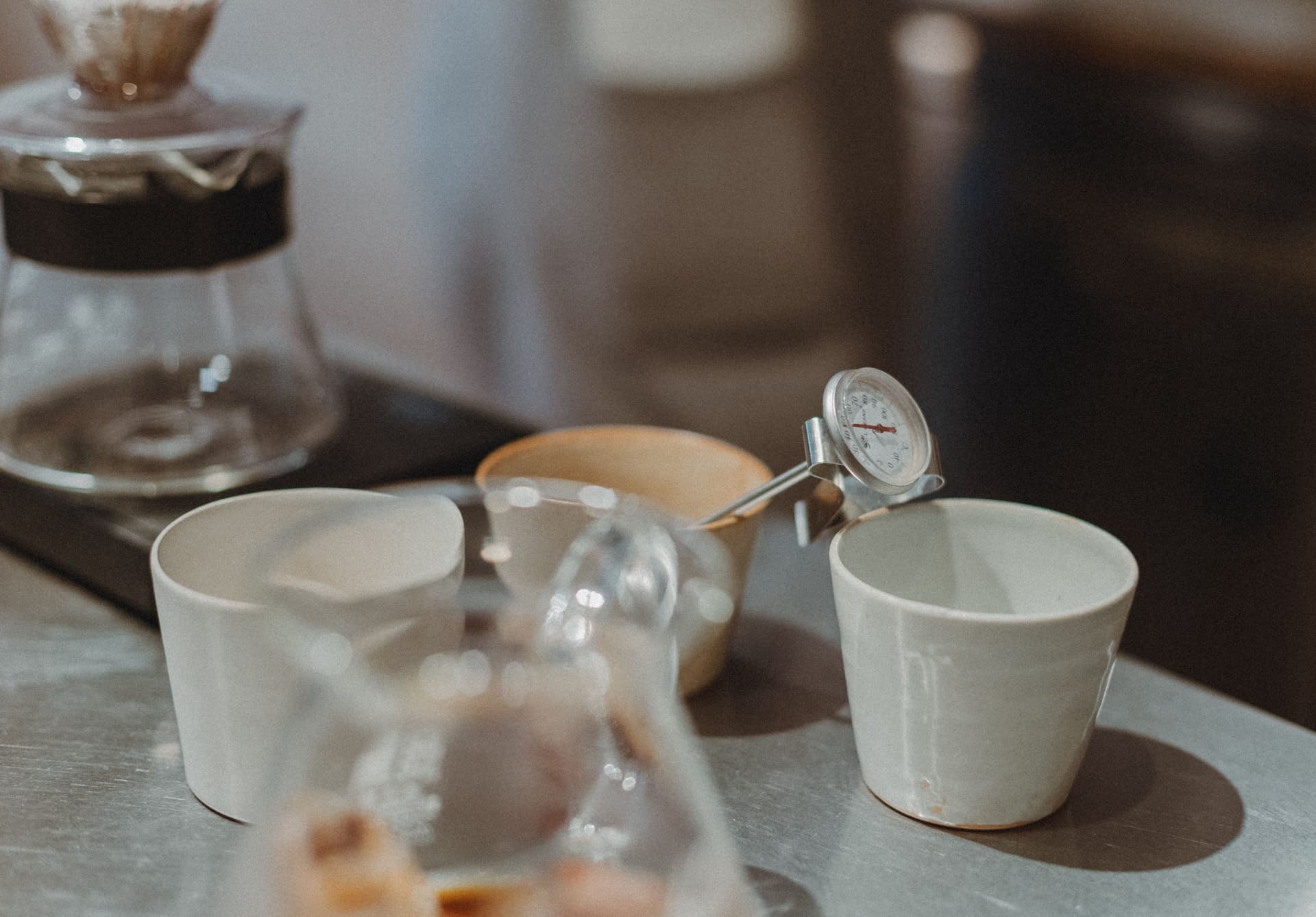
Buy the instant-read thermometer. For about fifteen dollars it turns any kettle you already own into a variable-temperature kettle, which is the single highest-leverage purchase in tea and roughly a fifth the price of the object usually recommended for the same job.
| # | Product | Best for | What it solves | Price |
|---|---|---|---|---|
| 1 | No image Various Instant-Read Kitchen ThermometerTop pickFifteen dollars of thermometer does most of what a hundred dollars of kettle does. It is the highest-leverage thing on this page. | Turning any kettle into a variable-temperature kettle | not verified | Check price#ad |
| 2 | No image Various Airtight, Opaque Tea TinTea goes stale from air, light, heat and moisture. A tin fixes all four for a few dollars, and a glass jar on a windowsill fixes none. | Not wasting the tea you just bought | not verified | Check price#ad |
| 3 | 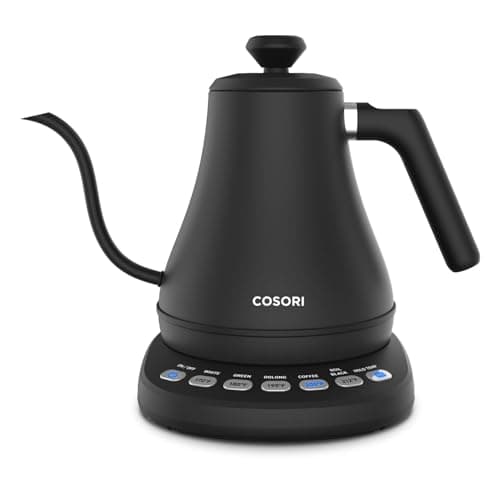 COSORI Original Electric Gooseneck Kettle (CO108-NK)Five presets that map to actual tea types, a 60-minute hold, and no plastic in the water path. This is the value pick and it is not close. | The sensible first variable-temperature kettle | 0.85 qt / 0.8 L | |
| 4 | No image Various Digital Kitchen Scale (0.1 g)Genuinely useful once you care about repeating a cup exactly. Genuinely unnecessary before that. | Later, not now | not verified | Check price#ad |
image
Top pick · Turning any kettle into a variable-temperature kettle
Various Instant-Read Kitchen Thermometer
Fifteen dollars of thermometer does most of what a hundred dollars of kettle does. It is the highest-leverage thing on this page.
#ad · how this is funded · price checked October 17, 2026
Published specifications
- Accuracy
- Not verifiedAccuracy claims vary enormously across this category and we have not verified one for a specific model. Anything claiming plus or minus 1F is more precision than tea needs.
- Read time
- Not verifiedNot verified for a specific model.
What the numbers mean
Tea temperature bands are wide. Art of Tea publishes 160-180F for green and 200-212F for black, and a thermometer that is a couple of degrees out still lands you inside the band.
That is why this beats upgrading a kettle for most beginners: you do not need a kettle that holds 178F, you need to know when the water is roughly there.
The workflow is boil, wait, measure. Boiled water dropping to green-tea temperature in an open mug takes a couple of minutes; the thermometer removes the guessing from that wait.
Good for
- Converts a boil-only kettle into a usable green-tea kettle
- Useful outside tea, unlike everything else on this page
- Cheapest possible fix for the most common beginner mistake
Against it
- One more thing to find in a drawer
- Accuracy claims in this category are not comparable
- Adds a step every single brew
Skip it ifSkip it if you already own a variable-temperature kettle. It measures a number your kettle is already holding.
image
Pick 2 · Not wasting the tea you just bought
Various Airtight, Opaque Tea Tin
Tea goes stale from air, light, heat and moisture. A tin fixes all four for a few dollars, and a glass jar on a windowsill fixes none.
#ad · how this is funded · price checked October 17, 2026
Published specifications
- Seal type
- Not verifiedDouble-lid tins seal better than single-lid ones; no maker here publishes a comparable figure.
What the numbers mean
The clear-jar mistake is the one we see most. Loose leaf looks beautiful in glass, and light is one of the four things that degrade it.
Opaque and airtight are the two properties that matter. Everything else is decoration.
Keep it out of the cupboard above the hob. Heat is the fourth enemy and that is the hottest spot in most kitchens.
Good for
- Cheapest possible protection for tea you already paid for
- Blocks light, which a glass jar cannot
- Stacks, unlike the bags tea ships in
Against it
- No comparable published specification anywhere in the category
- Cheap tins can smell of metal when new
- You will need more than one
Skip it ifSkip it if your tea arrived in a resealable, opaque pouch and you will finish it in a month. That pouch is already doing the job.
Pick 3 · The sensible first variable-temperature kettle
COSORI Original Electric Gooseneck Kettle (CO108-NK)
Five presets that map to actual tea types, a 60-minute hold, and no plastic in the water path. This is the value pick and it is not close.
Published specifications
- Capacity
- 0.85 qt / 0.8 LSource: COSORI — Original Electric Gooseneck Kettle (CO108-NK)
- Presets
- 170F white, 180F green, 195F oolong, 205F coffee, 212F blackSource: COSORI — Original Electric Gooseneck Kettle (CO108-NK)
- Hold
- Keeps water warm for up to 60 minutesSource: COSORI — Original Electric Gooseneck Kettle (CO108-NK)
- Power
- 1200 W (AC 120 V, 60 Hz)Source: COSORI — Original Electric Gooseneck Kettle (CO108-NK)
- Water contact
- 304 food-grade stainless steel kettle, lid and spoutSource: COSORI — Original Electric Gooseneck Kettle (CO108-NK)
- Warranty
- 2-year limitedSource: COSORI — Original Electric Gooseneck Kettle (CO108-NK)
What the numbers mean
The presets are the reason to recommend this to someone new. You do not have to know that sencha wants roughly 180F; you press the button that says green. That is one fewer thing to learn on week one.
Presets are also its limit. If you later want 165F for a delicate gyokuro, the button for it does not exist. Most people never get there, and the ones who do have already stopped being beginners.
It publishes 304 stainless for everything the water touches. That is the single spec worth checking on any cheap kettle, and plenty of them will not tell you.
Good for
- Presets named after teas, not temperatures
- 60-minute hold, longer than several kettles that cost more
- Stainless kettle, lid and spout published, not implied
Against it
- Preset steps only — no arbitrary target temperature
- 0.8 L is the smallest capacity here
- The gooseneck is slower to fill under a tap than a wide-mouth kettle
Skip it ifSkip it if you want to dial an exact number. Buy the OXO or the Stagg for that; this one gives you five good answers instead of infinite ones.
image
Pick 4 · Later, not now
Various Digital Kitchen Scale (0.1 g)
Genuinely useful once you care about repeating a cup exactly. Genuinely unnecessary before that.
#ad · how this is funded · price checked October 17, 2026
Published specifications
- Resolution
- Not verified0.1 g resolution is the useful threshold for tea; we have not verified a spec for a particular model.
What the numbers mean
A teaspoon is a volume and tea leaves are wildly different densities. A teaspoon of rolled gunpowder green weighs several times what a teaspoon of fluffy white tea does, which is why the same spoon makes strong tea one day and weak tea the next.
That is the honest case for a scale, and it is a real one. It is also not a week-one problem. Learn what you like first, then make it repeatable.
This is on the list mostly so we can tell you not to buy it yet.
Good for
- Makes a good cup repeatable
- Removes the density problem that spoons cannot solve
- Useful for cooking and coffee too
Against it
- Adds ceremony to something that should be easy
- Batteries
- Not a beginner purchase
Skip it ifSkip it for now if you are setting up your first kit. Come back when a tea you like starts tasting different day to day.
Why the thermometer is first
Art of Tea publishes 160-180F for green tea, 160-185F for white, 185-205F for oolong and 200-212F for black. A plain kettle gives you exactly one of those, and the other three are a guess.
Those bands are also wide, which is the part that makes a cheap thermometer sufficient. You do not need laboratory precision to land inside a twenty-degree window; you need to know roughly where you are, which is exactly what fifteen dollars buys.
We are not publishing an accuracy figure for a specific model because we could not verify one, and accuracy claims in this category are not comparable to each other. Anything claiming plus or minus one degree is offering more precision than tea requires.
Why storage is second
Because it protects tea you have already paid for. Air, light, heat and moisture all degrade leaf, and the two most common storage choices — a clear jar on a shelf, and the cupboard above the hob — are the two worst.
Opaque and airtight are the properties that matter. Everything else about a tea tin is decoration.
The kettle, honestly ranked
A variable-temperature kettle is the accessory most guides put first and we have put third, deliberately. It does the same job as the thermometer with one fewer step, and convenience is a real benefit — just not a capability one.
If you brew daily and the boil-wait-measure routine will wear on you, buy it. COSORI publishes five presets and up to 60 minutes of keep-warm; OXO publishes one-degree control and up to 30 minutes; Fellow publishes a 15/30/45/60-minute hold. If you brew twice a week, the thermometer is the right answer for now.
Two more things not on this page
A dedicated tea timer. Your phone has one, and OXO publishes a built-in count-up timer on its gooseneck kettle. There is no version of this product worth buying.
Water filtration, unless your tap water tastes bad. If it makes decent coffee it will make decent tea. It is the most oversold variable in the category and the easiest to test for free.
If you drink a lot of tea
There is one more category worth knowing about. Zojirushi publishes a 3.0 liter boiler with keep-warm settings at 160F, 175F, 195F and 208F, and a Quick Temp mode that reaches the lower settings without boiling first. That maps onto real tea types and it removes waiting entirely.
It is a large appliance and it only makes sense at four or more cups a day. Below that it is three liters of water being kept warm for nobody.
How we picked
By impact on the cup, not by price and not by margin. Where a maker publishes specifications we cite them; where we could not verify one, the card says so plainly. The method is on how we pick.
What we did not do
We have not tested a thermometer's accuracy, measured a tin's seal or weighed anything on a scale. This is a reasoned ordering built on published brewing parameters and published product specifications, both cited below.
Questions
What tea accessories are actually worth buying?
An instant-read thermometer if you drink green or white tea, and an opaque airtight tin. Both are cheap and both change something real. Almost everything else can wait.
Do I need a scale for tea?
Not until you want to reproduce a cup exactly. Leaf densities vary so a teaspoon is imprecise, but that is a later problem than most guides suggest.
Is a thermometer better than a variable-temperature kettle?
It does the same job for roughly a fifth of the price, with an extra step. The kettle buys convenience rather than capability, which is worth paying for if you brew daily.
Do I need a special tea timer?
No. Your phone has one, and OXO publishes a built-in count-up timer on its gooseneck kettle. This is a product category with no reason to exist.
Sources
Every figure on this page came from one of these, retrieved during the research pass for this article. Where a maker publishes nothing we could verify, the page says so instead of substituting a number.
Read next
- Tea brewing temperature chartPublished brewing temperatures in F and C for every tea type, with the source named for each figure.
- How much loose-leaf tea per cupThe published ratio, why a spoon is unreliable across tea types, and the point at which weighing starts to matter.
- Tea gear you can skipNine purchases beginners are pushed toward, why each one can wait, and the cheaper thing that solves the same problem.
- The best electric tea kettlesElectric kettles ranked on the specification that actually matters: how long they hold the temperature they reached.
- How to brew loose-leaf teaThe complete method in five steps, with published parameters and the four mistakes that account for most bad cups.
- How to store loose leaf teaOpaque and airtight are the whole specification. Why the tea-branded tins publish nothing, and what to buy instead.