Best infuser
The best tea infusers
Four infusers, one of which we tell you not to buy. The format matters more than the brand.
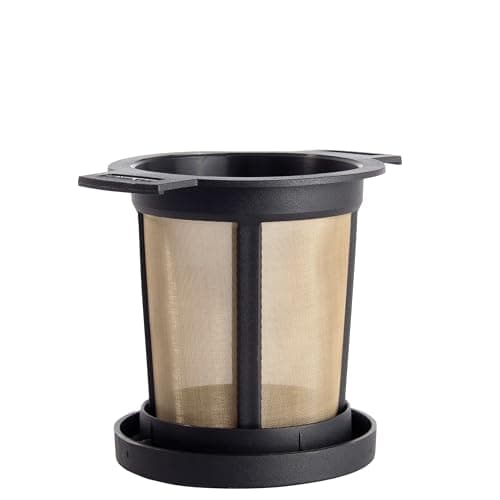
Top pickfinum Brewing Basket
$14.09 - View on Amazon
#ad · how this is funded · price checked October 17, 2026
Steep & Spout
Ten dollars, correctly spent, does more for your tea than a hundred dollars of kettle.
This is the category where a beginner gets the most back for the least money, and also the category with the most bad products in it. The bad ones are not badly made. They are badly shaped, and the shape is the whole job.
Dry tea leaves are compressed. Rolled oolong arrives as hard pellets; gunpowder green is exactly what its name suggests. Add hot water and they unfurl to something like three times their dry volume. Whatever is holding them has to have room for that to happen, and water has to be able to move through the whole mass rather than around the outside of it.
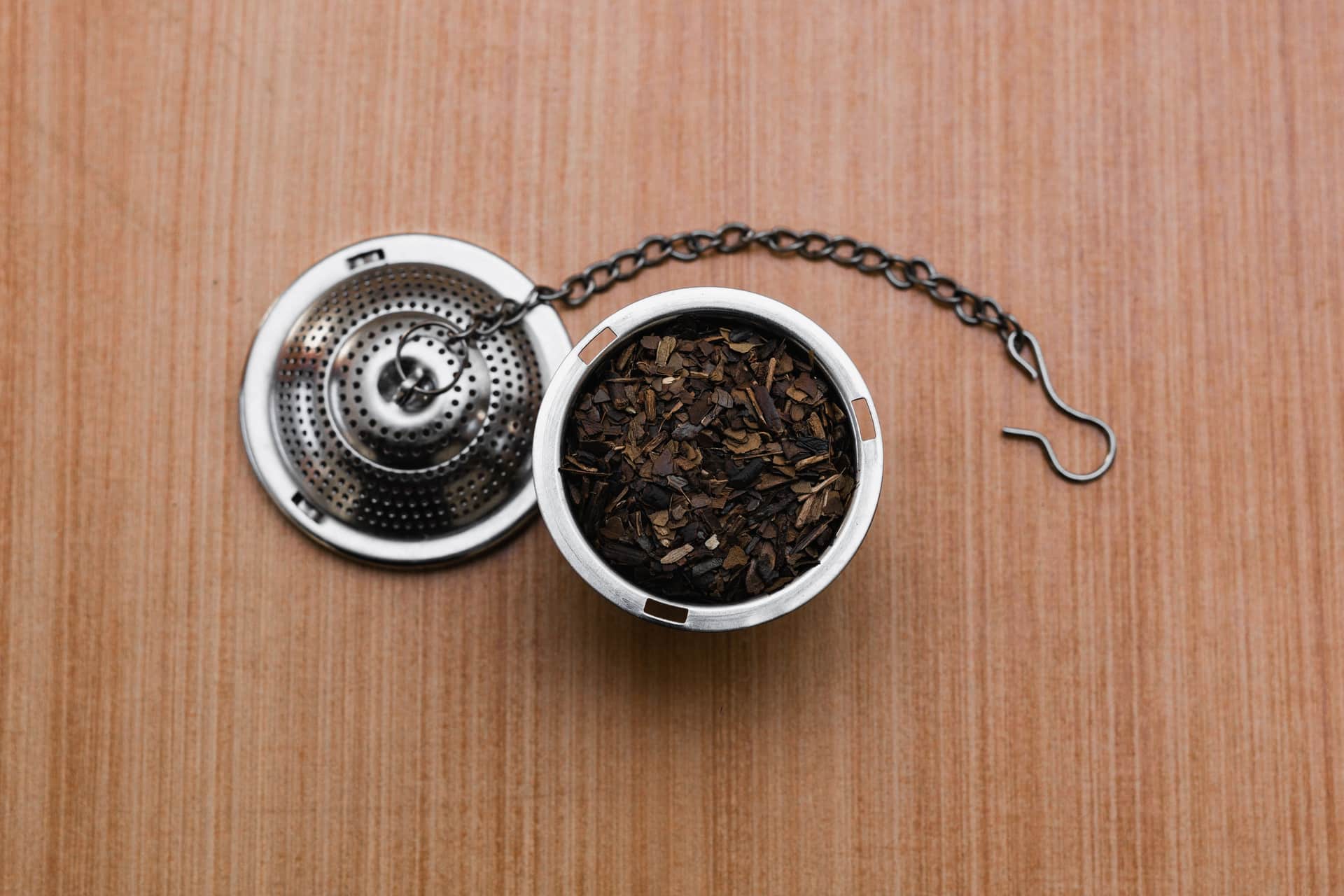
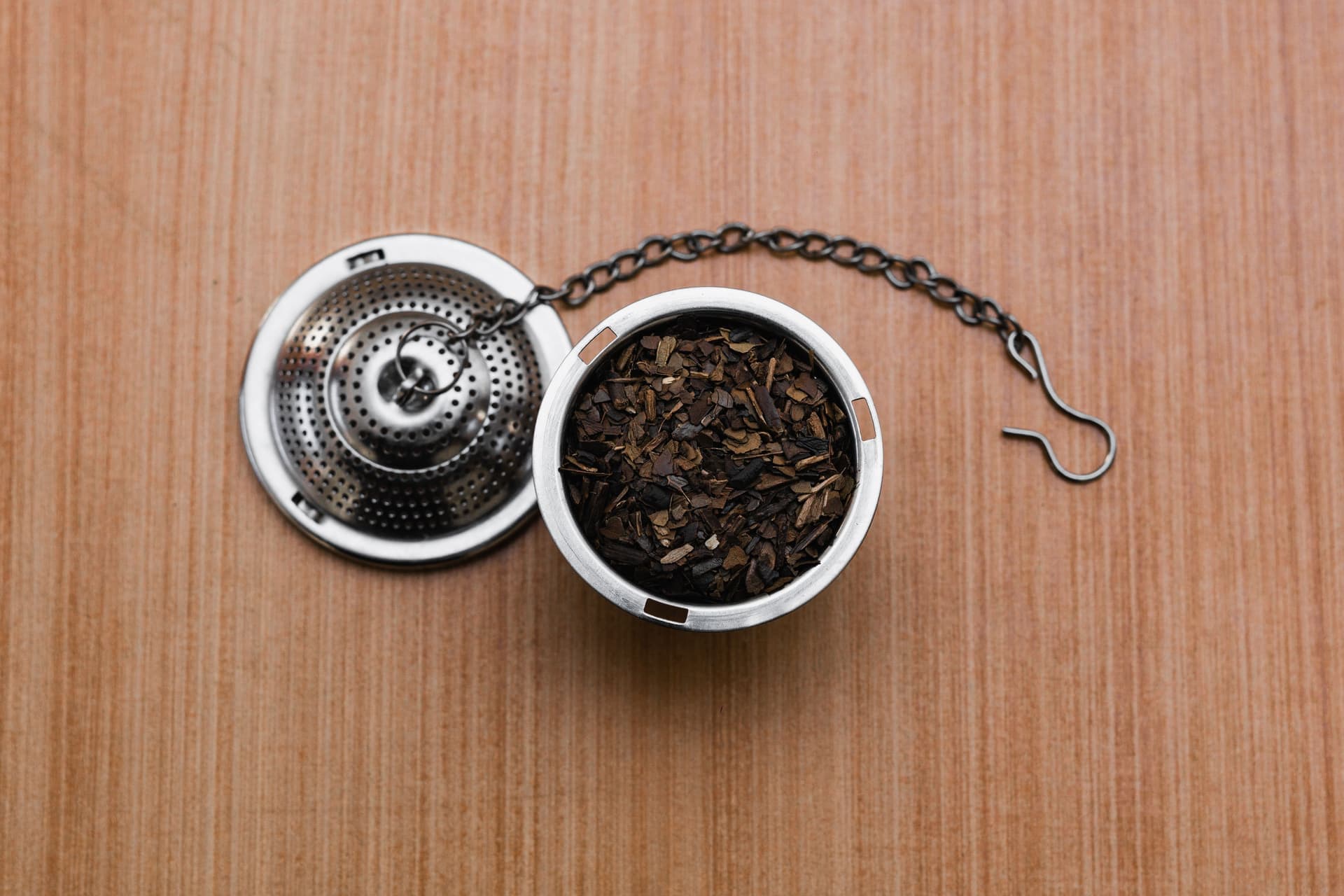
A tea ball is a fixed, small sphere. Pack enough leaf into it for a decent cup and the leaf cannot expand; leave enough room to expand and there is not enough leaf. There is no filling level that works, which is why tea balls produce that specific disappointing cup: thin, and yet somehow with a bitter edge from the over-extracted outer layer.
A basket infuser is a cylinder wide enough to sit in a mug and deep enough to hold a proper dose. The leaves spread, the water circulates, and the extraction is even. It costs the same as the ball. This is the single easiest upgrade in tea and it is why our roundup names the ball explicitly as the thing to skip.
The second thing to look at is how fine the mesh is. Coarse mesh is fine for big whole-leaf teas and useless for rooibos, broken-leaf blends and anything with fine-cut botanicals — those go straight through and settle as silt in the bottom of the cup.
Very few makers publish a gauge. FORLIFE publishes 0.3 mm for the infuser that ships with its Curve mug, which is genuinely fine, and finum publishes stainless-steel micro-mesh without a figure. Most publish nothing at all. When we could not verify a gauge, our picks say so rather than guessing at one.
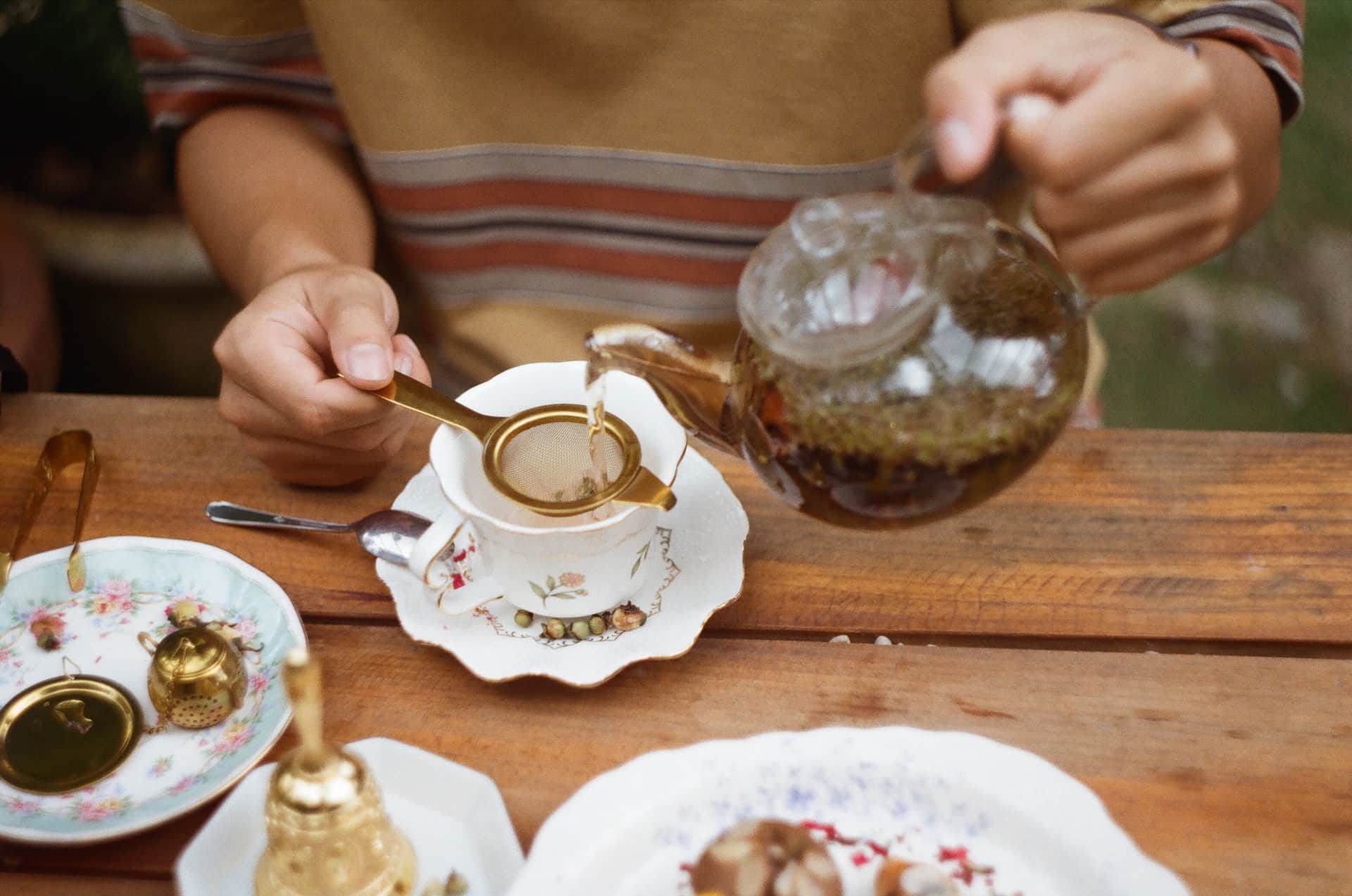
A strainer does not hold leaves during the brew. It catches them on the way out, which means the leaves spend the whole steep loose in the pot with the entire vessel to move in. That is the best extraction available and it is how tea has been made for most of its history.
The trade is a second object and a second washing-up. If you already own a teapot without a built-in filter, a strainer is the right purchase. If your teapot has a basket, you are buying a solution to a solved problem.
Bottles with a built-in basket seem obviously correct and are the one format we would steer you away from. Tea steeped for the length of a commute is over-steeped tea, and there is no infuser design that fixes it, because the problem is time rather than mesh. Brew properly at home, strain, and carry it in something insulated.
Best infuser
Four infusers, one of which we tell you not to buy. The format matters more than the brand.
Top pickfinum Brewing Basket
#ad · how this is funded · price checked October 17, 2026
Best infuser mug
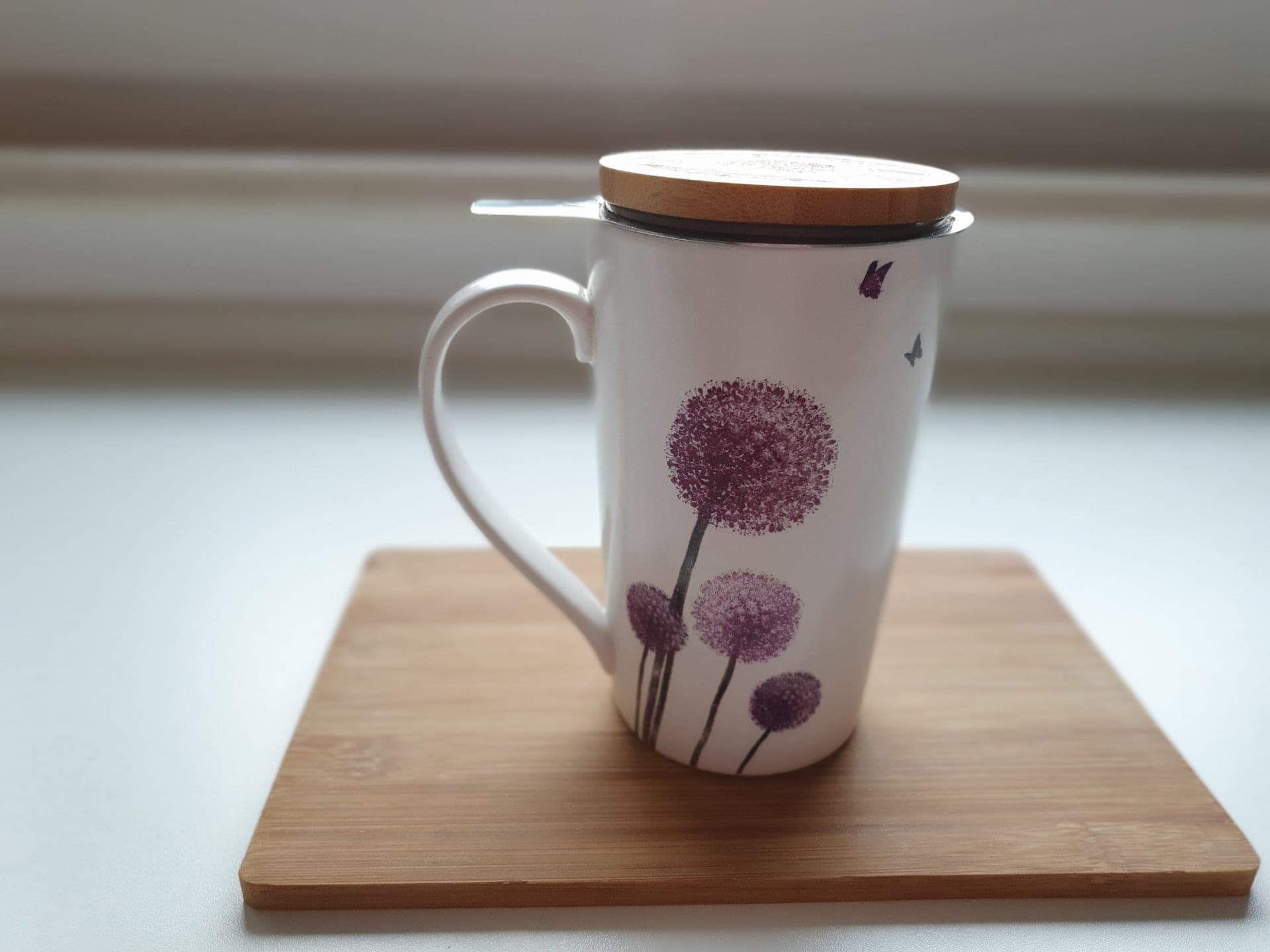
Infuser mugs where the three pieces were designed together, and why the lid matters more than the mug.
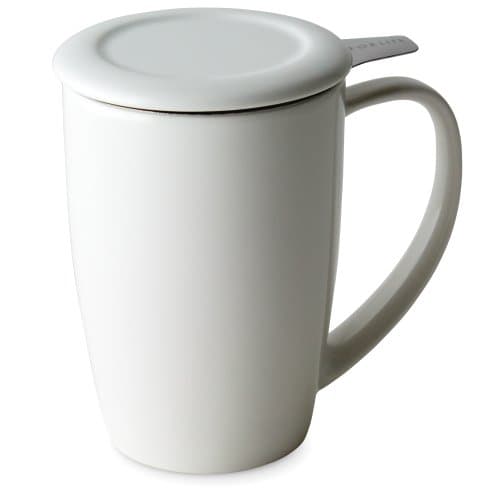
Top pickFORLIFE Curve Tall Tea Mug with Infuser and Lid
#ad · how this is funded · price checked October 17, 2026
Best strainer
Strainers ranked on published mesh gauge and format, including the only pick here that tells you how fine its mesh actually is.
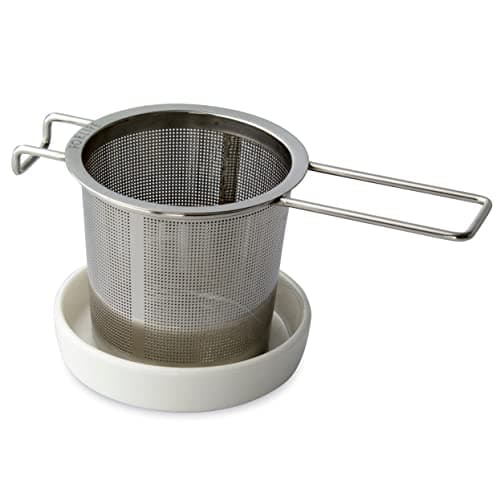
Top pickFORLIFE Extra-fine Tea Infuser & Dish Set
#ad · how this is funded · price checked October 17, 2026

Best for travel
Why hot brewing in a bottle fails, why cold brewing in one works, and the three-way answer to carrying tea.
Top pickZojirushi Stainless Steel Vacuum Travel Mug
#ad · how this is funded · price checked October 17, 2026
Best for rooibos
Rooibos is cut finer than most infusers can hold. The one mesh gauge any maker here publishes, the paper filter option, and which to buy.
Top pickFORLIFE Extra-fine Tea Infuser & Dish Set
#ad · how this is funded · price checked October 17, 2026
Model review
A ten-dollar micro-mesh basket that outperforms infusers costing five times more, and the honest answer to whether you want the M or the L.
Top pickfinum Brewing Basket
#ad · how this is funded · price checked October 17, 2026
Model review
15 oz of lead-free ceramic with a 0.3 mm stainless infuser and a lid that holds it. The published gauge is the reason to pay more than for a basket.
Top pickFORLIFE Curve Tall Tea Mug with Infuser and Lid
#ad · how this is funded · price checked October 17, 2026
The difference is leaf grade and expansion room, not ritual. Here is what actually changes in the cup.
A ball cannot hold enough leaf and give it room to expand at the same time. That is the whole comparison.
The method in six steps, with the two mistakes that account for most disappointing cups.
Four no-equipment methods, honestly ranked, and the ten-dollar object that beats all of them.
Five-second daily cleaning, the soak that clears a clogged mesh, and what the brown stain actually is.
An infuser contains the leaves while they brew; a strainer catches them on the way out. The strainer makes marginally better tea and one more thing to wash.
Yes, for a structural reason. A ball is too small for leaves that triple in size, so water extracts the outside of the clump and never reaches the middle. A basket infuser costs the same and does not have this problem.
Whatever fits your mug's opening with room to lift out. This is the single most common infuser complaint and it is always a measurement problem. Measure the inside diameter of your mug before you buy.
Strainer if you have a teapot without a filter and want the best extraction. Infuser if you brew in a mug and want one object instead of two. Neither is a compromise; they suit different setups.
Yes. Put the leaves in the cup, add water, wait, and drink around them — the leaves sink. It works, it is free, and it is how a great deal of tea is drunk. The last mouthful is the price.