Tea Kettles
Electric vs stovetop kettle for tea
One of these can tell you the water is at 180F. That is the entire argument, and everything else is preference.
We earn a commission if you buy through the links on this page, at no extra cost to you. It does not change which products we name or what we say about them — how this is funded.
Buy electric if you drink green or white tea, or if you want water fast without thinking about it. Buy stovetop if you drink black and herbal tea, cook on a hob you like using, and want a kettle with nothing in it that can break. Both boil identical water. Only one of them can hold it at 175F.
The comparison, in one table
| Electric | Stovetop | |
|---|---|---|
| Temperature control | Available, from presets to one-degree dials | None — the kettle cannot measure water |
| Holds a temperature | Yes on most models: 30-60 minutes published | No |
| Speed | Fast; heat goes straight into the water | Depends entirely on your hob |
| Failure modes | Element, board, base contacts | Essentially none |
| Counter footprint | Kettle plus a base, permanently | Lives on the hob or in a cupboard |
| Hob compatibility | Irrelevant | Must match your hob, induction especially |
| Typical capacity | 0.8-1.7 L | 1.5-2 L |
Why temperature control decides it
Art of Tea publishes 160-180F for green tea, 160-185F for white, 185-205F for oolong and 200-212F for black. If everything you drink lives in that top band, a stovetop kettle is not a compromise; it is exactly right, and the electric kettle's headline feature does nothing for you.
The moment green tea enters the rotation, that changes. Boiling water on green tea produces astringency and a flat, cooked flavor that a lot of people conclude is just what green tea tastes like. It is not. It is a 30-degree error.
There is a third path that neither side of this argument likes to mention: a stovetop kettle plus a fifteen-dollar instant-read thermometer does the same job as a hundred-dollar electric kettle, more slowly and with an extra step. If you already own a stovetop kettle you like, that is the cheapest correct upgrade available.
Speed, honestly
Electric kettles are generally faster because the element sits in the water instead of under a base plate. How much faster depends entirely on your hob — a powerful gas ring narrows the gap considerably and a slow electric coil widens it enormously.
We have not timed either. Anyone publishing a precise boil-time comparison has either measured it or copied it, and we have done neither, so we will not give you a number to remember.
Longevity, which is the real stovetop argument
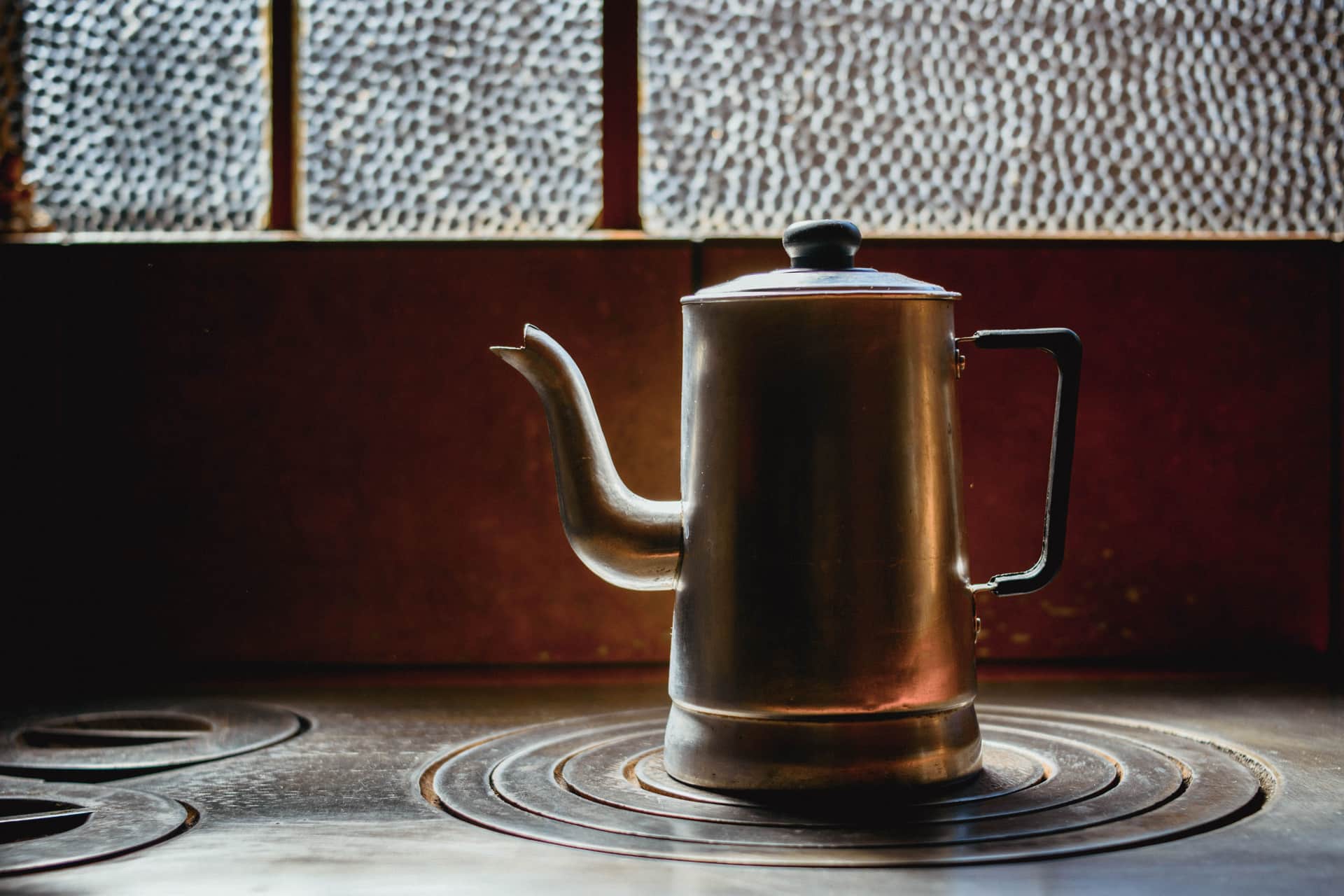
A stovetop kettle is a metal container with a handle. There is no element to burn out, no control board to fail, no base contacts to corrode. Le Creuset's enameled carbon steel version publishes compatibility with every common hob including induction and requires hand washing; that is the entire maintenance schedule.
Electric kettles are appliances and appliances fail. Fellow publishes a two-year warranty, COSORI publishes a two-year limited warranty, OXO publishes two years. That is a normal, honest warranty length for a small appliance, and it is also a statement about expected life.
So which should you buy?
Green or white tea in the rotation, or you want the water ready without a second thought: electric with temperature control, and the electric roundup names the specific ones. Black and herbal only, or you want one object for the next decade: stovetop, and check the induction line first.
And if you are still deciding what you drink — which is most people reading this — start with the cheapest kettle that fits and put the money into the infuser and the tea instead. The kettle is the easiest thing on this site to upgrade later.
Questions
Is an electric kettle better than a stovetop kettle for tea?
Better only if you need temperature control or speed. Green and white teas want 160-185F and a stovetop kettle cannot tell you when you are there. For black and herbal tea, which want 200-212F, both are equally correct.
Do electric kettles boil faster than stovetop kettles?
Usually, because the heating element sits in the water rather than under the base. How much faster depends on your hob. We have not timed either and will not publish a figure we did not measure.
Which lasts longer, electric or stovetop?
Stovetop, by a wide margin. There is nothing in it to fail. Electric kettles are appliances, and the makers here publish two-year warranties, which is the normal expectation for the category.
Can I use a stovetop kettle for green tea?
Yes, with an instant-read thermometer. Boil, then let it drop and measure. That combination costs far less than a temperature-controlled electric kettle and produces the same water.
Sources
Every figure on this page came from one of these, retrieved during the research pass for this article. Where a maker publishes nothing we could verify, the page says so instead of substituting a number.
Read next
- The best electric tea kettlesElectric kettles ranked on the specification that actually matters: how long they hold the temperature they reached.
- The best stovetop tea kettlesThree stovetop kettles with published hob compatibility, and the one spec that decides whether any of them will work in your kitchen.
- Is a variable-temperature kettle worth it?Worth it if you drink green tea daily and value the removed step. Not worth it as a first purchase, and here is why.
- Green tea water temperatureThe forty-degree gap between green tea and boiling water, what it does to the cup, and three ways to close it.
- What you actually need for loose-leaf teaThe complete requirement, stated once and plainly, and the reason everything else can wait.
- Tea kettles for induction and gas stovesWhich stovetop kettles publish induction compatibility by name, which only imply it, and how to check before you buy.