Tea Kettles · Best for induction
Tea kettles for induction and gas stoves
The only specification that matters here is one sentence long, and a surprising number of makers decline to write it.
We earn a commission if you buy through the links on this page, at no extra cost to you. It does not change which products we name or what we say about them — how this is funded.
Buy the Chantal Classic. Chantal states in writing that it suits all stove types including induction, gas and electric, and explains why: the body is magnetic carbon steel. On a specification where guessing wrong leaves you with an ornament, a maker who writes the sentence out is worth paying for.
| # | Product | Best for | Cooktop compatibility | Price |
|---|---|---|---|---|
| 1 | 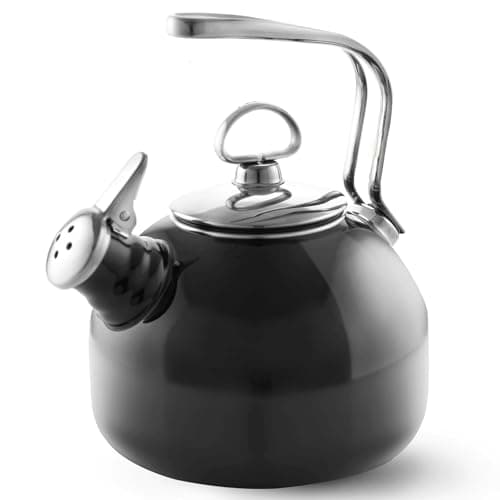 Chantal Enamel-on-Steel Classic Teakettle, 1.8 Qt.Top pickPorcelain enamel over carbon steel, a two-note harmonica whistle, and a published line saying it works on every cooktop including induction. The specification sheet is the reason to buy it. | A stovetop kettle that names every hob type | 1.8 Qt. | |
| 2 | 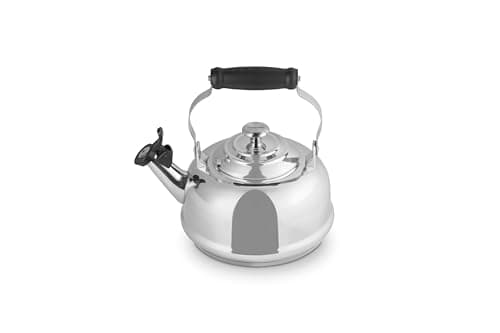 Le Creuset Classic Whistling KettleEnameled carbon steel, works on every heat source including induction, and whistles. It is a kettle, and it is a very good one. | A stovetop kettle you will still own in a decade | 1.7 qt | |
| 3 | No image OXO Brew Classic Tea Kettle1.7 quarts of brushed stainless, induction-compatible, with a handle that swings clear of the steam. Sensible rather than exciting. | A stovetop kettle for a household, not a cup | 1.7 qt / 1.6 L | Check price#ad |
| 4 | 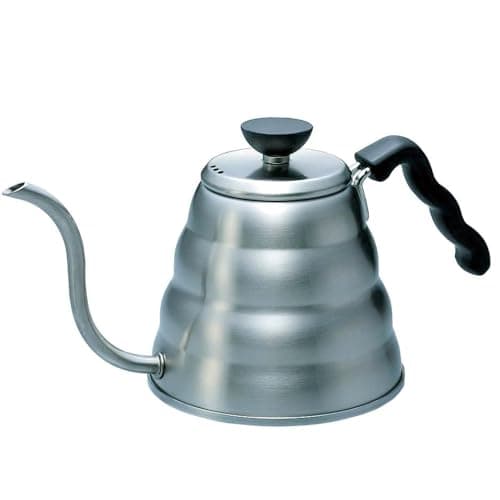 HARIO V60 Buono Drip KettleThe stovetop gooseneck. Made in Japan, 800 ml of working capacity, and the spout that most pour-over technique was written around. | A gooseneck you can use on the hob | 800 ml |
Top pick · A stovetop kettle that names every hob type
Chantal Enamel-on-Steel Classic Teakettle, 1.8 Qt.
Porcelain enamel over carbon steel, a two-note harmonica whistle, and a published line saying it works on every cooktop including induction. The specification sheet is the reason to buy it.
#ad · how this is funded · price checked October 20, 2026
Published specifications
- Functional capacity
- 1.8 Qt.Source: Chantal — Enamel-on-Steel Classic Teakettle (1.8 Qt.) product page
- Construction
- Heavy-duty carbon steel with a US-formulated commercial-grade porcelain glass enamel interiorSource: Chantal — Enamel-on-Steel Classic Teakettle (1.8 Qt.) product page
- Cooktop compatibility
- Suitable for all stove types, including induction, gas and electricCarbon steel is magnetic, which is what makes the induction claim work.Source: Chantal — Enamel-on-Steel Classic Teakettle (1.8 Qt.) product page
- Whistle
- Two-note harmonica whistleSource: Chantal — Enamel-on-Steel Classic Teakettle (1.8 Qt.) product page
- In the box
- Includes a quilted mittSource: Chantal — Enamel-on-Steel Classic Teakettle (1.8 Qt.) product page
- Base diameter
- 6.5 in exteriorSource: Chantal B2B — Enamel-on-Steel Classic Teakettle (1.8 Qt.) spec sheet
- Warranty length
- Not verifiedChantal states a limited warranty but does not publish a duration on the product page.
What the numbers mean
The compatibility line is the whole point. Chantal writes out every cooktop type by name, including induction, rather than using a summary adjective. On a stovetop kettle that is the single specification most worth having in writing, because induction is binary.
Porcelain enamel over carbon steel is the same construction as the Le Creuset, and the properties follow: non-reactive, non-porous, holds no flavors, chips if you knock it hard against a tap.
At 1.8 quarts it is a touch larger than the 1.7-quart norm in this category, which is around seven to eight cups. That is a kettle for a household, and heating it for one mug is slow.
Good for
- Every cooktop type published by name, induction included
- Enamel interior specified as commercial-grade porcelain glass
- The harmonica whistle is genuinely distinctive rather than a marketing line
- A quilted mitt is included rather than sold separately
Against it
- Boiling only, like every stovetop kettle
- No published warranty duration
- Enamel chips, and it is hand-wash territory
- 1.8 quarts is a slow boil if you only want one mug
Skip it ifSkip it if you brew a single mug at a time. Heating nearly two quarts for 300 ml of tea is a habit that wastes both time and energy.
Pick 2 · A stovetop kettle you will still own in a decade
Le Creuset Classic Whistling Kettle
Enameled carbon steel, works on every heat source including induction, and whistles. It is a kettle, and it is a very good one.
Published specifications
- Capacity
- 1.7 qtSource: Le Creuset — Classic Whistling Kettle
- Construction
- Carbon steel with porcelain enamelSource: Le Creuset — Classic Whistling Kettle
- Heat sources
- Gas, electric, ceramic, halogen and inductionSource: Le Creuset — Classic Whistling Kettle
- Dimensions
- 8.25 in diameter x 9.75 in highSource: Le Creuset — Classic Whistling Kettle
- Care
- Hand washSource: Le Creuset — Classic Whistling Kettle
What the numbers mean
Porcelain enamel is the reason this is on the list rather than a cheaper steel kettle. It is non-reactive and non-porous, so it does not hold onto flavor or stain the way bare aluminum does.
Induction compatibility is published, which is more than most enameled kettles will tell you. If your hob is induction, that single line is the difference between a kettle and an ornament.
It has no temperature control, because no stovetop kettle does. Pair it with a thermometer or with teas that want boiling water.
Good for
- Published as compatible with every common hob, induction included
- Enamel does not react with water or hold flavors
- No electronics, so nothing in it can fail
Against it
- Boiling only — temperature is on you
- Hand wash, and enamel chips if you are careless
- Costs more than several electric kettles that do more
Skip it ifSkip it if you mostly drink green tea and do not own a thermometer. A stovetop kettle cannot tell you when the water is at 180F.
image
Pick 3 · A stovetop kettle for a household, not a cup
OXO Brew Classic Tea Kettle
1.7 quarts of brushed stainless, induction-compatible, with a handle that swings clear of the steam. Sensible rather than exciting.
#ad · how this is funded · price checked October 20, 2026
Published specifications
- Capacity
- 1.7 qt / 1.6 LSource: Sur La Table — OXO Stainless Steel Teakettle
- Material
- High-grade brushed stainless steelSource: Sur La Table — OXO Stainless Steel Teakettle
- Heat sources
- Induction, electric and gasSource: Sur La Table — OXO Stainless Steel Teakettle
- Handle
- Rotating handle with silicone touch pointsSource: Sur La Table — OXO Stainless Steel Teakettle
What the numbers mean
1.6 liters is roughly seven cups, which is the number that matters if you are making tea for a table rather than for yourself.
The rotating handle is a small thing that you notice every single time: it moves out of the path of the steam when you lift the lid, and it lets the kettle sit under a low tap.
Stainless is the low-maintenance choice against enamel. It will not chip, it goes in the dishwasher in most households, and it shows water spots instead of hiding them.
Good for
- Seven cups, so one boil serves a table
- Induction, electric and gas all published
- Nothing about it is fragile
Against it
- Boiling only
- Brushed stainless shows every fingerprint
- A 1.6 L kettle takes noticeably longer to boil than a 0.8 L one
Skip it ifSkip it if you are brewing one mug at a time. Heating 1.6 liters for 300 ml of tea is a slow, expensive habit.
Pick 4 · A gooseneck you can use on the hob
HARIO V60 Buono Drip Kettle
The stovetop gooseneck. Made in Japan, 800 ml of working capacity, and the spout that most pour-over technique was written around.
Published specifications
- Practical capacity
- 800 mlHario publishes practical capacity, not brim capacity — the 1.2 L on the box is the latter.Source: HARIO USA — V60 Buono Drip Kettle
- Materials
- Stainless steel body and lid; phenol resin handle and knobSource: HARIO USA — V60 Buono Drip Kettle
- Dimensions
- W274 x D144 x H147 mmSource: HARIO USA — V60 Buono Drip Kettle
- Made in
- JapanSource: HARIO USA — V60 Buono Drip Kettle
- Induction compatibility
- Not verifiedHario's US page does not state a hob type. Check the base against your own hob before buying if you cook on induction.
What the numbers mean
The practical-versus-brim capacity distinction is worth internalizing. A kettle sold as 1.2 L that holds 800 ml in use is not overstating anything, but it will surprise you if you plan around the bigger number.
This is the crossover object for anyone arriving from coffee. If you already pour over, this kettle is already in your kitchen, and the only tea gear you still need costs about ten dollars.
No temperature control, and the published spec is silent on induction. Both are the price of a stovetop kettle at this price.
Good for
- A genuine gooseneck without an electric base on the counter
- Published practical capacity, which is the honest number
- Pours slowly and precisely into a gaiwan or a small pot
Against it
- No temperature control
- Induction compatibility is not published
- The resin handle gets warm on a gas hob with a wide flame
Skip it ifSkip it if you cook on induction and want certainty. The maker does not publish a hob compatibility line, and a gooseneck you cannot heat is an expensive jug.
Why induction is different from every other spec
Gas and electric hobs heat a kettle by putting a flame or a hot surface underneath it. Almost anything solid will get hot. Induction does not heat the hob at all - it generates a magnetic field that induces a current in the pan itself, and only ferrous, magnetic metal responds.
That makes it binary. There is no partly compatible, no slower but fine. The kettle either couples with the field and boils, or it sits on a cold hob doing nothing at all. Every other kettle specification is a matter of degree; this one is a yes or a no.
What each maker actually publishes
| Kettle | What the maker publishes | Induction named? |
|---|---|---|
| Chantal Classic 1.8 Qt. | Suitable for all stove types, including induction, gas and electric | Yes |
| Le Creuset Classic Whistling | Gas, electric, ceramic, halogen and induction | Yes |
| OXO Brew Classic | Induction, electric and gas | Yes |
| HARIO V60 Buono | No cooktop type stated on the US page | No |
Le Creuset is the most thorough: five hob types listed individually, including ceramic and halogen, which most makers ignore entirely. Chantal is the most useful, because it explains the mechanism rather than only asserting the outcome.
The Hario row is not a criticism of the kettle, which is excellent. It is a straightforward statement of a gap: the page does not say, so an induction owner buying it is inferring from the stainless body. That inference is probably right and it is still an inference.
Gas has its own small problem
Induction gets the attention, but gas has a failure mode of its own that nobody publishes a specification for: flame spread. A wide burner under a narrow kettle sends flame up the sides, and that is what scorches handles.
Chantal publishes a 6.5 inch exterior base diameter, which is a genuinely useful number for matching a kettle to a burner and one almost nobody else gives you. If your hob has a large primary ring, a wide flat base sits over it properly instead of perching.
Handle material is the other half, and it is the specification most often missing. Hario publishes phenol resin, which is heat-resistant but will still get warm over a wide flame. Where a maker does not publish it, our product cards mark it unverified rather than guessing.
Materials, and what they change on each hob type
| Construction | Induction | Gas | Note |
|---|---|---|---|
| Enamel over carbon steel | Yes - carbon steel is magnetic | Yes | Chantal and Le Creuset both build this way |
| Stainless steel | Usually, depending on the alloy | Yes | Some stainless grades are non-magnetic; the magnet test settles it |
| Aluminum | No | Yes | Non-ferrous, so induction will not see it |
| Glass or ceramic | No | No | These are brewing vessels, not kettles |
| Copper | No, without a bonded ferrous base | Yes | Decorative copper kettles are frequently induction-incompatible |
The row that catches people is stainless. It is not automatically magnetic - the alloy decides - which is exactly why a maker publishing the word induction is worth more than a maker publishing the word stainless.
How to check before you buy
- Look on the manufacturer's own product page, not a marketplace listing. Third-party listings paraphrase, and paraphrase is where a careful compatibility statement turns into a vague adjective.
- Look for the word induction specifically. Summary phrases like works on all cooktops or stovetop agnostic are weaker, because they are the maker's interpretation rather than a stated fact.
- If it is not stated either way, treat it as a no for induction. The downside of being wrong is a kettle you have to return.
- For a kettle already in your kitchen, use the fridge magnet test on the base.
- If you cook on induction and the page is silent, ask the maker in writing. A company that supports induction will confirm it in a sentence.
What none of these can do
Tell you the temperature. Every kettle on this page boils and stops there, which is correct for black tea and herbal infusions at the published 200-212F band, and wrong for green tea at 160-180F.
If green tea is in your rotation, pair any of these with an instant-read thermometer. That combination costs a fraction of a temperature-controlled electric kettle and produces identical water, and we would rather tell you that than sell you a second kettle.
What we did not do
We have not put any of these kettles on any hob. No boil times, no induction coupling tested, no handle temperatures measured. Every compatibility statement above is quoted from the maker, with the page cited, and where a maker says nothing this page says so rather than filling the gap.
Questions
Which tea kettles work on induction cooktops?
Of our picks, Chantal publishes all stove types including induction, Le Creuset publishes gas, electric, ceramic, halogen and induction, and OXO publishes induction, electric and gas. Hario does not state a cooktop type for the V60 Buono.
How do I know if my kettle is induction compatible?
Hold a fridge magnet against the base. A firm grip means the base is ferrous and induction will almost certainly work; a weak hold or none means it will not. The maker stating it in writing is still better.
Is stainless steel always induction compatible?
No. Some stainless alloys are non-magnetic and induction cannot see them. That is why a maker publishing the word induction matters more than one publishing the word stainless.
What should I look for in a kettle for a gas stove?
A wide flat base that sits over the burner rather than perching on it, and a handle material you can check. Chantal publishes a 6.5 inch base diameter, which is a rare and genuinely useful figure for matching a kettle to a burner.
Sources
Every figure on this page came from one of these, retrieved during the research pass for this article. Where a maker publishes nothing we could verify, the page says so instead of substituting a number.
- Chantal — Enamel-on-Steel Classic Teakettle (1.8 Qt.) product page
- Chantal B2B — Enamel-on-Steel Classic Teakettle (1.8 Qt.) spec sheet
- Le Creuset — Classic Whistling Kettle
- Sur La Table — OXO Stainless Steel Teakettle
- HARIO USA — V60 Buono Drip Kettle
- Art of Tea — recommended steep times and temperatures
Read next
- Types of tea kettles, explainedThe five kettle categories in plain English, with the specific job each one does better than the rest.
- Electric vs stovetop kettle for teaThe decision comes down to whether you drink green tea and whether you want an object with electronics in it.
- Chantal Classic Teakettle reviewChantal publishes every cooktop type, the enamel formulation and a base diameter. A review of what full disclosure is actually worth.
- The safest tea kettle materialsStainless, glass and enamel are all inert. What separates kettles is whether the maker publishes what the water touches.
- Green tea water temperatureThe forty-degree gap between green tea and boiling water, what it does to the cup, and three ways to close it.
- Viking 2.6-Quart Whistling Kettle reviewViking publishes a lifetime warranty, a 3-ply clad base and a handle heat break. A review of what that level of disclosure is actually worth.