Start Here
How to store loose leaf tea
Two properties decide this, and the tins sold for tea are the ones least likely to publish either.
We earn a commission if you buy through the links on this page, at no extra cost to you. It does not change which products we name or what we say about them — how this is funded.
Keep tea opaque, airtight, cool and dry, and away from anything strongly scented. That is the entire method, and it is not controversial. What is worth writing down is the buying problem behind it: the containers actually sold as tea tins almost never publish how they seal, while the containers that do publish a mechanism are sold for coffee.
| # | Product | Best for | How it seals | Price |
|---|---|---|---|---|
| 1 | No image Planetary Design Airscape Classic CanisterTop pickA plunger lid that forces air out of the canister rather than sealing it in, from the one maker on this page that names tea in its own product copy. | Pushing the air out instead of just shutting the lid | Patented plunger lid that pushes out excess oxygen rather than trapping it inside | Check price#ad |
| 2 | 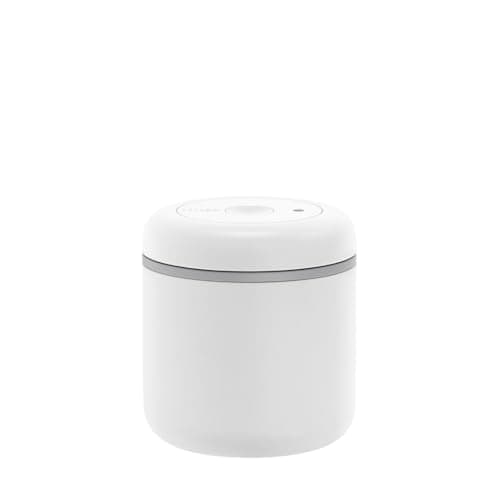 Fellow Atmos Vacuum Canister, 0.7 LTwist the lid and a pump pulls the air out. An indicator tells you whether the seal actually held, which no tin on this page can do. | A vacuum you can check at a glance | A vacuum pump in the lid removes air to reduce oxidation; twist to lock, press the button to release | |
| 3 | No image Various Airtight, Opaque Tea TinTea goes stale from air, light, heat and moisture. A tin fixes all four for a few dollars, and a glass jar on a windowsill fixes none. | Not wasting the tea you just bought | not verified | Check price#ad |
image
Top pick · Pushing the air out instead of just shutting the lid
Planetary Design Airscape Classic Canister
A plunger lid that forces air out of the canister rather than sealing it in, from the one maker on this page that names tea in its own product copy.
#ad · how this is funded · price checked September 19, 2026
Published specifications
- Mechanism
- Patented plunger lid that pushes out excess oxygen rather than trapping it insidePlanetary Design's stated reasoning is that oxygen is the main cause of flavor loss, so removing it beats sealing around it.Source: Planetary Design — Airscape Classic Coffee Canister
- Body
- Restaurant-grade stainless steel, BPA-free and scratch resistantSource: Planetary Design — Airscape Classic Coffee Canister
- Interior
- Brushed stainless steelSource: Planetary Design — Airscape Classic Coffee Canister
- Sizes
- 250 g holds roughly 1/2 lb of coffee beans; 500 g holds roughly 1 lbThose are the maker's bean figures. Loose tea is far less dense than whole beans, so the same canister holds much less tea by weight.Source: Planetary Design — Airscape Classic Coffee Canister
- Suitable contents
- Named by the maker for tea, sugar, flour, spices and other dry goods as well as coffeeSource: Planetary Design — Airscape Classic Coffee Canister
- Base
- Stackable, with a non-slip rubber baseSource: Planetary Design — Airscape Classic Coffee Canister
- In the box
- An Airscape cotton refill bagSource: Planetary Design — Airscape Classic Coffee Canister
- Tea capacity
- Not verifiedPlanetary Design publishes capacity in coffee beans only. We have not weighed tea into one and will not convert between the two.
What the numbers mean
Every other container on this page works by sealing air in with the tea. This one works by getting the air out first: you press an inner lid down onto the leaf and the excess air escapes past a valve before you close the outer lid. It is the only mechanism here you can see working.
It is sold as a coffee canister, and Planetary Design's own page names tea among the things it is for, which is more than any tea-branded tin on the market says about itself.
The catch when buying is sizing. The maker sells 250 g and 500 g, and those figures describe coffee beans. Tea is much lighter for its volume, so a canister rated for half a pound of beans holds a lot less tea than that number suggests. Buy for volume, not for the printed weight.
Good for
- Removes air rather than merely sealing it in, and you can see it happen
- The maker names tea, not just coffee, in its own product copy
- Restaurant-grade stainless and BPA-free, both published
- Opaque, so it solves the light problem at the same time
Against it
- Capacity is published in coffee beans, which does not translate to tea
- Two lids to handle every time instead of one
- Costs several times a plain tin
- Amazon's listings for the stainless versions do not state the size in the title, so you have to pick the size on the listing yourself
Skip it ifSkip it if you buy tea in small amounts and finish it quickly. A canister that actively removes air is protecting leaf over months, and tea you will drink in three weeks does not need it.
Pick 2 · A vacuum you can check at a glance
Fellow Atmos Vacuum Canister, 0.7 L
Twist the lid and a pump pulls the air out. An indicator tells you whether the seal actually held, which no tin on this page can do.
#ad · how this is funded · price checked September 19, 2026
Published specifications
- Mechanism
- A vacuum pump in the lid removes air to reduce oxidation; twist to lock, press the button to releaseSource: Fellow — Atmos Vacuum Canister
- Seal indicator
- A clear indicator shows when the vacuum is lockedThis is the feature a plain airtight tin cannot offer: confirmation rather than assumption.Source: Fellow — Atmos Vacuum Canister
- Materials
- 301 18/8 stainless steel body with a silicone wrapper handleSource: Fellow — Atmos Vacuum Canister
- Capacity
- 0.7 L, which Fellow publishes as up to 11 oz of coffee beansFellow also publishes 0.4 L for up to 6 oz of beans and 1.2 L for up to 16 oz of light or medium roast.Source: Fellow — Atmos Vacuum Canister
- Care
- Not dishwasher safe; hand wash with a damp non-abrasive sponge and mild soapSource: Fellow — Atmos Vacuum Canister
- Published warning
- Storing ground coffee or other fine substances may clog the intake valve, prevent a proper vacuum seal, and may void the warrantyWorth reading twice before you put a fine-cut tea in one. Rooibos and broken-leaf blends are exactly the kind of fine material this warning describes.Source: Fellow — Atmos Vacuum Canister
- Tea capacity
- Not verifiedFellow publishes capacity in coffee beans only. We have not weighed tea into one.
What the numbers mean
The seal indicator is the reason this is on the page. Every airtight tin asks you to trust that it closed properly; this one tells you, which matters most for the tea you open least often.
The published clog warning is the reason it is not first. Fellow is being straight with buyers about a real limitation, and the fine-cut teas most at risk of going stale are the ones most likely to trigger it. Whole-leaf tea is a much better fit for this canister than a fannings-grade blend.
Stainless rather than glass is the version to want for tea. Fellow sells both, and glass lets light at the leaf — the one variable a vacuum does nothing about.
Good for
- Tells you whether the seal held, rather than asking you to assume
- Vacuum mechanism and materials both published
- Stainless steel body is opaque as well as airtight
- Cheaper than the electric version that does the same job automatically
Against it
- Fellow publishes that fine substances may clog the intake valve and may void the warranty
- Not dishwasher safe, published
- Capacity is given in coffee beans, not tea
- A moving mechanism in the lid is a thing that can fail; a tin has none
Skip it ifSkip it if your tea is finely cut. Fellow's own warning about fine substances and the intake valve is the reason, and a plain opaque tin has nothing to clog.
image
Pick 3 · Not wasting the tea you just bought
Various Airtight, Opaque Tea Tin
Tea goes stale from air, light, heat and moisture. A tin fixes all four for a few dollars, and a glass jar on a windowsill fixes none.
#ad · how this is funded · price checked September 19, 2026
Published specifications
- Seal type
- Not verifiedDouble-lid tins seal better than single-lid ones; no maker here publishes a comparable figure.
What the numbers mean
The clear-jar mistake is the one we see most. Loose leaf looks beautiful in glass, and light is one of the four things that degrade it.
Opaque and airtight are the two properties that matter. Everything else is decoration.
Keep it out of the cupboard above the hob. Heat is the fourth enemy and that is the hottest spot in most kitchens.
Good for
- Cheapest possible protection for tea you already paid for
- Blocks light, which a glass jar cannot
- Stacks, unlike the bags tea ships in
Against it
- No comparable published specification anywhere in the category
- Cheap tins can smell of metal when new
- You will need more than one
Skip it ifSkip it if your tea arrived in a resealable, opaque pouch and you will finish it in a month. That pouch is already doing the job.
The two properties that matter
Opaque and airtight. Everything else about a tea container — the shape, the finish, the little window, the bamboo lid — is decoration, and one of those decorations actively works against you.
Air is the one the makers themselves talk about. Planetary Design's stated reasoning for the Airscape is that oxygen is the main cause of flavor loss, which is why its lid pushes air out rather than sealing it in. Fellow publishes that the Atmos vacuum pump exists to remove air and reduce oxidation. Two competitors, two different mechanisms, the same stated enemy.
Light is the one nobody sells you on, because the fix is free: use something you cannot see through. This is why a clear jar on an open shelf is the worst common storage choice, and it is also why the glass version of a canister is the wrong version for tea even though it is the prettier one.
How we judged these
We looked for containers whose maker publishes something checkable, and ranked on four things.
- Does the maker publish a sealing mechanism, in writing, rather than the word airtight on a listing? This eliminated almost the entire tea-tin category.
- Is it opaque? A container that solves air and not light has solved one problem out of two.
- Does the maker publish materials? Tea sits in contact with the container for months, which makes this a fair question and one most tins do not answer.
- Is what it publishes about capacity actually usable? Every canister here states capacity in coffee beans, and tea is far lighter for its volume.
The finding: tea tins publish nothing
We went looking for a tea-branded storage tin with a published seal specification and did not find one. What the category offers instead is a long list of unbranded canisters whose listings say airtight, double seal or UV protection with nothing behind those words — no materials statement, no gasket description, no maker page to check.
That is why our own generic tea tin entry has carried unverified specifications since the site launched. It is not an oversight. Nobody publishes them.
Meanwhile the coffee side of the same shelf publishes plunger mechanisms, vacuum pumps, steel grades and seal indicators. If you want a container you can evaluate rather than trust, that is where it is, and at least one of those makers names tea in its own copy.
| Pick | Mechanism published | Opaque | Materials published |
|---|---|---|---|
| Airscape Classic | Plunger lid that forces air out | Yes - stainless | Restaurant-grade stainless, BPA-free |
| Fellow Atmos 0.7 L | Vacuum pump in the lid, with a seal indicator | Yes - stainless version | 301 18/8 stainless, silicone handle |
| A plain opaque tin | No - listings say airtight and stop there | Yes, if you pick a solid one | No |
The one that removes the air
The Airscape is the pick if you want to see the mechanism work. Planetary Design publishes a patented plunger lid that pushes excess oxygen out before the outer lid goes on, a restaurant-grade stainless steel body that is BPA-free and scratch resistant, a brushed stainless interior, a stackable non-slip base, and a cotton refill bag in the box.
It is also the only container on this page whose maker names tea in its own product copy rather than leaving you to assume a coffee canister will do. It is sold for coffee; Planetary Design lists tea, sugar, flour and spices alongside it.
Against it: the published sizes, 250 g and 500 g, describe coffee beans. Tea is much lighter for its volume, so a canister rated for half a pound of beans holds considerably less tea than that number implies — buy on volume. There are two lids to handle rather than one. And Amazon's listings for the stainless versions carry identical titles with no size in them, which is why our buy link goes to a search rather than a single listing: pick the size yourself on the page.
The one that proves it sealed
Fellow publishes a vacuum pump in the Atmos lid that removes air to reduce oxidation, a twist-to-lock action with a press-button release, a 301 18/8 stainless steel body with a silicone wrapper handle, 0.7 L holding up to 11 oz of coffee beans, and hand-wash-only care.
The feature that earns its place is the seal indicator: a clear window that shows the vacuum is locked. Every other container on this page asks you to assume the lid did its job. This one shows you, and the tea you open least often is exactly the tea where assuming is expensive.
Against it, and this is published by Fellow rather than inferred by us: storing ground coffee or other fine substances may clog the intake valve, prevent a proper vacuum seal, and may void the warranty. Fine-cut tea is exactly that kind of material. If you drink rooibos or a finely broken blend, this is the wrong canister and a plain tin has nothing to clog. Fellow also sells a glass version, which is the wrong one for tea because it lets light in.
Fellow sells an Electric Atmos that maintains the vacuum for you, and its FAQ on the same page names loose leaf tea among what it can hold. It costs roughly twice the manual version to automate a twist of the wrist, which is why the manual one is the pick here.
The cheap answer that is still correct
An opaque airtight tin does the job. It has no mechanism to fail, no valve to clog, no charging, and it costs a fraction of either canister. For tea you will finish inside a couple of months it is genuinely all you need, and buying more than that is buying reassurance rather than freshness.
We list it as a category recommendation rather than a specific model, and the section above is why: we could not find a tin in this category whose maker publishes a seal specification we could quote. Read the listing, pick a solid-walled one rather than one with a window, and check that the lid seats on a gasket rather than just resting in the opening.
How long tea actually keeps
We are not going to publish a shelf-life table, because we could not find a maker or research source publishing one we could stand behind, and the honest answer varies by tea type more than by any number a storage page could give you.
What is safe to say is the direction of travel. Dry tea stored cool, dark and sealed does not spoil the way food does; it fades. Aroma goes first, then the brightness of the flavor, and a tea that has been sitting in a clear jar near a window for a year will taste flat rather than bad. That is a quality question, not a safety one.
The practical consequence is about buying rather than storing: buy tea in amounts you will drink in a few months, and the storage question mostly answers itself.
Things that quietly ruin stored tea
- The cupboard above the kettle or the hob. Heat rises and steam finds its way in. It is the single most common bad spot, and it is where most people keep tea.
- Anything strongly scented sharing the shelf. Dry leaf picks up smells, which is why coffee, spices and cleaning products are poor neighbors.
- The refrigerator, unless the tea is vacuum sealed and stays sealed. Taking a cold container into a warm kitchen invites condensation, and moisture is the one variable that does real damage rather than gradual fading.
- Decanting into a nice clear jar. It is the most common storage upgrade people make and it makes things worse, because it trades an opaque bag for a transparent one.
- Leaving the original pouch open and rolled over. If the pouch is resealable and opaque it is a perfectly good container; if it is neither, it is not.
Do you need a separate container per tea
Practically, yes, and this is the argument for cheap tins over one expensive canister. Tea takes on the aroma of whatever it sits near, so a strongly scented jasmine or a smoked lapsang shares its character with anything stored loose beside it.
If you drink one tea, buy the good canister. If you drink six, several opaque tins will serve you better than one very good container you have to keep emptying, and the money is better spent on the leaf.
What we did not do
We did not test any of these. There is no measurement of how much air any of them retains, no shelf-life trial and no tasting of stored against fresh leaf, because we have run none. Every specification quoted is read from the maker's own page and links back to it from the product card. Where a figure is missing — tea capacity for either canister, any seal specification at all for the tin category — the card says unverified rather than carrying a number we estimated.
Questions
How should you store loose leaf tea?
Opaque, airtight, cool and dry, and away from anything strongly scented. Those four cover it. The two places to avoid are a clear jar on a sunny shelf and the cupboard directly above the hob, which are the two most common spots people choose.
What is the best container for loose leaf tea?
One whose maker publishes how it seals. That is a short list: Planetary Design publishes a plunger lid that forces air out, and Fellow publishes a vacuum pump lid with a seal indicator. Tea-branded tins almost never publish a mechanism at all, which is why we treat them as a category rather than recommending a model.
Should tea be stored in glass or metal?
Metal, or anything else you cannot see through. Glass is the prettier option and it lets light at the leaf, which is one of the two things you are trying to prevent. If you love a glass canister, keep it in a closed cupboard.
Can you store loose leaf tea in the fridge?
Only if it is vacuum sealed and stays sealed. Moving a cold container into a warm kitchen invites condensation, and moisture does real damage rather than the gradual fading that air and light cause.
Does loose leaf tea expire?
Dry tea stored cool, dark and sealed fades rather than spoils - aroma first, then brightness of flavor. We do not publish a shelf-life figure because we could not find a maker or research source publishing one we could stand behind. Buy in amounts you will drink within a few months and the question mostly goes away.
Can I use a coffee canister for tea?
Yes, and the good ones are better documented than the tea tins. Planetary Design names tea in its own copy for the Airscape. One caution: Fellow publishes that fine substances may clog the Atmos intake valve, so a finely cut tea belongs in a plain tin rather than a vacuum canister.
Sources
Every figure on this page came from one of these, retrieved during the research pass for this article. Where a maker publishes nothing we could verify, the page says so instead of substituting a number.
Read next
- Loose-leaf tea for beginnersWhat the tea types are, which to start with, and the four mistakes that account for most disappointing first cups.
- The tea brewing accessories worth buyingFour accessories ordered by impact rather than price, including the one we tell you to buy last.
- What you actually need for loose-leaf teaThe complete requirement, stated once and plainly, and the reason everything else can wait.
- The loose-leaf tea starter kitFour objects that make a complete first setup, ordered by how much difference each one makes.
- A complete first setup, without buying a kettleThree inexpensive objects that cover every tea type, including the green tea most people think requires a new kettle.
- Tea gear you can skipNine purchases beginners are pushed toward, why each one can wait, and the cheaper thing that solves the same problem.