Infusers, Steepers & Strainers · Best infuser
The best tea infusers
Ten dollars spent here changes the cup more than a hundred spent on a kettle. Spend it on a basket, not a ball.
We earn a commission if you buy through the links on this page, at no extra cost to you. It does not change which products we name or what we say about them — how this is funded.
Buy the finum Brewing Basket. It is a tall stainless micro-mesh cylinder with a lid that flips over into a drip tray, it is dishwasher safe, finum publishes that it is made in Germany, and it costs about ten dollars. It will make better tea than any infuser ball at any price, for a reason that is geometric rather than a matter of taste.
| # | Product | Best for | Format | Price |
|---|---|---|---|---|
| 1 | 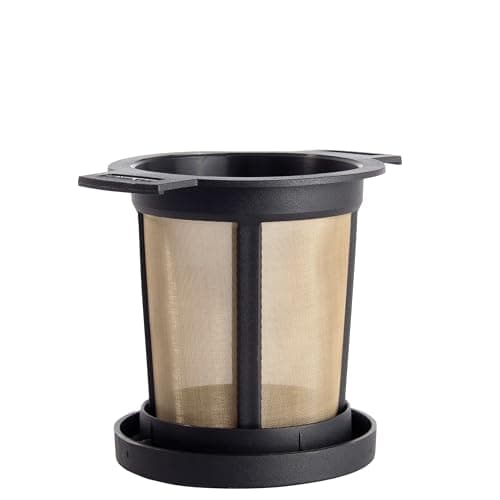 finum Brewing BasketTop pickA tall stainless mesh basket with a lid that flips over into a drip tray. Ten dollars, and it makes better tea than most infusers costing five times more. | The first thing to buy, full stop | Stainless-steel micro-mesh | |
| 2 | 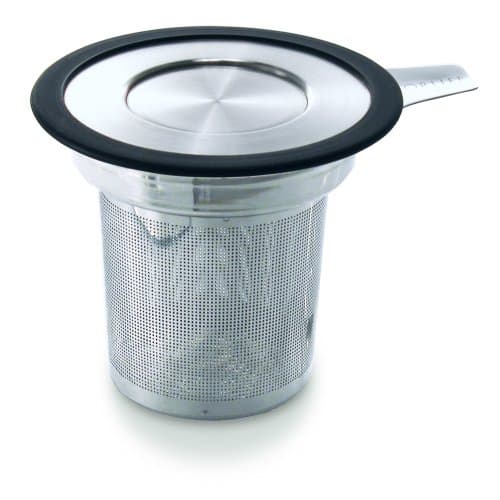 FORLIFE Extra-Fine Tea InfuserThe standalone version of the mesh in the Curve mug. Buy it if your mug is wide enough and you want the mesh without the ceramic. | Fine-cut tea and rooibos | not verified | |
| 3 | No image OXO Good Grips Double Handle Tea StrainerThe tool for the oldest method there is: leaves loose in the water, strainer over the cup. No infuser can beat it on flavor. | Brewing loose in the pot and straining on the way out | not verified | Check price#ad |
| 4 | 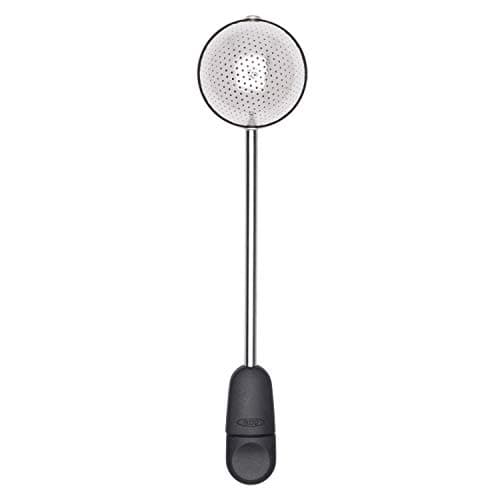 OXO Good Grips Twisting Tea BallThe best version of a format we would still steer you away from. Balls crush leaves; that is a design problem, not a manufacturing one. | A single cup when nothing else is clean | not verified |
Top pick · The first thing to buy, full stop
finum Brewing Basket
A tall stainless mesh basket with a lid that flips over into a drip tray. Ten dollars, and it makes better tea than most infusers costing five times more.
#ad · how this is funded · price checked October 16, 2026
Published specifications
- Filter
- Stainless-steel micro-meshSource: finum — Brewing Basket M
- Frame
- Heat-tolerant, BPA-freeSource: finum — Brewing Basket M
- Cleaning
- Dishwasher safeSource: finum — Brewing Basket M
- Made in
- GermanySource: finum — Brewing Basket M
- In the box
- One basket with a lid that doubles as a drip-off traySource: finum — Brewing Basket M
What the numbers mean
The reason a basket beats a ball is volume. Tea leaves triple in size as they hydrate, and a basket gives them room to do it while a ball crushes them into a pellet that only wets on the outside.
Micro-mesh matters for the fine stuff. Rooibos and broken-leaf teas go straight through a coarse strainer and end up as silt in the bottom of the cup.
The lid-becomes-a-drip-tray detail sounds like marketing until you have carried a dripping infuser across a kitchen once.
Good for
- Enough room for leaves to actually open
- Micro-mesh holds fine-cut and broken leaf
- Dishwasher safe, so cleaning is not a ritual
Against it
- Sized to a mug opening — measure yours before buying
- Mesh eventually stains, which is cosmetic
- Nothing about it is beautiful
Skip it ifSkip it only if your mug is narrower than the basket. Measure the opening; the medium and large sizes fit different mugs and the wrong one perches uselessly on the rim.
Pick 2 · Fine-cut tea and rooibos
FORLIFE Extra-Fine Tea Infuser
The standalone version of the mesh in the Curve mug. Buy it if your mug is wide enough and you want the mesh without the ceramic.
#ad · how this is funded · price checked October 16, 2026
Published specifications
- Mesh gauge
- Not verifiedFORLIFE publishes 0.3 mm for the infuser supplied with the Curve mug; we have not verified the gauge of the standalone infuser from FORLIFE's own page.
- Material
- Not verifiedStainless steel with a plastic rim on the versions we found, but we could not verify a materials statement from the maker.
What the numbers mean
This is the same idea as the finum basket from a different maker, and the two are close enough that price and mug fit should decide it.
We have not verified a specification sheet for the standalone infuser, only for the one that ships inside the Curve mug. Treat the fine-mesh claim as likely rather than confirmed.
Whichever you buy, the thing to check is the diameter against your mug. Almost every complaint about basket infusers is really a fit problem.
Good for
- Basket format, so leaves can open
- Widely stocked and cheap
- Fits most standard mugs
Against it
- We could not verify published specs from the maker
- The plastic rim is a wear point over years
- No lid on some versions
Skip it ifSkip it in favor of the finum basket if you want the version whose specs the maker actually publishes.
image
Pick 3 · Brewing loose in the pot and straining on the way out
OXO Good Grips Double Handle Tea Strainer
The tool for the oldest method there is: leaves loose in the water, strainer over the cup. No infuser can beat it on flavor.
#ad · how this is funded · price checked October 16, 2026
Published specifications
- Mesh
- Not verifiedNot verified from OXO's own documentation.
- Fit
- Not verifiedThe two handles rest on a cup rim; we have not verified a published diameter range.
What the numbers mean
Brewing loose and straining gives leaves the entire vessel to move in, which is why every tea shop that cares does it this way and no infuser quite matches it.
The two handles are the whole point of this format: they sit on the rim so you have a free hand for the pot.
It is the strainer, not the infuser, that a beginner should own if they already have a teapot without a filter.
Good for
- Full-immersion brewing with nothing constraining the leaves
- Rests on the cup, leaving a hand free
- Works with any pot
Against it
- Adds a step and a thing to wash
- No verified mesh specification
- Fine-cut tea can still pass a coarse strainer
Skip it ifSkip it if your teapot already has a built-in filter basket. You would be buying a second solution to a solved problem.
Pick 4 · A single cup when nothing else is clean
OXO Good Grips Twisting Tea Ball
The best version of a format we would still steer you away from. Balls crush leaves; that is a design problem, not a manufacturing one.
#ad · how this is funded · price checked October 16, 2026
Published specifications
- Mesh
- Not verifiedWe could not verify a mesh gauge from OXO's own documentation.
- Capacity
- Not verifiedNot published in the sources we checked.
What the numbers mean
We include this so the roundup is honest about the format rather than pretending it does not exist. Plenty of people own one and it does make tea.
The problem is geometric. A ball holds a fixed small volume, and leaves that need to triple in size cannot. You extract the outside of the clump and not the inside, which reads in the cup as weak tea that also tastes slightly bitter.
OXO's twisting mechanism is genuinely better than the hinged clamshell version, because it does not spring open in the mug.
Good for
- Twists shut instead of springing open
- Small enough to live in a drawer
- Cheap
Against it
- Too small for leaves to expand properly
- No published mesh gauge, so fine tea is a gamble
- Awkward to clean compared with a basket
Skip it ifSkip this one — this is our explicit skip in the infuser category. A basket costs the same and makes better tea, and there is no case where the ball wins.
Who this is for
Anyone brewing loose leaf in a mug. If you brew in a teapot with a built-in filter, you do not need any of this and you should go and read something else.
The one thing that decides an infuser
Dry tea is compressed. Rolled oolong arrives as hard pellets, gunpowder green is exactly what the name says, and even a loose black tea is far denser dry than wet. Add hot water and it all expands to roughly three times its dry volume.
So the question for any infuser is simply: does the leaf have room to do that, and can water move through the whole mass? A basket answers yes. A ball answers no, at any filling level, which is why it is on this page as the thing to skip rather than as a budget pick.
Mesh gauge, and the honest state of the specs
The second variable is how fine the mesh is. Coarse mesh is fine for big whole-leaf tea and hopeless for rooibos, broken-leaf blends and fine-cut botanicals, which pass straight through and settle as silt.
Almost nobody publishes a figure. FORLIFE publishes 0.3 mm for the infuser supplied with its Curve mug, which is genuinely fine. finum publishes stainless-steel micro-mesh without a number. Everyone else in this category publishes nothing at all.
That is why the cards on this page mark unverified specs as unverified rather than borrowing a figure from a retail listing. If a card says we could not verify the mesh gauge, that is exactly what it means.
Size is the complaint, every time
Nearly every one-star infuser review is a fit problem wearing a quality complaint. finum sells the Brewing Basket in more than one size for exactly this reason, and the wrong one perches uselessly on your mug rim.
- Measure the inside diameter of the mug you actually use, at the rim.
- Measure its depth, because a basket that bottoms out cannot be lifted cleanly.
- Buy the size that clears the first measurement and does not exceed the second.
- If you use several mugs, size for the smallest one.
What about strainers?
A strainer is the other answer and a genuinely better one for flavor: leaves go loose in the pot with the whole vessel to move in, and the strainer catches them on the way out. It is the oldest method there is and no infuser quite matches it.
The cost is a second object and a second thing to wash. If you own a teapot without a filter, buy the strainer. If you brew in a mug, the basket is the better-shaped tool.
How we picked
Format first, because it dominates everything else. Then published mesh and materials where a maker states them, then fit and cleaning. Every published figure below names its source, and where we could not verify one, the card says so. The full method is on how we pick.
What we did not do
We have not brewed tea in any of these. There are no side-by-side extraction comparisons on this page because we did not run any. What is here is published specification plus reasoning about leaf volume and water flow, which is exactly what it looks like.
Questions
What is the best type of tea infuser?
A basket infuser. Tea leaves expand to roughly three times their dry volume, and a basket is the only common format wide enough to let that happen while water moves through the whole mass.
Why is a tea ball bad?
It is a fixed small sphere. Enough leaf for a good cup cannot expand inside it, and enough room to expand means too little leaf. Water extracts the outside of the clump and never reaches the middle.
What mesh size do I need for a tea infuser?
Fine mesh if you drink rooibos, broken-leaf blends or anything finely cut, because coarse mesh lets those through. Very few makers publish a gauge; FORLIFE publishes 0.3 mm for the infuser in its Curve mug.
How do I know what size infuser fits my mug?
Measure the inside diameter at the rim and the depth, then buy a basket that clears the first and does not exceed the second. Almost every infuser complaint is really a fit problem.
Sources
Every figure on this page came from one of these, retrieved during the research pass for this article. Where a maker publishes nothing we could verify, the page says so instead of substituting a number.
Read next
- Basket vs ball infuserA ball cannot hold enough leaf and give it room to expand at the same time. That is the whole comparison.
- How to use a tea infuserThe method in six steps, with the two mistakes that account for most disappointing cups.
- The best tea mugs with infusersInfuser mugs where the three pieces were designed together, and why the lid matters more than the mug.
- The loose-leaf tea starter kitFour objects that make a complete first setup, ordered by how much difference each one makes.
- How to clean a tea infuserFive-second daily cleaning, the soak that clears a clogged mesh, and what the brown stain actually is.
- The best tea strainersStrainers ranked on published mesh gauge and format, including the only pick here that tells you how fine its mesh actually is.