Teapots & Brewing Vessels
Tea kettle vs teapot
They are not two versions of the same object. One touches a heat source and one never should.
We earn a commission if you buy through the links on this page, at no extra cost to you. It does not change which products we name or what we say about them — how this is funded.
A tea kettle is a vessel for heating water. It goes on a hob or has an element in its base, and nothing is ever brewed inside it. A teapot is a vessel for brewing and serving tea. Leaves and hot water go in, and in almost every case it must never go near a heat source. If you own neither, you need a kettle first, because you cannot make tea without hot water and you can make tea without a teapot.
| # | Product | Best for | What it is for | Price |
|---|---|---|---|---|
| 1 | 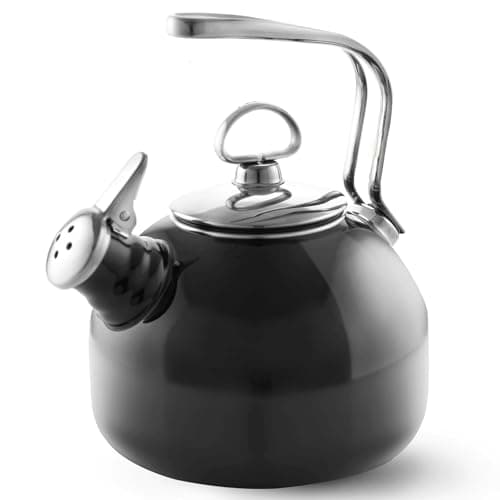 Chantal Enamel-on-Steel Classic Teakettle, 1.8 Qt.Top pickPorcelain enamel over carbon steel, a two-note harmonica whistle, and a published line saying it works on every cooktop including induction. The specification sheet is the reason to buy it. | A stovetop kettle that names every hob type | 1.8 Qt. | |
| 2 | 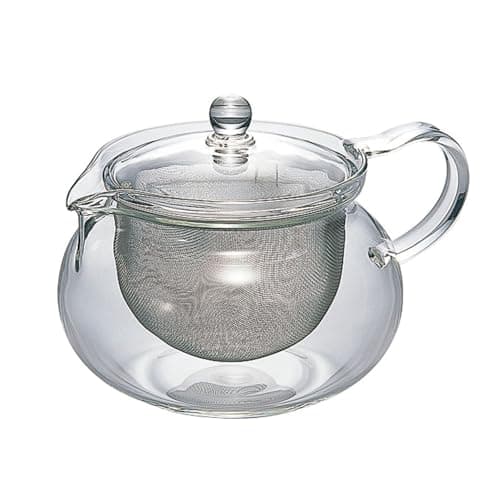 HARIO ChaCha Kyusu Maru Tea PotBorosilicate glass with a full-width stainless basket, in three sizes. The clearest published spec sheet of any teapot here. | Watching the leaves, which is most of the appeal | 300 ml, 450 ml and 700 ml (practical capacity) |
Top pick · A stovetop kettle that names every hob type
Chantal Enamel-on-Steel Classic Teakettle, 1.8 Qt.
Porcelain enamel over carbon steel, a two-note harmonica whistle, and a published line saying it works on every cooktop including induction. The specification sheet is the reason to buy it.
#ad · how this is funded · price checked September 14, 2026
Published specifications
- Functional capacity
- 1.8 Qt.Source: Chantal — Enamel-on-Steel Classic Teakettle (1.8 Qt.) product page
- Construction
- Heavy-duty carbon steel with a US-formulated commercial-grade porcelain glass enamel interiorSource: Chantal — Enamel-on-Steel Classic Teakettle (1.8 Qt.) product page
- Cooktop compatibility
- Suitable for all stove types, including induction, gas and electricCarbon steel is magnetic, which is what makes the induction claim work.Source: Chantal — Enamel-on-Steel Classic Teakettle (1.8 Qt.) product page
- Whistle
- Two-note harmonica whistleSource: Chantal — Enamel-on-Steel Classic Teakettle (1.8 Qt.) product page
- In the box
- Includes a quilted mittSource: Chantal — Enamel-on-Steel Classic Teakettle (1.8 Qt.) product page
- Base diameter
- 6.5 in exteriorSource: Chantal B2B — Enamel-on-Steel Classic Teakettle (1.8 Qt.) spec sheet
- Warranty length
- Not verifiedChantal states a limited warranty but does not publish a duration on the product page.
What the numbers mean
The compatibility line is the whole point. Chantal writes out every cooktop type by name, including induction, rather than using a summary adjective. On a stovetop kettle that is the single specification most worth having in writing, because induction is binary.
Porcelain enamel over carbon steel is the same construction as the Le Creuset, and the properties follow: non-reactive, non-porous, holds no flavors, chips if you knock it hard against a tap.
At 1.8 quarts it is a touch larger than the 1.7-quart norm in this category, which is around seven to eight cups. That is a kettle for a household, and heating it for one mug is slow.
Good for
- Every cooktop type published by name, induction included
- Enamel interior specified as commercial-grade porcelain glass
- The harmonica whistle is genuinely distinctive rather than a marketing line
- A quilted mitt is included rather than sold separately
Against it
- Boiling only, like every stovetop kettle
- No published warranty duration
- Enamel chips, and it is hand-wash territory
- 1.8 quarts is a slow boil if you only want one mug
Skip it ifSkip it if you brew a single mug at a time. Heating nearly two quarts for 300 ml of tea is a habit that wastes both time and energy.
Pick 2 · Watching the leaves, which is most of the appeal
HARIO ChaCha Kyusu Maru Tea Pot
Borosilicate glass with a full-width stainless basket, in three sizes. The clearest published spec sheet of any teapot here.
Published specifications
- Capacities
- 300 ml, 450 ml and 700 ml (practical capacity)Source: HARIO USA — ChaCha Kyusu Maru Tea Pot
- Materials
- Heatproof borosilicate glass pot and lid; stainless steel strainerSource: HARIO USA — ChaCha Kyusu Maru Tea Pot
- Care
- Safe for hot water, microwave and dishwasher; remove the strainer before microwavingSource: HARIO USA — ChaCha Kyusu Maru Tea Pot
- Not safe for
- Oven, induction hob or open flameSource: HARIO USA — ChaCha Kyusu Maru Tea Pot
- Made in
- Japan (glass and lid); strainer made in ChinaSource: HARIO USA — ChaCha Kyusu Maru Tea Pot
What the numbers mean
The large strainer is the functional argument. A wide basket lets the leaves open across the whole pot rather than packing into a tube, which is the single biggest difference between teapots at this price.
The explicit not-for-stovetop line is the reason we point at this one. Glass teapots get put on hobs and crack, and Hario states plainly that this is not a stovetop object.
Three capacities matter more than they sound. 300 ml is one generous mug; 700 ml is a pot for two or three people. Buying the wrong one is the most common teapot regret.
Good for
- Wide strainer that lets leaves expand
- Microwave and dishwasher safe, both published
- Three sizes, so you can match your actual household
Against it
- Glass loses heat faster than ceramic or cast iron
- Not for the hob, the oven or a flame
- Glass shows tea staining if you leave it wet
Skip it ifSkip it if you want the pot to stay hot for a second and third cup. Glass is the worst insulator here; cast iron is the best.
The difference in one table
| Tea kettle | Teapot | |
|---|---|---|
| Job | Heat water | Brew and serve tea |
| Goes on a hob | Yes - that is the design | Almost never. Check before assuming. |
| Leaves go inside | Never | Yes, loose or in a basket |
| Typical material | Stainless, enameled steel, glass with an element | Glass, porcelain, cast iron, clay |
| Typical capacity | 1-3 quarts | 300-1000 ml |
| Has a filter | No | Often - a basket, a tube or a press |
| Keeps tea hot | Not its job | Cast iron for about an hour; glass, minutes |
Why the confusion is expensive
Two mistakes come out of treating these as interchangeable, and both cost money.
The first is putting a teapot on a hob. Most teapots are not rated for direct heat. A borosilicate glass pot that is not sold as stovetop safe will crack, a porcelain pot can craze, and an enameled cast iron teapot - which looks exactly like something that belongs on a burner - is usually a brewing vessel and not a kettle at all. Glass in particular gives no warning; it is intact and then it is not.
The second is brewing in a kettle. Leaves left in a kettle keep extracting every time it is reheated, the tannins stain the interior, and fragments end up in every subsequent cup of anything. On an electric kettle they also settle on the element. It is the kind of shortcut that works once and degrades every use after.
Which do you need first
A kettle, every time. Hot water is non-negotiable and there is no teapot that produces it. A basket infuser in a mug plus any kettle is a complete loose-leaf setup for one person, and it costs less than most teapots on their own.
The teapot becomes necessary when you are making tea for more than one person, or when you want to brew and walk away rather than standing over a mug. Those are the only two problems it solves that a mug and an infuser do not.
The order is worth stating plainly because it is the opposite of how the category is sold. Teapots are the photogenic object and kettles are the appliance, so gift guides and tea shops lead with the pot. The pot is the second purchase.
The kettle we would buy if you only buy one
Chantal's Classic Teakettle publishes 1.8 quarts of functional capacity, a heavy-duty carbon steel body with a US-formulated commercial-grade porcelain enamel interior, a two-note harmonica whistle, and compatibility with all stove types including induction and gas. The named induction compatibility is the reason it is here: it is the constraint most likely to make a kettle unusable in your kitchen, and most makers do not address it.
It boils and nothing else, like every stovetop kettle. If green tea is a daily habit you want a variable-temperature electric kettle instead, and that is a different page.
The teapot we would buy first
The HARIO ChaCha Kyusu Maru publishes more about itself than any other teapot on this site: heatproof borosilicate glass pot and lid, a stainless steel strainer, three practical capacities at 300, 450 and 700 ml, safe for hot water, microwave and dishwasher, and explicitly not safe for oven, induction hob or open flame.
That last line is the whole point of this page, published by the maker. It is a teapot. It is not a kettle. Hario says so in the specifications rather than leaving you to find out.
What about a kettle with a built-in infuser
They exist, and the honest answer is that they do one job well and the other adequately. A kettle with a removable basket is genuinely convenient for a single type of tea drunk at one temperature. What it cannot do is separate the two operations, which is the entire reason the two objects are different.
In practice you boil, you brew, and the leaves sit in cooling water in the kettle body until you deal with them. If you want one object, a teapot plus any kettle you already own is a better combination than a hybrid.
Is a tea kettle the same as a tea pot
No, and the naming does not help. In American usage a kettle heats and a pot brews. In some British usage a teapot is a pot and a kettle is a kettle, but the word teapot is also used loosely for both, and imported product listings are inconsistent about it.
The reliable test is not the name on the box. It is whether the maker states a hob rating. A vessel rated for direct heat is a kettle, whatever it is called. A vessel with no hob rating is a teapot, whatever it is called.
Questions
What is the difference between a tea kettle and a teapot?
A kettle heats water and is designed to sit on a heat source. A teapot brews and serves tea and in almost every case must not go on a heat source. Leaves never go in a kettle.
Can you use a teapot on the stove?
Only if the maker states it is stovetop safe, in the specifications. Most teapots are not. Borosilicate glass that is not rated for direct heat cracks without warning, and enameled cast iron teapots are usually brewing vessels rather than kettles despite looking the part.
Can you brew tea in a kettle?
You can, and it is a bad habit. Leaves keep extracting every time the kettle is reheated, tannins stain the interior, and fragments end up in everything you pour afterwards. On an electric kettle they also settle on the element.
Do I need both a kettle and a teapot?
Eventually, most people do. You need the kettle first because nothing else makes hot water. The teapot becomes worth buying when you serve more than one person or want to brew and walk away.
Is a tea kettle the same as a teapot?
No. The names are used loosely, especially on imported listings, so the reliable test is whether the maker publishes a hob rating. Rated for direct heat means kettle; no hob rating means teapot.
Sources
Every figure on this page came from one of these, retrieved during the research pass for this article. Where a maker publishes nothing we could verify, the page says so instead of substituting a number.
Read next
- The best teapots for loose-leaf teaFour teapots covering glass, press and cast iron, chosen on published capacity, materials and safety limits.
- Stovetop-safe teapots: how to check before you crack oneMost teapots crack on a hob. How to read the safety statement, and why boiling separately is almost always the answer.
- Infuser or teapot first?Buy the infuser first unless you are regularly brewing for two or more. Here is why, and what changes when you are.
- Types of tea kettles, explainedThe five kettle categories in plain English, with the specific job each one does better than the rest.
- What size teapot do you need?Teapot capacity matched to the number of people who will actually drink, and why the biggest pot is rarely the safest choice.
- The best tea kettles for beginnersFour kettles ranked against what a first-time loose-leaf buyer actually needs, including the argument for spending as little as possible.