Teapots & Brewing Vessels
Stovetop-safe teapots: how to check before you crack one
Most teapots are not for the hob, and the ones that are say so in writing. Assume nothing.
We earn a commission if you buy through the links on this page, at no extra cost to you. It does not change which products we name or what we say about them — how this is funded.
Assume your teapot is not stovetop safe unless the manufacturer says in writing that it is. Hario states plainly that its ChaCha Kyusu Maru is safe for hot water, microwave and dishwasher and is not safe for the oven, an induction hob or an open flame. That is what a clear answer looks like, and most teapots do not come with one.
Why this matters more than it sounds
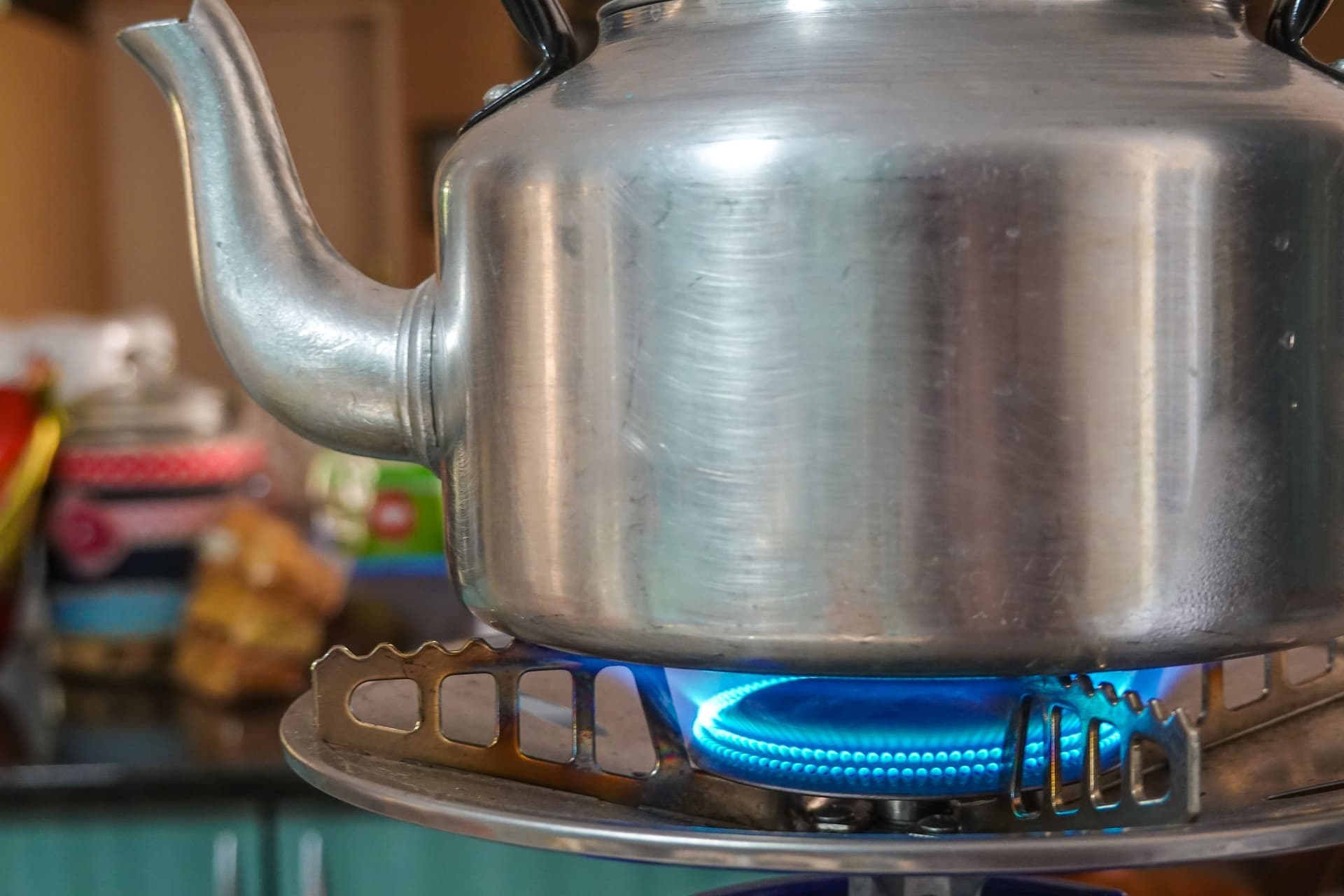
A teapot is a brewing vessel. A kettle is a heating vessel. They look similar, they sit next to each other in shops, and the difference is whether the object was engineered to sit on a heat source.
Borosilicate glass resists thermal shock — that is what borosilicate means — but resisting a sudden temperature change is not the same as tolerating direct flame or the localized heating of an induction hob. Glass that is perfectly happy receiving boiling water can fail on a burner.
What the categories can and cannot do
| Vessel type | On a hob? | Note |
|---|---|---|
| Glass teapot | Usually no | Hario states not for oven, induction or open flame |
| Porcelain teapot | No | Not designed for direct heat |
| Enameled cast iron teapot | Usually no | A brewing vessel; check the model's instructions |
| Bare cast iron tetsubin | Sometimes | Some traditional ones are; many modern ones are not |
| Enameled steel kettle | Yes | Le Creuset publishes gas, electric, ceramic, halogen and induction |
| Stainless steel kettle | Yes | This is what a kettle is for |
The row people get wrong is cast iron. It looks like the most heat-proof object in any kitchen and most cast iron teapots are still not stovetop vessels, because the enamel lining and the handle assembly are not built for it.
How to check a specific pot
- Look on the manufacturer's own product page, not a marketplace listing. Third-party listings paraphrase, and paraphrase is where a careful safety statement becomes a vague one.
- Look for an explicit negative as well as a positive. Hario lists what the pot is not safe for, which is far more useful than a listing that only mentions the good news.
- Check the included instruction card. Makers who leave it off the web page often print it on the insert.
- If nothing states it either way, treat that as a no. The downside of being wrong is a cracked pot and hot water on a hob.
- Induction is its own question. A vessel can be flame-safe and still be wrong for induction, which heats ferrous metal directly and unevenly.
You almost certainly do not need it
The reason people want a stovetop-safe teapot is usually to keep tea warm, or to reheat it. Neither is a good idea.
Heating tea that has already brewed keeps extracting whatever leaf remains and drives off aromatics, so it tastes flatter and more astringent. The correct fixes are a pot that retains heat — Primula publishes up to an hour for its enameled cast iron — or brewing a smaller volume more often.
The workflow that works everywhere is: boil in a kettle, brew in a teapot, drink within the time the pot stays warm. That is why a kettle and a teapot are two objects.
If you genuinely want one vessel
Then what you want is a kettle you also brew in, which is a real category with a real trade-off: brewing in your kettle means residue and flavor carry-over between teas, and descaling gets more complicated.
Le Creuset publishes gas, electric, ceramic, halogen and induction compatibility for its Classic Whistling Kettle, and that published line is exactly the sort of thing to look for. Just be clear that you are buying a kettle, not a teapot that happens to survive a hob.
Questions
Can you put a teapot on the stove?
Usually not. Most teapots are brewing vessels, not heating vessels. Hario states its ChaCha Kyusu is not safe for the oven, an induction hob or an open flame, which is typical of the category.
Is borosilicate glass stovetop safe?
Not necessarily. Borosilicate resists thermal shock, which is different from tolerating direct flame or induction heating. Check the specific product's published statement.
Can cast iron teapots go on the stove?
Most cannot, despite looking like the most heat-proof thing in the kitchen. Enameled cast iron teapots are brewing vessels and the linings and handles are not built for direct heat.
How do I keep tea warm without a stovetop teapot?
Use a pot that retains heat — Primula publishes up to an hour for its enameled cast iron — or brew smaller volumes more often. Reheating brewed tea drives off aromatics and increases astringency.
Sources
Every figure on this page came from one of these, retrieved during the research pass for this article. Where a maker publishes nothing we could verify, the page says so instead of substituting a number.
Read next
- The best glass teapotsThree glass teapots, and the single specification that separates a long-lived one from a cracked one.
- Teapot materials comparedFive teapot materials on heat retention, flavor neutrality and how much upkeep each one demands.
- How to use a cast iron teapotThe enameled-versus-bare distinction, the preheat that makes cast iron worth owning, and how to dry a tetsubin.
- The best stovetop tea kettlesThree stovetop kettles with published hob compatibility, and the one spec that decides whether any of them will work in your kitchen.
- The best teapots for loose-leaf teaFour teapots covering glass, press and cast iron, chosen on published capacity, materials and safety limits.
- Tea kettle vs teapotA kettle boils water; a teapot brews it. The confusion is common, it is expensive when it goes wrong, and most people end up owning both.