Teapots & Brewing Vessels
What size teapot do you need?
A half-filled large pot makes worse tea than a filled small one. That single fact settles most of this question.
We earn a commission if you buy through the links on this page, at no extra cost to you. It does not change which products we name or what we say about them — how this is funded.
Buy for the number of people who will actually drink, not the number you might one day host. Around 300 ml is one generous mug, 450 ml serves one person twice, and 700 ml to 1 liter serves two or three. If you drink alone, the small end is not a compromise - it is the correct size, and the large pot is the mistake.
| # | Product | Best for | Capacity | Price |
|---|---|---|---|---|
| 1 | 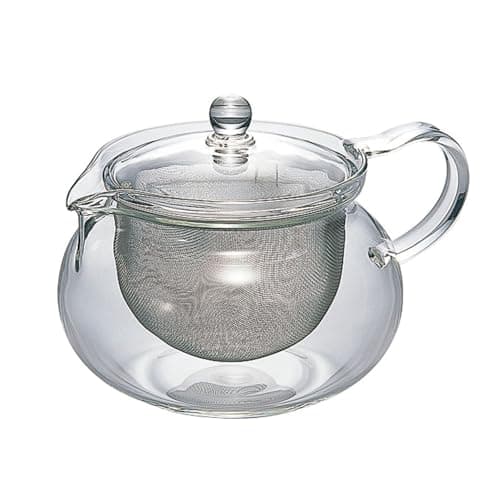 HARIO ChaCha Kyusu Maru Tea PotTop pickBorosilicate glass with a full-width stainless basket, in three sizes. The clearest published spec sheet of any teapot here. | Watching the leaves, which is most of the appeal | 300 ml, 450 ml and 700 ml (practical capacity) | |
| 2 | 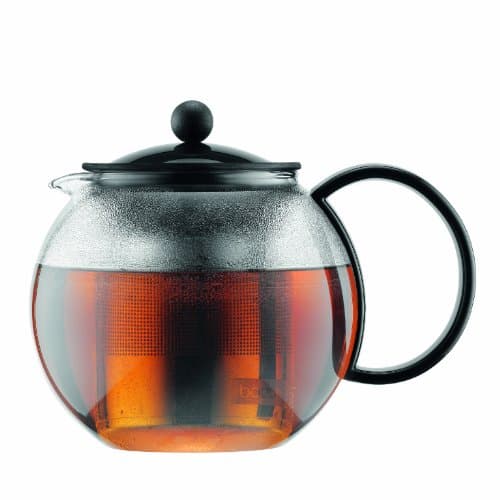 Bodum Assam Glass Tea PressA press, not just a pot. Plunging drops the leaves below the filter and ends the extraction, which is the problem every teapot has. | Stopping the brew at the right moment | 34 oz | |
| 3 | No image Various Porcelain GaiwanA lidded bowl you brew in and pour from. The cheapest object on this site and the one that teaches you the most. | Tasting a tea properly for the least money | not verified | Check price#ad |
Top pick · Watching the leaves, which is most of the appeal
HARIO ChaCha Kyusu Maru Tea Pot
Borosilicate glass with a full-width stainless basket, in three sizes. The clearest published spec sheet of any teapot here.
Published specifications
- Capacities
- 300 ml, 450 ml and 700 ml (practical capacity)Source: HARIO USA — ChaCha Kyusu Maru Tea Pot
- Materials
- Heatproof borosilicate glass pot and lid; stainless steel strainerSource: HARIO USA — ChaCha Kyusu Maru Tea Pot
- Care
- Safe for hot water, microwave and dishwasher; remove the strainer before microwavingSource: HARIO USA — ChaCha Kyusu Maru Tea Pot
- Not safe for
- Oven, induction hob or open flameSource: HARIO USA — ChaCha Kyusu Maru Tea Pot
- Made in
- Japan (glass and lid); strainer made in ChinaSource: HARIO USA — ChaCha Kyusu Maru Tea Pot
What the numbers mean
The large strainer is the functional argument. A wide basket lets the leaves open across the whole pot rather than packing into a tube, which is the single biggest difference between teapots at this price.
The explicit not-for-stovetop line is the reason we point at this one. Glass teapots get put on hobs and crack, and Hario states plainly that this is not a stovetop object.
Three capacities matter more than they sound. 300 ml is one generous mug; 700 ml is a pot for two or three people. Buying the wrong one is the most common teapot regret.
Good for
- Wide strainer that lets leaves expand
- Microwave and dishwasher safe, both published
- Three sizes, so you can match your actual household
Against it
- Glass loses heat faster than ceramic or cast iron
- Not for the hob, the oven or a flame
- Glass shows tea staining if you leave it wet
Skip it ifSkip it if you want the pot to stay hot for a second and third cup. Glass is the worst insulator here; cast iron is the best.
Pick 2 · Stopping the brew at the right moment
Bodum Assam Glass Tea Press
A press, not just a pot. Plunging drops the leaves below the filter and ends the extraction, which is the problem every teapot has.
Published specifications
- Capacity
- 34 ozSource: Target — Bodum 34oz Assam Tea Press listing
- Body
- Borosilicate glassSource: Target — Bodum 34oz Assam Tea Press listing
- Filter
- Stainless steel basketSource: Target — Bodum 34oz Assam Tea Press listing
- Care
- Dishwasher safeSource: Target — Bodum 34oz Assam Tea Press listing
What the numbers mean
The plunger is the design answer to over-steeping. In an ordinary teapot the leaves keep working while the pot sits on the table, and cup three is bitter. Here you plunge at three minutes and cup three tastes like cup one.
It is a tea press, not a coffee press, and the filter reflects that — but the same object will make coffee badly if you ask it to, which is worth knowing if counter space is tight.
34 oz is a table pot. For one person it is oversized, and a half-full press cools quickly.
Good for
- Extraction stops when you decide it does
- Genuinely dishwasher safe, unusual at this price
- Serves three or four without a refill
Against it
- Glass, so it cools fast and breaks if dropped
- Plunger mechanism is another thing to clean
- Too big for a single drinker
Skip it ifSkip it if you brew one mug at a time. A 34 oz press half-filled is a worse cup than a 300 ml pot filled.
image
Pick 3 · Tasting a tea properly for the least money
Various Porcelain Gaiwan
A lidded bowl you brew in and pour from. The cheapest object on this site and the one that teaches you the most.
#ad · how this is funded · price checked October 20, 2026
Published specifications
- Typical capacity
- Not verifiedGaiwan are made by hundreds of small producers with no common spec sheet. 100-150 ml is the usual range for the ones sold for tasting.
- Material
- Not verifiedPorcelain is standard and is what we would buy; glass and clay versions exist. No single maker to cite.
What the numbers mean
A gaiwan is three pieces: a bowl, a lid and a saucer. You put leaves in, add water, and use the lid as a gate to pour the liquor off. There is no mechanism to fail and nothing to clean but a bowl.
The reason to own one as a beginner is that short repeated infusions show you what a tea actually tastes like at each stage. A three-minute mug steep averages all of that into one flavor.
There is no manufacturer to cite because there is no single manufacturer. That is honest to state rather than paper over with a spec sheet borrowed from a listing.
Good for
- Costs less than most infusers
- No mechanism, no filter, nothing to replace
- Short infusions teach you more about a tea than a long one
Against it
- The rim gets hot until you learn the grip
- Small volume, so you pour often
- No published specifications anywhere in the category
Skip it ifSkip it if you want to walk away mid-steep. A gaiwan needs you present; that is the point and also the drawback.
Why a half-full pot brews worse
Three things go wrong at once, and none of them is obvious in the shop.
Heat loss. A pot loses heat through its surface, and a half-full pot has a large volume of air above a small volume of water. It cools faster than the same pot filled, and it cools faster than a smaller pot holding the same amount of tea. Since extraction is temperature-dependent, the back half of the steep happens cooler than you intended.
Leaf contact. Filters and baskets are positioned for the pot's designed water line. Fill to half and the basket may sit partly above the water, so some of the leaf never brews at all while the submerged part over-extracts.
Dosing error. Art of Tea publishes about a tablespoon of leaf per 8 ounces of water. Getting that right for an arbitrary partial fill means measuring water as well as leaf, and almost nobody does. People dose for the pot and then under-fill it, or fill it and dose for a cup.
Capacity by drinkers
| Capacity | Roughly | Suits | Leaf, per the published ratio |
|---|---|---|---|
| 150 ml | A tasting cup | Gongfu-style short infusions | High dose, short contact - different method |
| 300 ml | One generous mug | One person, one sitting | About 1.25 tablespoons |
| 450 ml | Two small cups | One person with a refill | About 1.9 tablespoons |
| 700 ml | Three cups | Two people, or one over an afternoon | About 3 tablespoons |
| 1 liter | Four cups | Three people | About 4.25 tablespoons |
Hario publishes 300 ml, 450 ml and 700 ml practical capacities for the three ChaCha Kyusu sizes, which maps neatly onto the first three useful rows. The Bodum Assam listing publishes 34 oz, which is the top row of that range.
Note the word practical in Hario's figures. That is working volume, not brim volume, and it is the honest number. A pot advertised on brim capacity holds noticeably less in use, which is worth knowing before you plan a dose around it.
The question that actually decides it
Not how many people live in your house. How many cups get poured from one brew, in one sitting, on a normal day.
Those are different numbers because tea does not keep well in the pot. Leaves left in keep extracting, so cup three from a large pot is bitter unless you removed the basket, and even then the tea has been cooling for twenty minutes. A big pot does not extend a session; it just makes the last cup worse.
Material changes how much size matters
Heat retention and capacity interact. Glass loses heat fastest, so a large glass pot half-filled is the worst combination on this page. Cast iron holds heat longest - Primula publishes up to an hour for its enameled pots - so a large cast iron pot tolerates a slow session far better.
That is a real argument for cast iron at the larger sizes and for glass at the smaller ones, and it is the opposite of how the two are usually shopped for.
When smaller is the whole point
Around 100 to 150 ml is not an undersized teapot, it is a different technique. A gaiwan at that volume is built for short repeated infusions: a high dose of leaf, twenty to thirty seconds of contact, poured off completely, repeated with a little more time each round.
Five infusions from one dose is ordinary with rolled oolong, and they taste different from each other rather than fading. If what you want is to understand a tea rather than to serve it, small is the answer and it is also usually the cheapest vessel in the shop.
A press changes the arithmetic upward
The one case for buying larger than your daily habit is a press pot. Plunging drops the leaves below the filter and ends the extraction, so a large press can sit on a table without the third cup turning bitter.
The Bodum Assam listing publishes 34 oz with a borosilicate body and a stainless filter, dishwasher safe. If your pattern genuinely is a pot on a table over an hour, that mechanism is worth more than any size guidance on this page.
How to decide, in four steps
- Count the cups you would actually pour from one brew on a normal day, not a hosting day.
- Multiply by your cup size - most mugs are 10 to 12 oz, most teacups 6 to 8 oz.
- Buy the published practical capacity closest to that figure, rounding down rather than up.
- If you host occasionally, buy the everyday size and brew twice when guests come.
Rounding down is the part people resist and it is the right call. An overfilled small pot is a minor inconvenience. An under-filled large pot is worse tea every single time you use it.
Questions
What size teapot do I need for one person?
Around 300 ml, which is one generous mug. Hario publishes that as the practical capacity of its smallest ChaCha Kyusu. Buy 450 ml if you usually want a refill from the same brew.
Is it bad to only half-fill a teapot?
Yes, for three reasons: it cools faster than a filled pot, the filter basket may sit partly above the water so some leaf never brews, and dosing correctly for a partial fill is guesswork most people get wrong.
What size teapot serves four people?
Around 1 liter, or 34 oz, which is the size of the Bodum Assam press and roughly four cups. For four regular drinkers, a press is worth choosing so the last cups do not turn bitter.
Why are gaiwan and tasting pots so small?
Because 100 to 150 ml is a different technique rather than an undersized pot. High leaf, twenty to thirty seconds of contact, poured off completely and repeated - five infusions from one dose is ordinary.
Sources
Every figure on this page came from one of these, retrieved during the research pass for this article. Where a maker publishes nothing we could verify, the page says so instead of substituting a number.
Read next
- The best teapots for loose-leaf teaFour teapots covering glass, press and cast iron, chosen on published capacity, materials and safety limits.
- Infuser or teapot first?Buy the infuser first unless you are regularly brewing for two or more. Here is why, and what changes when you are.
- Gaiwan vs teapotA gaiwan is for tasting a tea properly; a teapot is for serving one. Buying the wrong one is a mismatch of purpose, not quality.
- How much loose-leaf tea per cupThe published ratio, why a spoon is unreliable across tea types, and the point at which weighing starts to matter.
- Teapot materials comparedFive teapot materials on heat retention, flavor neutrality and how much upkeep each one demands.
- HARIO ChaCha Kyusu Maru reviewBorosilicate glass, a full-width stainless strainer and three published practical capacities — plus a published list of what it cannot do.