Brewing Guides · Best iced tea maker
The best iced tea makers
The decision is not which brand. It is which shape fits your refrigerator and whether the strainer comes out.
We earn a commission if you buy through the links on this page, at no extra cost to you. It does not change which products we name or what we say about them — how this is funded.
Buy the 1.2 liter Mizudashi. It is a heatproof glass carafe with a strainer that lifts out, Hario publishes every material in it, and it costs less than the alternatives. Buy the Ka-Ku instead if your refrigerator is full, because it is the one that lies on its side. And before either: if you own a large jar and a fine strainer, you can cold brew tonight for nothing.
| # | Product | Best for | Capacity | Price |
|---|---|---|---|---|
| 1 | 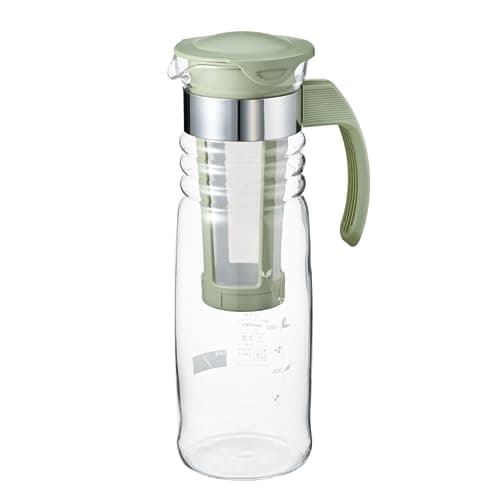 HARIO Mizudashi Cold Brew Tea Pot, 1200 mlTop pickA 1.2 liter heatproof glass carafe with a removable mesh strainer, sized to stand in a refrigerator door. Hario publishes every material in it. | The default cold brew jug, and the one to buy first | 1200 milliliters | |
| 2 | 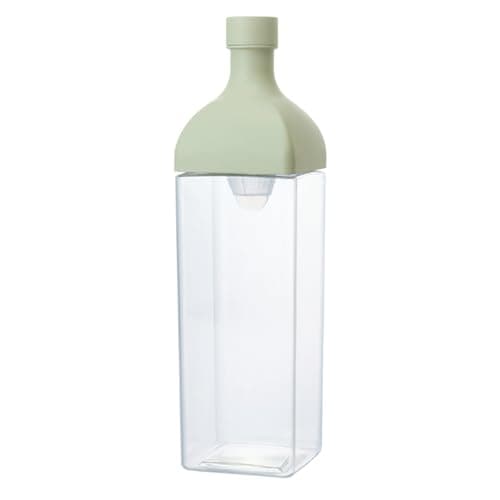 HARIO Ka-Ku Cold Brew Tea Bottle, 1200 mlThe same 1.2 liters in a rectangular shatter-resistant bottle that seals well enough to store flat. That is the entire reason to pay more than the glass one. | A packed refrigerator, because it lies on its side | 1200 milliliters | |
| 3 | 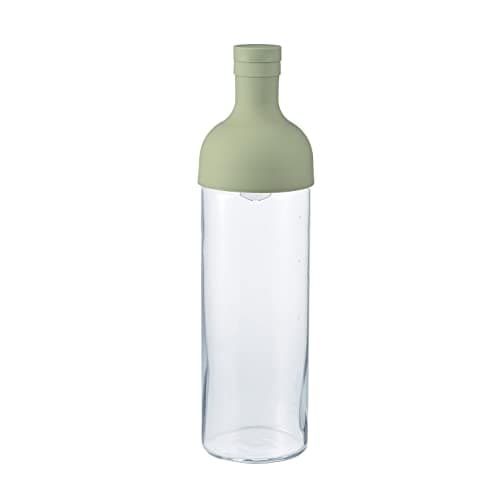 HARIO Cold Brew Tea Filter-in Bottle, 750 mlA 750 ml glass bottle with a built-in filter, made for brewing tea in the refrigerator. Cold extraction is slow enough that leaving the leaves in stops being a mistake. | Cold brew, and the one bottle we would carry | 750 ml |
Top pick · The default cold brew jug, and the one to buy first
HARIO Mizudashi Cold Brew Tea Pot, 1200 ml
A 1.2 liter heatproof glass carafe with a removable mesh strainer, sized to stand in a refrigerator door. Hario publishes every material in it.
Published specifications
- Practical capacity
- 1200 millilitersSource: HARIO USA — Mizudashi Cold Brew Tea Pot (1200 ml)
- Strainer
- Removable mesh strainer, so the leaves lift out and the carafe is ready to pourSource: HARIO USA — Mizudashi Cold Brew Tea Pot (1200 ml)
- Materials
- Heatproof glass body; polypropylene lid, strainer, frame and handle; polyester mesh; stainless steel bandSource: HARIO USA — Mizudashi Cold Brew Tea Pot (1200 ml)
- Dimensions
- W125 x D93 x H290 mm, 88 mm diameterSource: HARIO USA — Mizudashi Cold Brew Tea Pot (1200 ml)
- Care
- Hot water and dishwasher safe; not safe for microwave, oven or open flameSource: HARIO USA — Mizudashi Cold Brew Tea Pot (1200 ml)
- Intended use
- Made for cold brewing onlyHario states this explicitly. It is a brewing carafe, not a kettle and not a stovetop vessel.Source: HARIO USA — Mizudashi Cold Brew Tea Pot (1200 ml)
What the numbers mean
The removable strainer is the specification that matters. Cold brewing is forgiving about time, but leaves left in the carafe for a second day are not improving anything — lifting the strainer out ends it cleanly and leaves something you can pour from.
1.2 liters is roughly five glasses, which is the right size for a household making a jug in the evening for the next day. Hario publishes the practical capacity rather than a brim figure, which it does consistently and almost nobody else does.
The dimensions are published for a reason: at 290 mm tall and 93 mm deep it is designed to stand in a refrigerator door rather than take a shelf. Measure your door shelf before assuming.
Good for
- Every material published, down to the mesh and the band
- Strainer lifts out, so extraction actually stops
- Dishwasher safe, published
- Practical capacity rather than a brim number
Against it
- Glass, so it breaks if it goes over in a packed refrigerator
- Cold brewing only — Hario says so outright
- A 290 mm carafe will not fit every refrigerator door
- The mesh is polyester, not stainless, so it stains over time
Skip it ifSkip it if you want hot tea chilled quickly. This is a slow overnight vessel; nothing about it speeds the process up.
Pick 2 · A packed refrigerator, because it lies on its side
HARIO Ka-Ku Cold Brew Tea Bottle, 1200 ml
The same 1.2 liters in a rectangular shatter-resistant bottle that seals well enough to store flat. That is the entire reason to pay more than the glass one.
#ad · how this is funded · price checked September 21, 2026
Published specifications
- Capacity
- 1200 millilitersSource: HARIO USA — Ka-Ku Cold Brew Tea Bottle
- Shape
- Rectangular, so it can be stored horizontally or uprightSource: HARIO USA — Ka-Ku Cold Brew Tea Bottle
- Dimensions
- W90 x D90 x H320 mmSource: HARIO USA — Ka-Ku Cold Brew Tea Bottle
- Materials
- PCT resin bottle; polypropylene removable top, filter and mesh; silicone rubber bottle and cap packingSource: HARIO USA — Ka-Ku Cold Brew Tea Bottle
- Strainer
- Removable plastic strainer, for simple cleanupSource: HARIO USA — Ka-Ku Cold Brew Tea Bottle
- Model
- KAB-120-SGSource: HARIO USA — Ka-Ku Cold Brew Tea Bottle
- Made in
- JapanSource: HARIO USA — Ka-Ku Cold Brew Tea Bottle
What the numbers mean
Lying flat is the feature. A 1.2 liter bottle that can go on its side fits a refrigerator that has no room for a 290 mm carafe standing up, and that is a real constraint in a shared or small fridge.
It is resin rather than glass, so it does not break. The trade is that plastics of any kind hold onto aroma more than glass does over years of strongly scented infusions.
The square footprint is genuinely more space-efficient than a round carafe of the same volume, which matters more in a fridge than it sounds.
Good for
- Stores flat, which no glass carafe here can do
- Shatter-resistant, so it survives a packed refrigerator
- Every material published, including both silicone seals
- Square section wastes less space than a round jug
Against it
- Costs noticeably more than the glass Mizudashi for the same volume
- Resin rather than glass, so it can retain aroma over time
- Nothing published about dishwasher safety, unlike its glass sibling
- Stock has been thin on the listing we checked
Skip it ifSkip it if your refrigerator has an upright shelf free. The glass Mizudashi holds the same 1.2 liters, publishes dishwasher safety, and costs less.
Pick 3 · Cold brew, and the one bottle we would carry
HARIO Cold Brew Tea Filter-in Bottle, 750 ml
A 750 ml glass bottle with a built-in filter, made for brewing tea in the refrigerator. Cold extraction is slow enough that leaving the leaves in stops being a mistake.
#ad · how this is funded · price checked September 21, 2026
Published specifications
- Materials
- Heatproof glass bottle, polypropylene strainer, silicone rubber spout stopperSource: HARIO USA — Cold Brew Tea Filter-in Bottle, 750 ml
- Dimensions
- W87 x D84 x H300 mmSource: HARIO USA — Cold Brew Tea Filter-in Bottle, 750 ml
- Care
- All components remove for washing and are dishwasher safeSource: HARIO USA — Cold Brew Tea Filter-in Bottle, 750 ml
- Method
- Fill to the 750 ml mark, insert the stopper, brew in the refrigerator 3-6 hoursSource: HARIO USA — Cold Brew Tea Filter-in Bottle, 750 ml
What the numbers mean
This is the exception to our standing advice against brewing in a bottle. That advice is about hot brewing, where leaves left in water over-extract into bitterness within minutes. Cold extraction runs so much slower that a three-to-six-hour window is the method rather than a mistake.
The filter is polypropylene rather than steel, which is worth knowing if you avoid plastic in the water path. It is a cold-water contact, which is the mildest condition a plastic ever sees.
At 300 mm tall it is a refrigerator-door object, not a handbag one. Check your shelf before buying.
Good for
- Purpose-built for cold brewing, where leaving leaves in is correct
- Every part removes and is published dishwasher safe
- Published dimensions, which is rare in this category
- 750 ml is two or three glasses from one brew
Against it
- Polypropylene filter rather than stainless
- 300 mm tall, so it needs a real refrigerator shelf
- Glass, so not the bottle for a backpack
- Not for hot brewing, which is most of what this site is about
Skip it ifSkip it if you want hot tea on a commute. Brew hot at home, strain, and carry it in an insulated mug instead.
What an iced tea maker actually is
Search results for this term cover two completely different products, and buying the wrong one is the most common mistake here.
- A cold brew vessel. A carafe or bottle with a built-in strainer. You add leaf and cold water, leave it in the refrigerator for hours, and lift the strainer out. No power, no heat, nothing to break down. Everything on this page is one of these.
- An electric iced tea brewer. A countertop appliance that brews hot and drops the concentrate onto ice. Faster, bulkier, and a different purchase entirely — and we do not cover one, because we could not find one whose maker publishes a spec sheet we could check.
If you want iced tea in five minutes, you want the second kind, and this is the wrong page. If you are happy to make it the night before, the first kind is cheaper, simpler and produces a smoother drink.
How we judged these
Cold brewing is a forgiving process, so the vessel is doing less work than the marketing suggests. Four things genuinely differ.
- Does the strainer come out? Cold brewing tolerates a long steep, but not an indefinite one. A strainer you can lift ends extraction and leaves a carafe you can pour from. This is the single most useful feature in the category.
- Will it fit your refrigerator, and how? Published dimensions decide this, and shape decides whether a full shelf rules it out. A bottle that lies flat solves a problem a tall carafe cannot.
- Are the materials published? Anything holding a liquid for twelve hours deserves a materials statement, and most of this category does not give one.
- Is the capacity practical or brim? Hario publishes practical capacity consistently. Most competitors publish the number that sounds biggest.
The default
Hario publishes 1200 ml of practical capacity for the Mizudashi, a removable mesh strainer, a heatproof glass body with a polypropylene lid, strainer, frame and handle, a polyester mesh and a stainless steel band, dimensions of W125 x D93 x H290 mm, model HCC-12-SG, made in Japan, hot water and dishwasher safe, and not safe for microwave, oven or open flame.
It also publishes that it is made for cold brewing only, which is the kind of plain statement of scope this category almost never offers.
Against it: it is glass in a refrigerator, which is where glass gets knocked. The mesh is polyester rather than stainless, so it will stain over time. And 290 mm is tall — measure your door shelf, because the shape assumes it is going in a door rather than on a shelf.
The one for a full refrigerator
The Ka-Ku holds the same 1200 ml in a rectangular bottle Hario publishes as storable horizontally or upright, W90 x D90 x H320 mm, with a PCT resin bottle, a polypropylene removable top, filter and mesh, silicone rubber bottle and cap packing, a removable plastic strainer, model KAB-120-SG, made in Japan.
Lying flat is the entire argument, and in a shared or small refrigerator it is a decisive one. A square section also wastes less space than a round carafe of the same volume.
Against it: it costs meaningfully more than the glass version for the same capacity, resin holds onto aroma in a way glass does not over years of strongly scented infusions, and Hario does not publish dishwasher safety for it the way it does for the Mizudashi. Stock was also thin on the listing we checked, so the price you see may move.
The one you can carry
The Filter-in Bottle is the 750 ml option and the only one here designed to leave the house. Hario publishes a heatproof glass bottle, a polypropylene strainer, a silicone rubber spout stopper, dimensions of W87 x D84 x H300 mm, all components removable and dishwasher safe, and a method: fill to the 750 ml mark, insert the stopper, and brew in the refrigerator for three to six hours.
That published method is worth something on a page like this, because three to six hours is a much shorter window than the overnight most cold brew guidance assumes.
Against it: 750 ml is one person's day rather than a jug for a household, and a glass bottle in a bag is a decision you make once and regret once. For refrigerator-to-glass use at home, the larger carafe is better value.
| Mizudashi | Ka-Ku | Filter-in Bottle | |
|---|---|---|---|
| Capacity | 1200 ml practical | 1200 ml | 750 ml |
| Body | Heatproof glass | PCT resin | Heatproof glass |
| Stores on its side | No | Yes, published | No |
| Height | 290 mm | 320 mm | 300 mm |
| Dishwasher safe | Published | Not published | Published, all parts |
| Published brew time | Not published | Not published | 3 to 6 hours in the refrigerator |
Cleaning, and the part that stains
The mesh is the part that ages. Hario publishes polyester for the Mizudashi mesh and polypropylene for the Ka-Ku filter, and both will take on color from strongly pigmented infusions over months — rooibos and hibiscus fastest. That is cosmetic rather than a failure, but it is worth knowing before you are surprised by it.
The habit that prevents most of it is the same one that keeps a mesh infuser working: empty and rinse the strainer while it is wet, before the leaves dry into it. Spent leaf that has dried onto a fine mesh is far harder to shift than leaf you tipped out an hour earlier.
For the machine, read the cards carefully, because the three differ. Hario publishes the Mizudashi as hot water and dishwasher safe, and publishes all components of the Filter-in Bottle as removable and dishwasher safe. It publishes no dishwasher statement at all for the Ka-Ku, which is why that product card marks it rather than borrowing the sibling's claim.
Practical capacity is the number to fill against
Hario publishes practical capacity rather than brim capacity, which is the honest figure and also the one that trips people up. A vessel described as 1200 ml is 1200 ml of usable liquid with the strainer in place and the lid on — not a jug you can fill to the rim.
In use that means a 1.2 liter carafe yields roughly five tall glasses, and the 750 ml bottle is a single person's day. If you are making iced tea for a household in summer, one carafe is an evening's work and two is less silly than it sounds.
It also means the strainer displaces volume. A packed strainer of leaf takes up room the liquid cannot, which is one more reason the published practical figure is the useful one and a brim number would not be.
You may not need to buy anything
Cold brewing has no mechanism. Leaf, cold water, time, then separate the two. A large jar and any fine strainer does it, and so does a basket infuser sitting in a jug. The vessels above are conveniences — a strainer that fits, a shape that stores, a lid that seals — rather than capabilities.
That is worth saying plainly because this category is sold as though the equipment makes the tea. It does not. If you are not sure cold brew is a habit yet, make one jar of it first and buy a carafe when you find yourself making it weekly.
What goes in it
Cold brewing suits fine-cut and broken-leaf teas better than most methods, because there is no heat to extract harshness quickly and time does the work instead. Rooibos, herbal blends and black tea all work; green tea cold-brews well and is much harder to ruin cold than hot.
We are not publishing a cold-brew ratio or a steep time table here. Hario publishes three to six hours for its Filter-in Bottle and nothing for the other two, and we are not going to invent numbers to fill the gap. Start at Hario's window, taste, and adjust — cold brew is forgiving enough that the first attempt will be drinkable.
What we did not do
We did not test these. No timed extractions, no taste comparisons, no measurement of how much sediment each mesh lets through, because we have run none. Every specification is read from Hario's own product page and links back to it from the product card, and where Hario publishes nothing — a brew time for two of the three, dishwasher safety for the Ka-Ku — the card says so rather than borrowing a figure from a sibling product.
Questions
What is the best iced tea maker for loose leaf tea?
For cold brewing, the 1.2 liter Hario Mizudashi: a heatproof glass carafe with a strainer that lifts out, and a maker that publishes every material in it. If your refrigerator is full, the Ka-Ku holds the same volume and is published as storable on its side.
Do you need a special pitcher to make iced tea?
No. Cold brewing is leaf, cold water and time, and a large jar with any fine strainer will do it. A dedicated vessel buys you a strainer that fits, a lid that seals and a shape that stores — conveniences rather than capabilities.
How long does cold brew tea take?
Hario publishes three to six hours in the refrigerator for its Filter-in Bottle. It does not publish a time for the Mizudashi or the Ka-Ku, and we are not going to invent one. Start in that window and adjust to taste.
Is cold brew tea less bitter than hot tea?
It is much harder to make bitter, because there is no heat driving fast extraction of the harsh compounds. That is the main reason people who find their hot tea astringent get on better with cold brew.
Can you use an iced tea maker for hot tea?
Not these. Hario publishes that the Mizudashi is made for cold brewing only, and that it is not safe for microwave, oven or open flame. Hot water is fine for washing; brewing hot in it is not what it is for.
Glass or plastic for a cold brew pitcher?
Glass does not hold aroma and is published as dishwasher safe on both Hario glass vessels here. Resin does not break and is the only option that lies flat in a packed refrigerator. Pick on which of those two problems you actually have.
Sources
Every figure on this page came from one of these, retrieved during the research pass for this article. Where a maker publishes nothing we could verify, the page says so instead of substituting a number.
Read next
- How to cold brew loose-leaf teaCold brewing in the refrigerator, the ratio to start from, and why this is the one method that is hard to get wrong.
- Travel tea infuser bottlesWhy hot brewing in a bottle fails, why cold brewing in one works, and the three-way answer to carrying tea.
- How much loose-leaf tea per cupThe published ratio, why a spoon is unreliable across tea types, and the point at which weighing starts to matter.
- The best tea infuser for rooibosRooibos is cut finer than most infusers can hold. The one mesh gauge any maker here publishes, the paper filter option, and which to buy.
- Why is my tea bitter?Four causes of bitter tea, ordered by how likely they are, with the free fix and the paid fix named separately for each one.
- How to brew loose-leaf teaThe complete method in five steps, with published parameters and the four mistakes that account for most bad cups.