Infusers, Steepers & Strainers · Best for rooibos
The best tea infuser for rooibos
Rooibos is not hard to brew. It is hard to keep out of your mouth, and that is a specification problem.
We earn a commission if you buy through the links on this page, at no extra cost to you. It does not change which products we name or what we say about them — how this is funded.
Buy an infuser whose maker publishes a fine mesh gauge, and in practice that means FORLIFE: its Extra-fine Tea Infuser and Dish Set publishes 0.3 mm holes, which is the only mesh figure any maker on this site puts in writing. If you want as little sediment as possible and do not mind a disposable, use a paper filter instead. Whatever you do, do not use a tea ball — rooibos is exactly the leaf a ball is worst at.
| # | Product | Best for | What holds the leaf | Price |
|---|---|---|---|---|
| 1 | 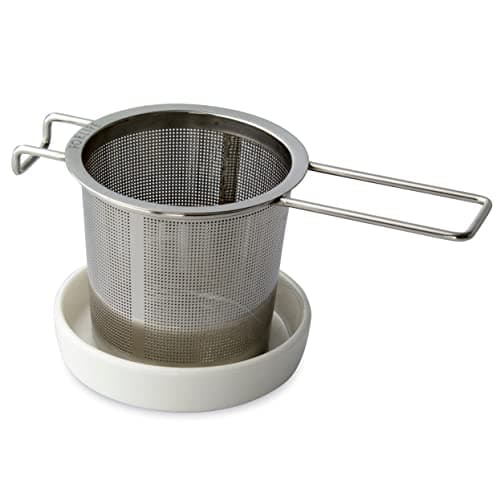 FORLIFE Extra-fine Tea Infuser & Dish SetTop pickA 0.3 mm extra-fine stainless basket with a ceramic rest dish in the same box. The published mesh gauge is rare in this category and the dish solves the problem every strainer creates. | The strainer that comes with somewhere to put it | Extra-fine 0.3 mm holes | |
| 2 | 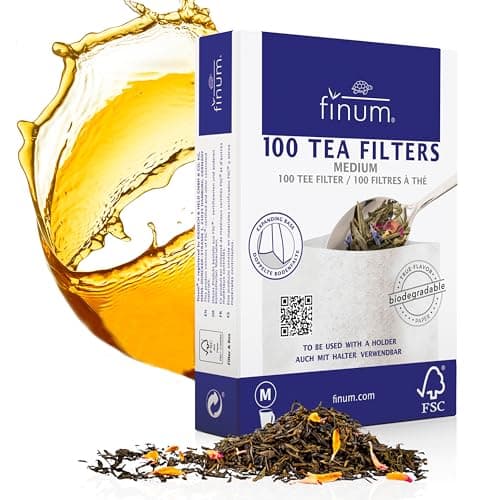 finum Paper Tea Filters, Size M (100 count)A paper filter has no mesh for fine leaf to slip through. For rooibos that is the whole argument, and the trade is a disposable filter per cup. | Rooibos and fine-cut blends, with the least sediment | Abaca pulp, cellulose and sealing fibers, with no glue or other binding agent | |
| 3 | 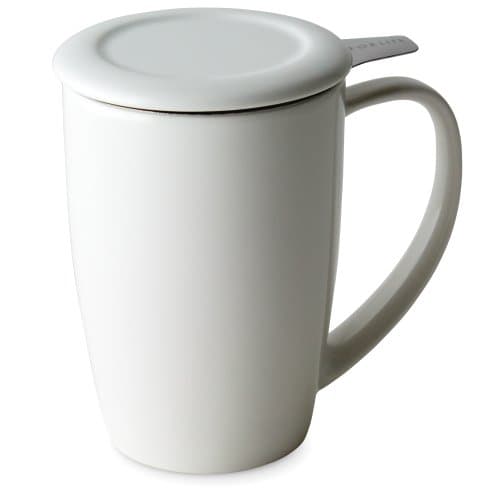 FORLIFE Curve Tall Tea Mug with Infuser and LidMug, infuser and lid designed together, so the infuser actually fits and the lid actually holds it when you pull it out. | One object instead of three | 15 oz | |
| 4 | 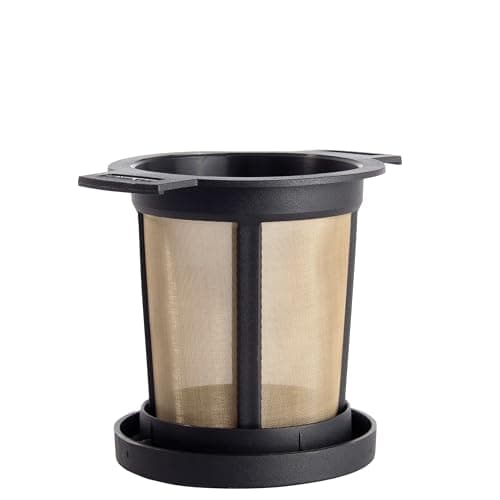 finum Brewing BasketA tall stainless mesh basket with a lid that flips over into a drip tray. Ten dollars, and it makes better tea than most infusers costing five times more. | The first thing to buy, full stop | Stainless-steel micro-mesh | |
| 5 | 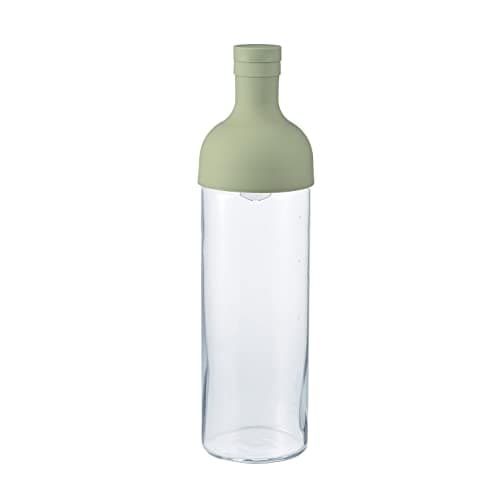 HARIO Cold Brew Tea Filter-in Bottle, 750 mlA 750 ml glass bottle with a built-in filter, made for brewing tea in the refrigerator. Cold extraction is slow enough that leaving the leaves in stops being a mistake. | Cold brew, and the one bottle we would carry | 750 ml |
Top pick · The strainer that comes with somewhere to put it
FORLIFE Extra-fine Tea Infuser & Dish Set
A 0.3 mm extra-fine stainless basket with a ceramic rest dish in the same box. The published mesh gauge is rare in this category and the dish solves the problem every strainer creates.
#ad · how this is funded · price checked September 17, 2026
Published specifications
- Mesh
- Extra-fine 0.3 mm holesSource: FORLIFE Design — Extra-fine Tea Infuser & Dish Set
- Infuser material
- Stainless steel, dishwasher safeSource: FORLIFE Design — Extra-fine Tea Infuser & Dish Set
- Dish material
- Lead-free high-fired ceramic, dishwasher safe and microwavableSource: FORLIFE Design — Extra-fine Tea Infuser & Dish Set
- Fit
- Designed to fit a variety of teacups and teapotsFORLIFE does not publish a diameter range, so measure your mug before buying.Source: FORLIFE Design — Extra-fine Tea Infuser & Dish Set
- Care
- Baking soda dissolved in warm water for tea stainsSource: FORLIFE Design — Extra-fine Tea Infuser & Dish Set
What the numbers mean
0.3 mm is the number to look for and almost nobody publishes it. At that gauge rooibos, broken-leaf blends and fine-cut botanicals stay in the basket instead of settling as silt in the bottom of the cup.
The ceramic dish looks like packaging filler and is the most useful part of the set. Every strainer creates the same problem the moment the steep ends: you are holding a dripping metal object in a kitchen with nowhere to put it.
FORLIFE describes the fit as a variety of teacups and teapots without publishing a diameter range, which is the one gap here. Measure the inside rim of the mug you actually use.
Good for
- Published 0.3 mm mesh gauge, which is unusual in this category
- Comes with its own rest dish rather than needing a saucer
- Both pieces published as dishwasher safe
- Works in a mug or over a cup, so it suits either method
Against it
- No published diameter range, so fit is on you to check
- Ceramic dish is one more thing to break
- Extra-fine mesh clogs sooner than a coarse one and needs rinsing while wet
Skip it ifSkip it if your teapot already has a wide built-in basket. You would be buying a second solution to a problem the pot already solves.
Pick 2 · Rooibos and fine-cut blends, with the least sediment
finum Paper Tea Filters, Size M (100 count)
A paper filter has no mesh for fine leaf to slip through. For rooibos that is the whole argument, and the trade is a disposable filter per cup.
#ad · how this is funded · price checked September 17, 2026
Published specifications
- Material
- Abaca pulp, cellulose and sealing fibers, with no glue or other binding agentSource: finum — 100 TEA FILTERS M
- Paper
- Chlorine-free bleached, FSC-certified and biodegradableSource: finum — 100 TEA FILTERS M
- Size
- 130 mm long x 100 mm wideSource: finum — 100 TEA FILTERS M
- Intended for
- Cup portions and small pitchersSource: finum — 100 TEA FILTERS M
- Base
- Expanding base that gives the leaves room to unfoldSource: finum — 100 TEA FILTERS M
- Use
- With a holder such as a clip, click mount or stickfinum sells the holders separately. Without one, the open top of the filter has to be folded over the rim of the mug so it does not slide in.Source: finum — 100 TEA FILTERS M
- In the pack
- 100 filtersSource: finum — 100 TEA FILTERS M
- Made in
- GermanySource: finum — 100 TEA FILTERS M
- Pore size
- Not verifiedPaper has no mesh gauge, and finum publishes no pore size. We have not measured one.
What the numbers mean
Every mesh infuser has holes, and any piece of leaf smaller than the holes goes through. A paper filter does not work that way, which is why coffee drinkers use paper to keep grounds out of the cup and why it is the most thorough answer to fine-cut tea.
The expanding base is the detail that makes a paper filter acceptable for loose leaf rather than a tea bag you fill yourself. finum publishes it specifically as giving the leaves room to unfold, which is the same thing a good basket infuser is trying to do.
The cost is the one a basket does not have: you throw one away every cup. At 100 to a pack that is a small recurring spend and a bin full of wet paper, both of which are worth being honest about before you commit.
Good for
- No mesh screen for fine leaf to slip through
- Nothing to scrub out of a clogged screen afterward
- Materials and construction published, including no glue
- The cheapest pick on the page to try
Against it
- Disposable, one filter per cup
- Needs a holder, sold separately, or a careful fold over the rim
- No published pore size
- A wet paper filter to throw away after every cup
Skip it ifSkip it if you drink rooibos every day and dislike single-use anything. A reusable 0.3 mm mesh gets you most of the way there with nothing to throw away.
Pick 3 · One object instead of three
FORLIFE Curve Tall Tea Mug with Infuser and Lid
Mug, infuser and lid designed together, so the infuser actually fits and the lid actually holds it when you pull it out.
#ad · how this is funded · price checked September 17, 2026
Published specifications
- Infuser
- Extra-fine 0.3 mm gauge stainless steelSource: FORLIFE Design — Curve Tall Tea Mug with Infuser & Lid, 15 oz.
- Mug and lid
- Lead-free high-fired ceramicSource: FORLIFE Design — Curve Tall Tea Mug with Infuser & Lid, 15 oz.
- Care
- Mug is microwave and dishwasher safe; keep the infuser out of the microwaveSource: FORLIFE Design — Curve Tall Tea Mug with Infuser & Lid, 15 oz.
- Dimensions
- 5.5 x 3.625 x 5.125 inSource: FORLIFE Design — Curve Tall Tea Mug with Infuser & Lid, 15 oz.
What the numbers mean
0.3 mm gauge is the number that separates this from a generic mesh basket. It holds rooibos and fine-cut leaf that a coarser infuser lets straight through.
The lid is the part people underestimate. It keeps the water hot for the whole steep, which is the difference between a three-minute brew and a three-minute cooling-off period, and then it becomes the dish you park the wet infuser on.
Fifteen ounces is a large mug. If you drink 8 oz cups, you will be brewing to half depth and the leaf ratio changes with it.
Good for
- The infuser fits the mug, because they were designed together
- Extra-fine mesh handles rooibos and broken leaf
- The lid holds heat during the steep and catches drips after it
Against it
- Ceramic, so it will break if you drop it
- 15 oz is more than some people want
- Infuser cannot go in the microwave
Skip it ifSkip it if you already like your mug. A ten-dollar basket in the mug you own is the cheaper and equally good version of this.
Pick 4 · The first thing to buy, full stop
finum Brewing Basket
A tall stainless mesh basket with a lid that flips over into a drip tray. Ten dollars, and it makes better tea than most infusers costing five times more.
Published specifications
- Filter
- Stainless-steel micro-meshSource: finum — Brewing Basket M
- Frame
- Heat-tolerant, BPA-freeSource: finum — Brewing Basket M
- Cleaning
- Dishwasher safeSource: finum — Brewing Basket M
- Made in
- GermanySource: finum — Brewing Basket M
- In the box
- One basket with a lid that doubles as a drip-off traySource: finum — Brewing Basket M
What the numbers mean
The reason a basket beats a ball is volume. Tea leaves triple in size as they hydrate, and a basket gives them room to do it while a ball crushes them into a pellet that only wets on the outside.
Micro-mesh matters for the fine stuff. Rooibos and broken-leaf teas go straight through a coarse strainer and end up as silt in the bottom of the cup.
The lid-becomes-a-drip-tray detail sounds like marketing until you have carried a dripping infuser across a kitchen once.
Good for
- Enough room for leaves to actually open
- Micro-mesh holds fine-cut and broken leaf
- Dishwasher safe, so cleaning is not a ritual
Against it
- Sized to a mug opening — measure yours before buying
- Mesh eventually stains, which is cosmetic
- Nothing about it is beautiful
Skip it ifSkip it only if your mug is narrower than the basket. Measure the opening; the medium and large sizes fit different mugs and the wrong one perches uselessly on the rim.
Pick 5 · Cold brew, and the one bottle we would carry
HARIO Cold Brew Tea Filter-in Bottle, 750 ml
A 750 ml glass bottle with a built-in filter, made for brewing tea in the refrigerator. Cold extraction is slow enough that leaving the leaves in stops being a mistake.
#ad · how this is funded · price checked September 17, 2026
Published specifications
- Materials
- Heatproof glass bottle, polypropylene strainer, silicone rubber spout stopperSource: HARIO USA — Cold Brew Tea Filter-in Bottle, 750 ml
- Dimensions
- W87 x D84 x H300 mmSource: HARIO USA — Cold Brew Tea Filter-in Bottle, 750 ml
- Care
- All components remove for washing and are dishwasher safeSource: HARIO USA — Cold Brew Tea Filter-in Bottle, 750 ml
- Method
- Fill to the 750 ml mark, insert the stopper, brew in the refrigerator 3-6 hoursSource: HARIO USA — Cold Brew Tea Filter-in Bottle, 750 ml
What the numbers mean
This is the exception to our standing advice against brewing in a bottle. That advice is about hot brewing, where leaves left in water over-extract into bitterness within minutes. Cold extraction runs so much slower that a three-to-six-hour window is the method rather than a mistake.
The filter is polypropylene rather than steel, which is worth knowing if you avoid plastic in the water path. It is a cold-water contact, which is the mildest condition a plastic ever sees.
At 300 mm tall it is a refrigerator-door object, not a handbag one. Check your shelf before buying.
Good for
- Purpose-built for cold brewing, where leaving leaves in is correct
- Every part removes and is published dishwasher safe
- Published dimensions, which is rare in this category
- 750 ml is two or three glasses from one brew
Against it
- Polypropylene filter rather than stainless
- 300 mm tall, so it needs a real refrigerator shelf
- Glass, so not the bottle for a backpack
- Not for hot brewing, which is most of what this site is about
Skip it ifSkip it if you want hot tea on a commute. Brew hot at home, strain, and carry it in an insulated mug instead.
How we judged these
Most infuser roundups rank on looks, capacity and price. For rooibos none of those is the deciding factor, so we ranked on four things in this order, and threw out any claim a maker does not publish.
- What actually holds the leaf back, and whether the maker says how fine it is. A published mesh gauge beats a marketing word like fine or micro, because only a number can be compared against the leaf.
- Whether the leaf has room to open. Art of Tea's own guidance is to give the leaves room to expand by using an infuser with space to swell rather than a cramped metal ball.
- What cleaning looks like after a fine-cut tea. Fine leaf lodges in mesh in a way whole leaf does not, so reusable and disposable formats trade effort against waste.
- Whether it suits how rooibos is brewed: a full boil and a long steep. That rules nothing out, but it changes which features matter.
Price came last. Every pick here is inexpensive next to the tea you will put through it over a year, and the cheapest wrong infuser is still a waste of money.
Why rooibos defeats most infusers
The South African Rooibos Council publishes how the leaf is made, and one line explains the whole problem: after harvest, the shoots are bound into sheaves and cut to less than 4 mm. What goes into your infuser is not a whole leaf that unfurls. It is leaves and stems chopped short before they are ever dried.
Less than 4 mm is a ceiling, not a description of every piece. Cutting anything that finely also produces smaller fragments and some dust, and nobody publishes that distribution. So the right question is not whether an infuser holds 4 mm pieces — almost all of them do — but how much of the finer material gets through.
That is why this site keeps saying coarse mesh is fine for big whole-leaf tea and hopeless for rooibos. A rolled oolong expands to many times its dry size and cannot fit through anything. Rooibos starts small and stays small.
How rooibos wants to be brewed, and what that means for gear
The Rooibos Council states plainly that rooibos is not a true tea but a herb, and that what you brew from it is a herbal infusion — a tisane. Art of Tea publishes 200 to 212°F and 5 to 7 minutes for herbal tisanes, and notes that you cannot really over-steep one. Its rule of thumb for dose is about one tablespoon of loose leaf per 8 ounces of water.
Three consequences follow for what you buy. First, you need no temperature control: a full boil is correct, so any kettle you already own will do. Second, the long steep means the infuser sits in hot water for a while, so a lid that keeps the mug warm earns its place more than it does for a two-minute green tea. Third, leaving the infuser in a little too long is not the disaster it is with black tea — which makes a no-fuss format more forgiving here than elsewhere.
The Rooibos Council also publishes that rooibos is naturally caffeine free, which makes it a natural evening drink. That has nothing to do with the infuser, but it is worth knowing if the gear you are choosing is for a single mug at night.
| Pick | What holds the leaf | Gauge published | Reusable |
|---|---|---|---|
| FORLIFE Extra-fine Infuser and Dish Set | Stainless mesh basket | Yes - 0.3 mm | Yes |
| finum Paper Tea Filters, Size M | Paper filter with an expanding base | No mesh to gauge; no pore size published | No - one per cup |
| FORLIFE Curve Tall Tea Mug | Stainless infuser designed into the mug | Yes - 0.3 mm | Yes |
| finum Brewing Basket | Stainless steel micro-mesh | No | Yes |
| HARIO Cold Brew Filter-in Bottle | Polypropylene strainer in the neck | No | Yes |
The pick for most people
FORLIFE's Extra-fine Tea Infuser and Dish Set publishes extra-fine 0.3 mm holes, a stainless steel basket that is dishwasher safe, a lead-free high-fired ceramic rest dish that is dishwasher safe and microwavable, and a fit described as suiting a variety of teacups and teapots.
The gauge is the reason it is first. It is the finest published mesh we could find in this category, and against a leaf cut to under 4 mm a published opening size is the most useful number available. The rest dish is the reason it is not just an infuser: a long rooibos steep ends with a hot, dripping basket, and this one arrives with somewhere to put it.
Against it: FORLIFE does not publish a diameter range, so measure the inside rim of the mug you actually use before ordering. Extra-fine mesh also clogs sooner than coarse mesh, and it needs rinsing while it is still wet — fine rooibos that dries into a 0.3 mm screen is a chore to get out. And 0.3 mm is fine, not absolute; the dust fraction of a cut tea can still pass.
The paper option, for the least sediment
A paper filter works differently from any mesh. There is no screen with holes of a fixed size for a fragment to slip through, which is the same reason coffee drinkers use paper to keep grounds out of the cup. If a trace of sediment at the bottom of the mug bothers you, paper is the format that addresses it.
finum publishes its Size M filters as abaca pulp, cellulose and sealing fibers with no glue or other binding agent, chlorine-free bleached, FSC-certified and biodegradable, 130 mm long by 100 mm wide, 100 to a pack, made in Germany, and intended for cup portions and small pitchers. It also publishes an expanding base designed to give the leaves room to unfold, which is what separates a filter meant for loose tea from a bag you stuff.
Against it: it is disposable, so there is a recurring cost and a wet filter to throw away every cup. finum publishes it for use with a holder — a clip, click mount or stick, sold separately — and without one you have to fold the open top over the rim so it does not slide into the mug. And finum publishes no pore size, so we cannot give you a number for it the way we can for FORLIFE's mesh.
If you want one object instead of two
FORLIFE's Curve Tall Tea Mug with Infuser and Lid publishes the same extra-fine 0.3 mm gauge for its infuser, a 15 oz capacity, lead-free high-fired ceramic for the mug and lid, dimensions of 5.5 by 3.625 by 5.125 inches, and care instructions: the mug is microwave and dishwasher safe, and the infuser stays out of the microwave.
For rooibos the lid does two jobs. It holds the heat in over a five-to-seven-minute steep, and it becomes the rest for the wet infuser when you lift it out. Because the infuser was designed for this mug, fit is not a question you have to answer with a tape measure.
Against it: it is the most expensive way to get a 0.3 mm mesh on this page, because you are buying a mug as well. If you already own a mug you like, the dish set gets you the same gauge for the infuser alone. It is also ceramic, so it breaks, and 15 oz is one serving.
The basket you might already own
The finum Brewing Basket is the infuser this site recommends more than any other, and for most teas it is still the right first purchase. finum publishes stainless-steel micro-mesh, a heat-tolerant BPA-free frame, dishwasher safety, made in Germany, and a lid that doubles as a drip-off tray.
For rooibos specifically it is fourth, and the reason is honest rather than damning: finum does not publish a mesh gauge. Micro-mesh is finum's word and we cannot convert it into a number to set beside 0.3 mm. It has a tall, wide shape that gives leaves plenty of room, which Art of Tea's guidance favors — we simply cannot tell you how much of a fine-cut tea gets through it.
If you already own one, try your rooibos in it before buying anything. If the bottom of the mug is clean enough for you, you are done. If it is not, the dish set or the paper filters are the fix, and the basket stays useful for every other tea you drink.
Cold-brewed rooibos
How to cold brew rooibos is a common question, and the HARIO Cold Brew Tea Filter-in Bottle is the tool on this site built for cold brewing. HARIO publishes a 750 ml heatproof glass bottle, a polypropylene strainer, a silicone rubber spout stopper, dimensions of W87 x D84 x H300 mm, all components removable and dishwasher safe, and a method: fill to the 750 ml mark, insert the stopper, and brew in the refrigerator for 3 to 6 hours.
That method is HARIO's published guidance for the bottle, not a rooibos-specific figure, and we are not going to invent a rooibos cold-brew time. Start inside HARIO's window and adjust to taste.
Against it for this use: HARIO publishes no gauge for the strainer, so like the finum basket it is a judgment by eye for a fine-cut tea. It is also a bottle rather than a mug infuser, which makes it the right pick only if cold rooibos is what you actually want.
Does green rooibos change any of this
No. The Rooibos Council publishes that green rooibos comes from the same plant as traditional rooibos; the difference is that traditional rooibos is crushed and fermented before drying, while green rooibos skips fermentation and is dried directly. It describes green rooibos as lighter in color with a very mild taste.
What it does not describe is a different cut. The harvest and cutting step comes before the fermentation split, so the infuser advice on this page applies to both.
Cleaning a mesh that rooibos has been through
Fine leaf lodges in fine mesh, and it is far easier to shift wet than dry. Tip the spent leaves into the bin while the infuser is still warm, rinse from the outside in so water pushes fragments back through the way they came, and do it before the infuser sits.
For staining, FORLIFE publishes baking soda dissolved in warm water for its dish set. The finum basket and the HARIO bottle's parts are published as dishwasher safe.
What not to use
- A tea ball. It packs the leaf into a sphere with no room to swell, which Art of Tea's guidance explicitly steers away from, and many balls have openings far coarser than a tea cut to under 4 mm needs.
- A coarse two-handled strainer with visible holes. Fine for a whole-leaf pot. For rooibos, fine leaf will pass holes you can see.
- Novelty silicone infusers. They are tea balls with a costume on, with the same shortage of room for the leaf to swell.
- A teapot's built-in narrow tube strainer, if the pot has one. Check how fine it is before you trust it with rooibos.
What we did not do
We did not test any of these with rooibos. There is no sediment measurement on this page, no comparison of how much passes each screen and no tasting, because we have run none of it. The 0.3 mm figure is FORLIFE's own published number, the less-than-4 mm cut comes from the South African Rooibos Council, and the brewing guidance is Art of Tea's published advice for herbal tisanes. Where a maker publishes no gauge, we say so rather than estimating one.
Questions
What is the best tea infuser for rooibos?
One with a published fine mesh gauge. FORLIFE publishes 0.3 mm holes for the infuser in its Extra-fine Tea Infuser and Dish Set, the only mesh figure any maker on this site publishes. If you want as little sediment as possible, a paper tea filter is the more thorough option, at the cost of being disposable.
Why does rooibos go through my tea infuser?
Because it is cut very finely. The South African Rooibos Council publishes that harvested rooibos is cut to less than 4 mm, leaves and stems together. That is a ceiling, and a cut that fine produces smaller fragments too - any infuser with openings larger than those fragments lets them through.
Can you use a tea ball for rooibos?
It is the worst format for it. A ball packs the leaf with no room to swell, which Art of Tea's guidance steers away from, and many balls have openings far coarser than a tea cut to under 4 mm. Expect leaf in the cup.
How long should you steep loose rooibos?
Rooibos is a herbal infusion rather than a true tea, according to the South African Rooibos Council. Art of Tea publishes 200 to 212°F and 5 to 7 minutes for herbal tisanes, and notes you cannot really over-steep one.
Do you need a special kettle for rooibos?
No. Art of Tea's guidance for herbal tisanes is 200 to 212°F, which is a full boil, so any kettle that boils water is correct. Temperature control only matters for teas that want water below boiling.
Are paper tea filters good for rooibos?
They are the most thorough option, because paper has no mesh for fine leaf to slip through. finum publishes an expanding base on its Size M filters to give the leaves room to unfold. The trade is one disposable filter per cup, and finum publishes them for use with a holder.
Sources
Every figure on this page came from one of these, retrieved during the research pass for this article. Where a maker publishes nothing we could verify, the page says so instead of substituting a number.
- SA Rooibos Council — Frequently Asked Questions
- Art of Tea — recommended steep times and temperatures
- FORLIFE Design — Extra-fine Tea Infuser & Dish Set
- finum — 100 TEA FILTERS M
- FORLIFE Design — Curve Tall Tea Mug with Infuser & Lid, 15 oz.
- finum — Brewing Basket M
- HARIO USA — Cold Brew Tea Filter-in Bottle, 750 ml
Read next
- The best tea infusersFour infusers, one of which we tell you not to buy. The format matters more than the brand.
- The best tea strainersStrainers ranked on published mesh gauge and format, including the only pick here that tells you how fine its mesh actually is.
- Tea infuser vs tea strainerAn infuser contains the leaves while they brew; a strainer catches them on the way out. The strainer makes marginally better tea and one more thing to wash.
- Basket vs ball infuserA ball cannot hold enough leaf and give it room to expand at the same time. That is the whole comparison.
- How to clean a tea infuserFive-second daily cleaning, the soak that clears a clogged mesh, and what the brown stain actually is.
- The best tea mugs with infusersInfuser mugs where the three pieces were designed together, and why the lid matters more than the mug.