Coming From Coffee
How to make tea in a French press
You already own one of the better tea brewers there is. The plunge solves a problem teapots have never solved.
We earn a commission if you buy through the links on this page, at no extra cost to you. It does not change which products we name or what we say about them — how this is funded.
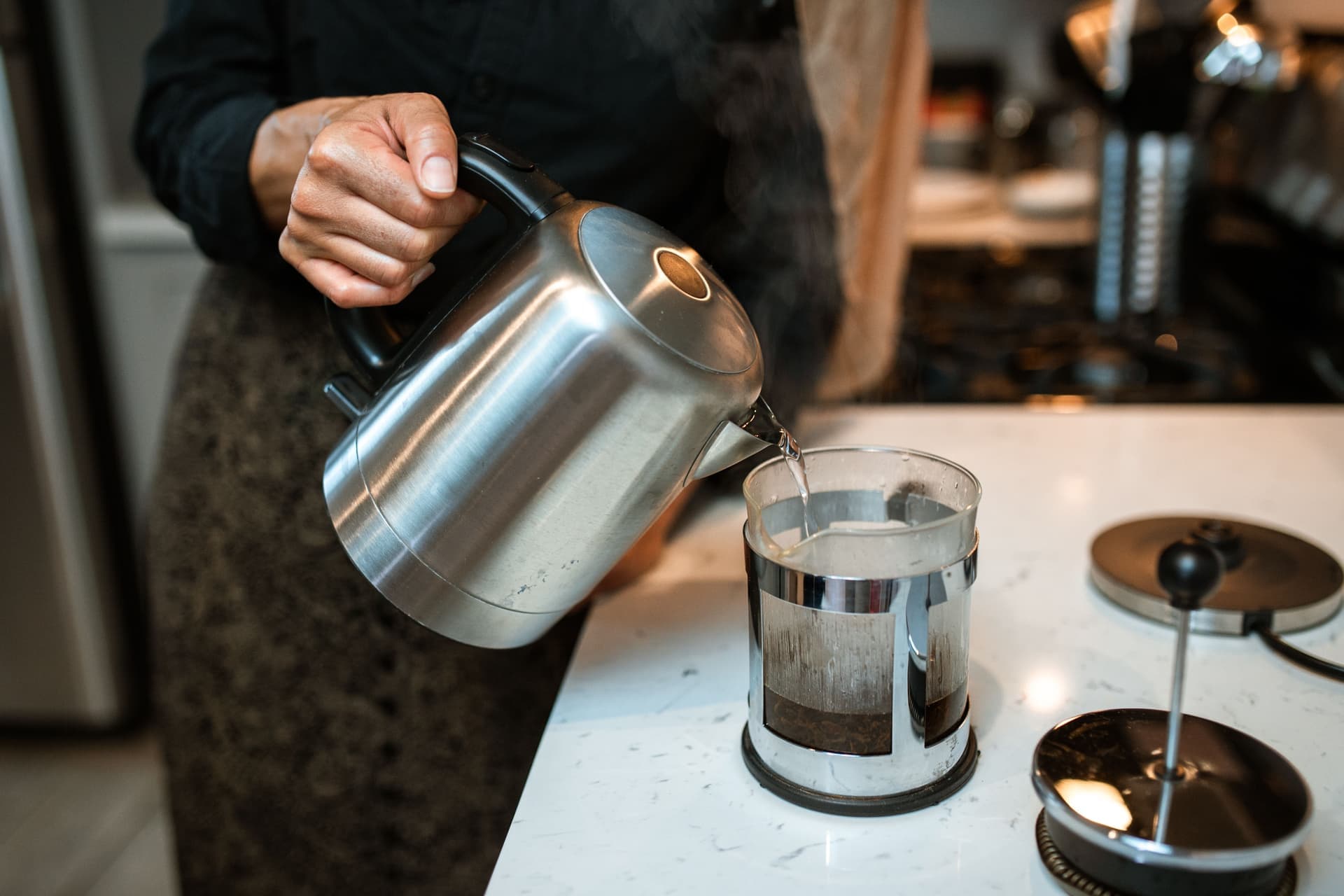
Put loose leaf in the press, add water at the temperature the tea wants, wait, plunge gently, and pour. That is it. A French press is a tea press with a coarser filter, and the plunge does something no ordinary teapot does: it ends the extraction on purpose.
The method
- Rinse the press thoroughly with hot water if it has been used for coffee. Do this properly — coffee oils cling, and the first cup will tell on you.
- Add loose leaf. Art of Tea publishes about a tablespoon per 8 ounces of water; scale it to the press volume.
- Add water at the right temperature: 160-180F for green, 185-205F for oolong, 200-212F for black and herbal.
- Put the lid on with the plunger raised. The lid keeps the heat in during the steep, which matters as much here as in a mug.
- Steep to time. One to three minutes for green and white, three to five for black.
- Plunge gently, then pour all of it out.
Why the plunge is the point
Every ordinary teapot has the same flaw: the leaves keep sitting in the remaining water after the first cup, so by the third cup the pot has been extracting for fifteen minutes and the tea is bitter.
Plunging drops the leaves below the filter and ends the extraction mechanically. That is the whole reason purpose-built tea presses exist — the Bodum Assam is the same mechanism with a finer filter and a 34 oz body serving three to four.
One caveat: plunging slows extraction dramatically rather than stopping it dead, because the leaves are still in contact with the liquid. Pour it all out into cups or a serving jug if you are not drinking it immediately.
The two things that go wrong
1. It tastes of coffee
Coffee oils are stubborn, and the fine mesh and the plunger seal both hold onto them. Wash it properly with hot soapy water, rinse thoroughly, and accept that the first tea you make in a heavily used coffee press may still carry a trace.
If you drink both regularly, a second press for tea is a genuinely reasonable purchase, and it is cheaper than most teapots.
2. Silt in the cup
French press mesh is coarser than a tea filter because coffee grounds are larger and more uniform than broken tea leaf. Fine-cut tea, rooibos and broken-leaf blends will get through.
Two fixes: use whole-leaf tea, which is what you should be buying for a press anyway, and plunge slowly. Forcing the plunger drives fine particles through the mesh.
Which teas suit it
| Tea | Suits a press? | Why |
|---|---|---|
| Whole-leaf black | Very well | Large leaf, coarse mesh, no silt |
| Rolled oolong | Very well | Full room to expand, and it re-steeps |
| Whole-leaf green | Well, at 160-180F | Watch the temperature; the press does not |
| Herbal tisanes | Well | Bulky material, and 5-7 minutes suits the format |
| Fine-cut or broken leaf | Poorly | Passes straight through the mesh |
| Rooibos | Poorly | Very fine; you will get silt |
The advantage over an infuser
Leaves in a press have the entire vessel to move in, with nothing constraining them. That is the same reason a strainer beats an infuser on flavor, and it is the best extraction you can get short of brewing loose and straining.
For one mug, an infuser is easier. For two or three people, a press is the better tool and you probably already own it.
Re-steeping in a press
Works well. Lift the plunger, add water, steep a little longer than the first round, plunge again. Whole-leaf oolong and pu-erh will give several rounds this way.
Do not leave the leaves sitting in the press between rounds for hours. Wet leaf left in warm water goes stale quickly.
Questions
Can you make tea in a French press?
Yes, and it works well. Leaves go loose in the water and the plunge ends the extraction, which is exactly what a purpose-built tea press does with a finer filter.
How do you stop French press tea tasting of coffee?
Wash it thoroughly with hot soapy water, paying attention to the mesh and the plunger seal, and rinse well. A heavily used coffee press may still carry a trace on the first brew.
Why is there silt in my French press tea?
French press mesh is coarser than a tea filter because coffee grounds are larger and more uniform. Use whole-leaf tea rather than fine-cut or rooibos, and plunge slowly.
Should I pour French press tea out straight away?
Yes. Plunging slows extraction rather than stopping it completely, because the leaves are still touching the liquid. Pour it all into cups or a jug.
Sources
Every figure on this page came from one of these, retrieved during the research pass for this article. Where a maker publishes nothing we could verify, the page says so instead of substituting a number.
Read next
- Use your coffee gear for teaItem by item through a coffee setup: what transfers to tea, what does not, and the ten dollars that completes it.
- How to brew loose-leaf tea without an infuserFour no-equipment methods, honestly ranked, and the ten-dollar object that beats all of them.
- The best teapots with infusersBuilt-in infusers ranked by basket geometry, which is the only thing that separates a good one from a bad one.
- Tea for coffee drinkersWhich teas suit a coffee palate, which of your coffee gear already works, and the two cheap things you still need.
- How to brew loose-leaf teaThe complete method in five steps, with published parameters and the four mistakes that account for most bad cups.
- Bodum Assam Tea Press reviewA 34 oz glass press that ends extraction with a plunge. The mechanism is the product; the thin spec sheet is the cost.