Coming From Coffee · Best switch kit
Tea for coffee drinkers
Every other page answering this question recommends teas. The more useful answer is that your kettle already does the job.
We earn a commission if you buy through the links on this page, at no extra cost to you. It does not change which products we name or what we say about them — how this is funded.
Buy the finum Brewing Basket. If you make pour-over or French press coffee, that ten-dollar object is very close to the only thing standing between your current kitchen and a complete loose-leaf setup. Your kettle, your scale, your timer and — if you own one — your press all transfer directly.
| # | Product | Best for | What it adds | Price |
|---|---|---|---|---|
| 1 | 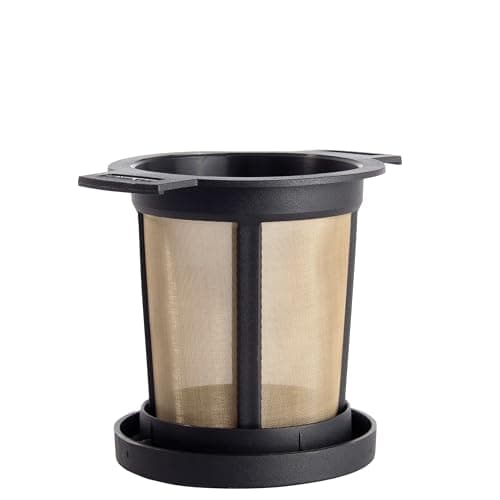 finum Brewing BasketTop pickA tall stainless mesh basket with a lid that flips over into a drip tray. Ten dollars, and it makes better tea than most infusers costing five times more. | The first thing to buy, full stop | Stainless-steel micro-mesh | |
| 2 | No image Various Porcelain GaiwanA lidded bowl you brew in and pour from. The cheapest object on this site and the one that teaches you the most. | Tasting a tea properly for the least money | not verified | Check price#ad |
| 3 | No image Various Airtight, Opaque Tea TinTea goes stale from air, light, heat and moisture. A tin fixes all four for a few dollars, and a glass jar on a windowsill fixes none. | Not wasting the tea you just bought | not verified | Check price#ad |
| 4 | No image Various Instant-Read Kitchen ThermometerFifteen dollars of thermometer does most of what a hundred dollars of kettle does. It is the highest-leverage thing on this page. | Turning any kettle into a variable-temperature kettle | not verified | Check price#ad |
Top pick · The first thing to buy, full stop
finum Brewing Basket
A tall stainless mesh basket with a lid that flips over into a drip tray. Ten dollars, and it makes better tea than most infusers costing five times more.
#ad · how this is funded · price checked October 17, 2026
Published specifications
- Filter
- Stainless-steel micro-meshSource: finum — Brewing Basket M
- Frame
- Heat-tolerant, BPA-freeSource: finum — Brewing Basket M
- Cleaning
- Dishwasher safeSource: finum — Brewing Basket M
- Made in
- GermanySource: finum — Brewing Basket M
- In the box
- One basket with a lid that doubles as a drip-off traySource: finum — Brewing Basket M
What the numbers mean
The reason a basket beats a ball is volume. Tea leaves triple in size as they hydrate, and a basket gives them room to do it while a ball crushes them into a pellet that only wets on the outside.
Micro-mesh matters for the fine stuff. Rooibos and broken-leaf teas go straight through a coarse strainer and end up as silt in the bottom of the cup.
The lid-becomes-a-drip-tray detail sounds like marketing until you have carried a dripping infuser across a kitchen once.
Good for
- Enough room for leaves to actually open
- Micro-mesh holds fine-cut and broken leaf
- Dishwasher safe, so cleaning is not a ritual
Against it
- Sized to a mug opening — measure yours before buying
- Mesh eventually stains, which is cosmetic
- Nothing about it is beautiful
Skip it ifSkip it only if your mug is narrower than the basket. Measure the opening; the medium and large sizes fit different mugs and the wrong one perches uselessly on the rim.
image
Pick 2 · Tasting a tea properly for the least money
Various Porcelain Gaiwan
A lidded bowl you brew in and pour from. The cheapest object on this site and the one that teaches you the most.
#ad · how this is funded · price checked October 17, 2026
Published specifications
- Typical capacity
- Not verifiedGaiwan are made by hundreds of small producers with no common spec sheet. 100-150 ml is the usual range for the ones sold for tasting.
- Material
- Not verifiedPorcelain is standard and is what we would buy; glass and clay versions exist. No single maker to cite.
What the numbers mean
A gaiwan is three pieces: a bowl, a lid and a saucer. You put leaves in, add water, and use the lid as a gate to pour the liquor off. There is no mechanism to fail and nothing to clean but a bowl.
The reason to own one as a beginner is that short repeated infusions show you what a tea actually tastes like at each stage. A three-minute mug steep averages all of that into one flavor.
There is no manufacturer to cite because there is no single manufacturer. That is honest to state rather than paper over with a spec sheet borrowed from a listing.
Good for
- Costs less than most infusers
- No mechanism, no filter, nothing to replace
- Short infusions teach you more about a tea than a long one
Against it
- The rim gets hot until you learn the grip
- Small volume, so you pour often
- No published specifications anywhere in the category
Skip it ifSkip it if you want to walk away mid-steep. A gaiwan needs you present; that is the point and also the drawback.
image
Pick 3 · Not wasting the tea you just bought
Various Airtight, Opaque Tea Tin
Tea goes stale from air, light, heat and moisture. A tin fixes all four for a few dollars, and a glass jar on a windowsill fixes none.
#ad · how this is funded · price checked October 17, 2026
Published specifications
- Seal type
- Not verifiedDouble-lid tins seal better than single-lid ones; no maker here publishes a comparable figure.
What the numbers mean
The clear-jar mistake is the one we see most. Loose leaf looks beautiful in glass, and light is one of the four things that degrade it.
Opaque and airtight are the two properties that matter. Everything else is decoration.
Keep it out of the cupboard above the hob. Heat is the fourth enemy and that is the hottest spot in most kitchens.
Good for
- Cheapest possible protection for tea you already paid for
- Blocks light, which a glass jar cannot
- Stacks, unlike the bags tea ships in
Against it
- No comparable published specification anywhere in the category
- Cheap tins can smell of metal when new
- You will need more than one
Skip it ifSkip it if your tea arrived in a resealable, opaque pouch and you will finish it in a month. That pouch is already doing the job.
image
Pick 4 · Turning any kettle into a variable-temperature kettle
Various Instant-Read Kitchen Thermometer
Fifteen dollars of thermometer does most of what a hundred dollars of kettle does. It is the highest-leverage thing on this page.
#ad · how this is funded · price checked October 17, 2026
Published specifications
- Accuracy
- Not verifiedAccuracy claims vary enormously across this category and we have not verified one for a specific model. Anything claiming plus or minus 1F is more precision than tea needs.
- Read time
- Not verifiedNot verified for a specific model.
What the numbers mean
Tea temperature bands are wide. Art of Tea publishes 160-180F for green and 200-212F for black, and a thermometer that is a couple of degrees out still lands you inside the band.
That is why this beats upgrading a kettle for most beginners: you do not need a kettle that holds 178F, you need to know when the water is roughly there.
The workflow is boil, wait, measure. Boiled water dropping to green-tea temperature in an open mug takes a couple of minutes; the thermometer removes the guessing from that wait.
Good for
- Converts a boil-only kettle into a usable green-tea kettle
- Useful outside tea, unlike everything else on this page
- Cheapest possible fix for the most common beginner mistake
Against it
- One more thing to find in a drawer
- Accuracy claims in this category are not comparable
- Adds a step every single brew
Skip it ifSkip it if you already own a variable-temperature kettle. It measures a number your kettle is already holding.
The gap this page exists to fill
Search for tea for coffee drinkers and you will get lists of teas: strong black blends, matcha, yerba mate, chosen to match a flavor profile. Those lists are fine and they are answering the smaller half of the question.
The larger half is that a coffee drinker with any equipment at all is already most of the way to a tea setup, and almost nobody says so. Here is which parts transfer.
What you already own
| What you own | Works for tea? | Why |
|---|---|---|
| Variable-temperature kettle | Yes, better than most tea kettles | Pour-over sits at 195-205F; tea spans 160-212F |
| Gooseneck spout | Yes, and it matters for small vessels | Filling a gaiwan from a wide spout is a mess |
| Digital scale | Yes, directly | Leaf density varies as much as bean density |
| Timer | Yes | Tea is more time-sensitive than coffee, not less |
| French press | Yes, genuinely well | It is a tea press with a coarser filter |
| Burr grinder | No | Grinding tea destroys the leaf structure |
| Paper filters | No | Paper strips too much; tea has fewer oils to spare |
| Pour-over cone | Only with a metal filter | Same problem as the paper |
Four yeses out of eight, and the four yeses are the expensive ones.
Which teas suit a coffee palate
This part is opinion rather than specification and we are labeling it as such. What follows is reasoning about flavor intensity and body, not a test result.
- Roasted oolong. Dark, toasty and full-bodied, and it re-steeps several times with genuinely different results. If you like a medium-roast coffee, start here.
- Assam or a strong breakfast blend. Malty, brisk, and it takes milk, which makes it the least jarring switch of all.
- Ripe (shou) pu-erh. Earthy and deep, brewed at 205-212F per Art of Tea. It is the tea most often described as having coffee's weight.
- Hojicha. Roasted green tea, low in caffeine, and the roast character is familiar in a way most green tea is not.
The category to approach carefully at first is delicate green and white tea. Those are wonderful and they are the furthest thing from a coffee palate, so they are the most likely to read as thin on the first attempt.
The two things you still need
A basket infuser, or a French press you are willing to rinse thoroughly. And a tin, because tea degrades from air and light in a way whole beans mostly tolerate for longer.
That is genuinely the list. The gaiwan on this page is optional and it is here for a specific reason: short repeated infusions are the closest thing tea has to cupping, and a coffee drinker with a trained palate gets more out of that exercise than almost anyone.
Recalibrating your instincts
Two habits transfer badly and it is worth knowing in advance.
The failure modes do not match. Under-extracted coffee is sour; under-extracted tea is just thin. Over-extracted tea turns bitter and drying much faster than coffee's equivalent, so the instinct to push extraction further is the wrong one here.
And temperature is a much bigger lever. Coffee lives inside a twenty-degree window; tea spans from 160F to 212F depending on type, so getting it wrong is a larger error than any coffee brewing mistake.
What we did not do
We have not conducted a tasting, and the tea recommendations above are reasoning about flavor intensity rather than test results. The temperature figures are Art of Tea's published guidance, cited below.
Questions
What tea should a coffee drinker try first?
A roasted oolong or a strong Assam. Both have the body and intensity a coffee palate expects, and roasted oolong re-steeps several times with genuinely different results each round.
Can I use my coffee kettle for tea?
Yes, and a variable-temperature pour-over kettle is better than most kettles sold for tea. Pour-over sits at 195-205F and tea spans about 160F to 212F, so it covers the whole range.
Can I grind tea leaves like coffee?
No. Grinding destroys the leaf structure that even extraction depends on and produces dust that over-extracts instantly. Matcha is the exception and it is stone-ground far finer.
What tea is closest to coffee?
Ripe pu-erh is the one most often described as having coffee's weight and earthiness. Roasted oolong and hojicha share the toasty character without the intensity.
Sources
Every figure on this page came from one of these, retrieved during the research pass for this article. Where a maker publishes nothing we could verify, the page says so instead of substituting a number.
Read next
- Use your coffee gear for teaItem by item through a coffee setup: what transfers to tea, what does not, and the ten dollars that completes it.
- How to make tea in a French pressThe method, the two things that go wrong, and why the plunge is a genuine advantage over an ordinary teapot.
- Tea vs coffee caffeineWhat the FDA actually publishes about caffeine, why per-cup tea figures are ranges, and the variables that move them.
- The strongest loose-leaf teaWhat strong actually means, why brewing moves it more than leaf choice does, and how to get there without bitterness.
- The best tea infusersFour infusers, one of which we tell you not to buy. The format matters more than the brand.
- Tea kettle vs Keurig for teaKeurig publishes 192F internal and 180-185F in cup. Set against the published tea bands, that decides most of this comparison.