Tea Kettles
The best tea kettles for glass top stoves
A smooth cooktop heats through contact, so the base is the whole specification. One maker on this site publishes it.
We earn a commission if you buy through the links on this page, at no extra cost to you. It does not change which products we name or what we say about them — how this is funded.
Buy the Chantal Classic. It is the only kettle on this site whose maker publishes both of the numbers a glass top actually cares about — a 6.5 inch exterior base diameter and a 5 lb weight — and it states compatibility with all stove types including electric. Every other kettle here requires you to check something the maker did not write down.
| # | Product | Best for | Base and weight | Price |
|---|---|---|---|---|
| 1 | 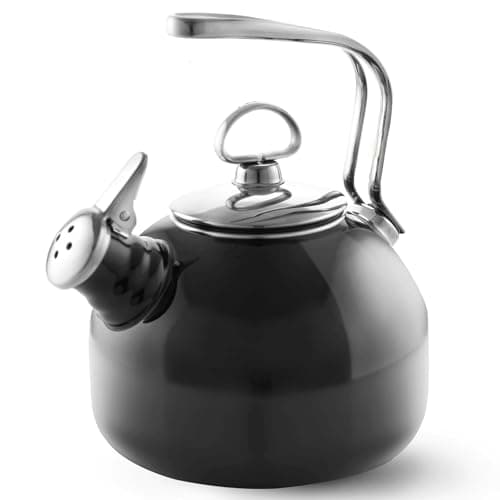 Chantal Enamel-on-Steel Classic Teakettle, 1.8 Qt.Top pickPorcelain enamel over carbon steel, a two-note harmonica whistle, and a published line saying it works on every cooktop including induction. The specification sheet is the reason to buy it. | A stovetop kettle that names every hob type | 1.8 Qt. | |
| 2 | 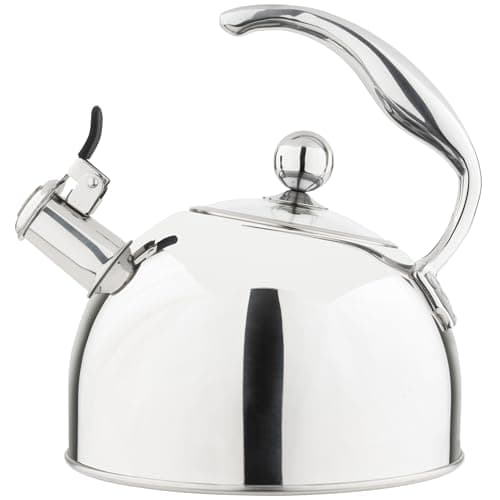 Viking 2.6-Quart Stainless Steel Whistling Kettle with 3-Ply BaseA clad-base stainless kettle that publishes more about itself than anything else in the category, including a Limited Lifetime Warranty nobody else on this site will commit to. | The only kettle here with a lifetime warranty | 2.6 quarts (2.5 liters) | |
| 3 | 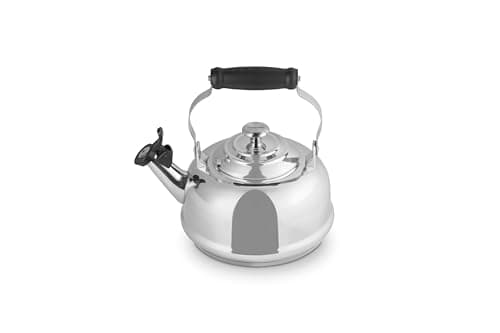 Le Creuset Classic Whistling KettleEnameled carbon steel, works on every heat source including induction, and whistles. It is a kettle, and it is a very good one. | A stovetop kettle you will still own in a decade | 1.7 qt | |
| 4 | 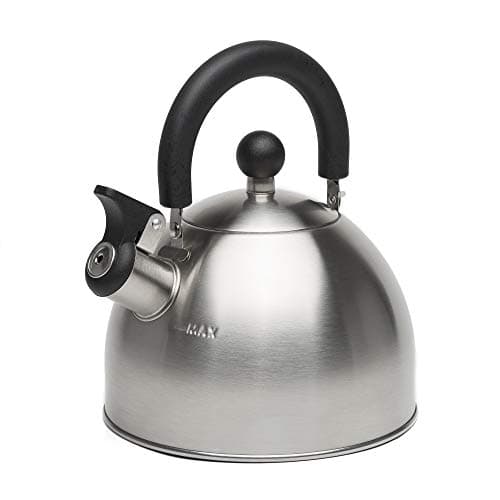 Primula Stewart Whistling Kettle with Folding Handle, 1.5 Qt.A 1.5-quart food-grade stainless whistler with a flip-up spout and a handle that folds flat. It boils water and stores in a drawer, which is the entire brief. | The cheapest kettle on this site that we would actually own | 1.5 qt |
Top pick · A stovetop kettle that names every hob type
Chantal Enamel-on-Steel Classic Teakettle, 1.8 Qt.
Porcelain enamel over carbon steel, a two-note harmonica whistle, and a published line saying it works on every cooktop including induction. The specification sheet is the reason to buy it.
#ad · how this is funded · price checked September 14, 2026
Published specifications
- Functional capacity
- 1.8 Qt.Source: Chantal — Enamel-on-Steel Classic Teakettle (1.8 Qt.) product page
- Construction
- Heavy-duty carbon steel with a US-formulated commercial-grade porcelain glass enamel interiorSource: Chantal — Enamel-on-Steel Classic Teakettle (1.8 Qt.) product page
- Cooktop compatibility
- Suitable for all stove types, including induction, gas and electricCarbon steel is magnetic, which is what makes the induction claim work.Source: Chantal — Enamel-on-Steel Classic Teakettle (1.8 Qt.) product page
- Whistle
- Two-note harmonica whistleSource: Chantal — Enamel-on-Steel Classic Teakettle (1.8 Qt.) product page
- In the box
- Includes a quilted mittSource: Chantal — Enamel-on-Steel Classic Teakettle (1.8 Qt.) product page
- Base diameter
- 6.5 in exteriorSource: Chantal B2B — Enamel-on-Steel Classic Teakettle (1.8 Qt.) spec sheet
- Warranty length
- Not verifiedChantal states a limited warranty but does not publish a duration on the product page.
What the numbers mean
The compatibility line is the whole point. Chantal writes out every cooktop type by name, including induction, rather than using a summary adjective. On a stovetop kettle that is the single specification most worth having in writing, because induction is binary.
Porcelain enamel over carbon steel is the same construction as the Le Creuset, and the properties follow: non-reactive, non-porous, holds no flavors, chips if you knock it hard against a tap.
At 1.8 quarts it is a touch larger than the 1.7-quart norm in this category, which is around seven to eight cups. That is a kettle for a household, and heating it for one mug is slow.
Good for
- Every cooktop type published by name, induction included
- Enamel interior specified as commercial-grade porcelain glass
- The harmonica whistle is genuinely distinctive rather than a marketing line
- A quilted mitt is included rather than sold separately
Against it
- Boiling only, like every stovetop kettle
- No published warranty duration
- Enamel chips, and it is hand-wash territory
- 1.8 quarts is a slow boil if you only want one mug
Skip it ifSkip it if you brew a single mug at a time. Heating nearly two quarts for 300 ml of tea is a habit that wastes both time and energy.
Pick 2 · The only kettle here with a lifetime warranty
Viking 2.6-Quart Stainless Steel Whistling Kettle with 3-Ply Base
A clad-base stainless kettle that publishes more about itself than anything else in the category, including a Limited Lifetime Warranty nobody else on this site will commit to.
Published specifications
- Capacity
- 2.6 quarts (2.5 liters)Source: Viking Culinary — 2.6-Quart Stainless Steel Whistling Kettle with 3-Ply Base
- Body and spout
- 304 stainless steel, with a surgical grade stainless interiorSource: Viking Culinary — 2.6-Quart Stainless Steel Whistling Kettle with 3-Ply Base
- Base
- 3-ply, with an aluminum core between two layers of stainlessAluminum conducts heat far better than steel, so a clad base spreads heat across the whole base instead of concentrating it over the burner.Source: Viking Culinary — 2.6-Quart Stainless Steel Whistling Kettle with 3-Ply Base
- Handle
- High-polished stainless steel, riveted to the pot, with a heat breakA heat break is a deliberate interruption in the metal path so less heat travels from body to handle.Source: Viking Culinary — 2.6-Quart Stainless Steel Whistling Kettle with 3-Ply Base
- Also included
- Removable quilted fabric heat sleeveSource: Viking Culinary — 2.6-Quart Stainless Steel Whistling Kettle with 3-Ply Base
- Lid
- Tempered glassSource: Viking Culinary — 2.6-Quart Stainless Steel Whistling Kettle with 3-Ply Base
- Whistle
- Melodic whistleSource: Viking Culinary — 2.6-Quart Stainless Steel Whistling Kettle with 3-Ply Base
- Cooktop compatibility
- Works on all stovetops, including inductionViking also lists gas, electric, halogen and ceramic.Source: Viking Culinary — 2.6-Quart Stainless Steel Whistling Kettle with 3-Ply Base
- Care
- Hand wash onlySource: Viking Culinary — 2.6-Quart Stainless Steel Whistling Kettle with 3-Ply Base
- Warranty
- Limited Lifetime WarrantySource: Viking Culinary — 2.6-Quart Stainless Steel Whistling Kettle with 3-Ply Base
- Dimensions and weight
- Not verifiedNot published on Viking's product page. At 2.6 quarts this is the largest kettle on the site, so check it against your hob and your cupboard.
What the numbers mean
The warranty is the specification that separates this from everything else we have written up. Caraway publishes no warranty at all and Chantal states a limited warranty without a duration. Viking publishes Limited Lifetime, which is a commitment rather than an adjective.
The 3-ply base is the real construction difference. Every other stovetop kettle on this site is a single layer of steel or enameled carbon steel, where heat enters wherever the burner touches. An aluminum core spreads it across the base first, which is the same reason clad pans exist.
At 2.6 quarts it is the largest kettle here by a clear margin, against 1.7 to 1.8 for the enameled ones. That is around ten cups from one boil and a genuinely slow way to make a single mug.
Good for
- Limited Lifetime Warranty, published - the only one on this site
- 3-ply clad base with an aluminum core, which no other kettle here has
- Handle heat break and a removable heat sleeve, both published
- Every cooktop named, induction included
- Tempered glass lid, so you can see the water
Against it
- Boiling only, like every stovetop kettle
- 2.6 quarts is a lot of water to heat for one mug
- Hand wash only, published
- A glass lid is a breakable part the all-metal kettles do not have
- No published dimensions or weight
Skip it ifSkip it if you brew a single mug at a time. Ten cups of capacity is the wrong shape for one person, and the enameled 1.7-quart kettles heat faster because there is less water in them.
Pick 3 · A stovetop kettle you will still own in a decade
Le Creuset Classic Whistling Kettle
Enameled carbon steel, works on every heat source including induction, and whistles. It is a kettle, and it is a very good one.
#ad · how this is funded · price checked September 14, 2026
Published specifications
- Capacity
- 1.7 qtSource: Le Creuset — Classic Whistling Kettle
- Construction
- Carbon steel with porcelain enamelSource: Le Creuset — Classic Whistling Kettle
- Heat sources
- Gas, electric, ceramic, halogen and inductionSource: Le Creuset — Classic Whistling Kettle
- Dimensions
- 8.25 in diameter x 9.75 in highSource: Le Creuset — Classic Whistling Kettle
- Care
- Hand washSource: Le Creuset — Classic Whistling Kettle
What the numbers mean
Porcelain enamel is the reason this is on the list rather than a cheaper steel kettle. It is non-reactive and non-porous, so it does not hold onto flavor or stain the way bare aluminum does.
Induction compatibility is published, which is more than most enameled kettles will tell you. If your hob is induction, that single line is the difference between a kettle and an ornament.
It has no temperature control, because no stovetop kettle does. Pair it with a thermometer or with teas that want boiling water.
Good for
- Published as compatible with every common hob, induction included
- Enamel does not react with water or hold flavors
- No electronics, so nothing in it can fail
Against it
- Boiling only — temperature is on you
- Hand wash, and enamel chips if you are careless
- Costs more than several electric kettles that do more
Skip it ifSkip it if you mostly drink green tea and do not own a thermometer. A stovetop kettle cannot tell you when the water is at 180F.
Pick 4 · The cheapest kettle on this site that we would actually own
Primula Stewart Whistling Kettle with Folding Handle, 1.5 Qt.
A 1.5-quart food-grade stainless whistler with a flip-up spout and a handle that folds flat. It boils water and stores in a drawer, which is the entire brief.
#ad · how this is funded · price checked September 14, 2026
Published specifications
- Material
- Food-grade stainless steelSource: Primula — Stewart Whistling Kettle with Folding Handle, 1.5 Qt.
- Spout
- Flip-up whistling spoutThe flip is one-handed, which matters when the other hand is holding a mug.Source: Primula — Stewart Whistling Kettle with Folding Handle, 1.5 Qt.
- Handle
- Stay-cool coating; folds down for storageThe folding handle is the reason this fits in a drawer rather than living on the hob.Source: Primula — Stewart Whistling Kettle with Folding Handle, 1.5 Qt.
- Lid
- Wide-mouth lid for cleaning and dryingSource: Primula — Stewart Whistling Kettle with Folding Handle, 1.5 Qt.
- Finishes
- Brushed stainless (PTK-6215-B) and chromeSource: Primula — Stewart Whistling Kettle with Folding Handle, 1.5 Qt.
- Cooktop compatibility
- Not verifiedPrimula does not name hob types on this page. Stainless is induction-compatible only when the base is magnetic, so hold a magnet to it or check the listing before buying for an induction hob.
- Warranty
- Not verifiedNo warranty length is published on the product page.
What the numbers mean
The honest case for a kettle at this price is that boiling water is a solved problem. A stovetop whistler has no electronics to fail, no temperature board to drift and nothing that stops working in year three. What you give up is the ability to set a temperature, and for black and herbal tea there is nothing to set.
1.5 quarts is about six mugs. That is a genuinely useful size: enough for a pot on the table, not so much that you are heating a liter of water you will pour down the sink.
The folding handle sounds like packaging copy and is the most practical thing here. A kettle that folds flat goes in a cupboard between uses, which is the difference between owning one and living with one permanently occupying a burner.
Good for
- Costs less than most infusers
- Nothing electronic to fail
- Folds flat, so it does not have to live on the hob
- Food-grade stainless is published, which is more than most kettles at this price say
Against it
- Boiling only — no temperature setting of any kind
- Thin stainless heats fast and cools fast
- No published hob compatibility, so induction buyers have to check
- No published warranty
Skip it ifSkip it if green tea is the reason you are here. Boiling water scorches it, and no whistling kettle will tell you when the water has dropped to 175F.
How we judged these
Glass top is the hob type with the most confident advice written about it and the least published data behind it. We threw out every claim we could not trace to a maker's own page and ranked on three things, in this order.
- Does the maker name electric or ceramic in its hob list? A kettle sold as induction-compatible tells you nothing useful here, because induction compatibility is about magnetism and a glass top is not an induction hob. The word to look for is electric, ceramic or radiant.
- Is the base flat by construction, and is its size published? A smooth cooktop transfers heat through physical contact. A base that does not sit flat contacts less of the element and boils slower, and a base much larger or smaller than the element ring wastes it.
- Is the weight published? This is the one that matters for the cooktop rather than for the tea, and it is the number almost nobody prints.
We did not rank on looks, on whistle tone, or on anything we would have had to test. Where a maker publishes nothing on a point, the pick below says so rather than filling the gap.
Why a glass top is its own problem
A gas ring heats by flame wrapping around the bottom of a vessel. A coil element heats by contact against a few narrow bands of metal. An induction hob does not heat the hob at all — it induces a current in the pan and the pan heats itself.
A glass or ceramic smooth top is different from all three. Beneath the glass is a radiant element; above it is a flat, hard, unforgiving sheet. Heat moves into the kettle through the contact patch where metal meets glass, plus radiant energy through the glass itself. That makes the geometry of the base — flat or not, and how big — the single specification that governs how the kettle performs.
It also makes the surface itself a thing you can damage, which no other hob type really is. That is where weight comes in, and it is the reason this page exists separately from our induction and gas guide.
The two specs that decide it, and almost nobody publishes them
This is the finding. We went through every kettle on this site and looked for a published base dimension and a published weight. Here is the complete result.
| Kettle | Hob list, in the maker's words | Base size | Weight |
|---|---|---|---|
| Chantal Classic, 1.8 Qt. | All stove types, including induction, gas and electric | 6.5 in exterior base diameter | 5 lb |
| Viking 2.6 Qt. 3-ply | All stovetops including induction; also gas, electric, halogen and ceramic | Not published | Not published |
| Le Creuset Classic, 1.7 qt | Gas, electric, ceramic, halogen and induction | 8.25 in body diameter published; no base figure | Not published |
| Primula Stewart, 1.5 Qt. | Not published | Not published | Not published |
| OXO Brew Classic | Induction, electric and gas | Not published | Not published |
| Caraway Whistling | Stovetop agnostic | Not published | Not published |
One row out of six has both numbers. That is not a criticism of the others as kettles — it is a statement about what you can know before you buy, and on this hob type it is the difference between a decision and a guess.
Caraway's row deserves a note. Stovetop agnostic is the company's own wording and it is the least useful phrase in this table, because it names no hob type at all. Retail listings for the same kettle do state gas, electric and induction, but Caraway's own page does not, and we only publish what the maker publishes.
Flatness: why a warped base costs you minutes
On a smooth top, heat crosses from glass to kettle wherever the two touch. A base with a slight dome, a ridge, or a rolled edge touches less, so less of the element's output arrives and the kettle takes longer to boil. On gas you would never notice, because flame heats the sides too.
This is the honest case for a clad base. Viking publishes a 3-ply base with an aluminum core between two layers of stainless — that construction is machined flat and stays flat, and the aluminum core spreads heat across the whole base rather than concentrating it where the element is hottest. On a radiant hob that is doing real work.
Thin stamped stainless is the other end. It is not automatically bad, but it is the construction most likely to deform over years of heating cycles, and a base that has developed a dome is the usual explanation when a kettle mysteriously starts taking longer.
Weight: the failure mode that actually breaks cooktops
Glass-ceramic is hard and it is brittle. It tolerates heat and steady load extremely well, and it does not tolerate impact. The way smooth tops break is almost never gradual — it is something heavy set down sharply, or dropped an inch, or slid sideways across grit.
That makes weight a specification about your kitchen rather than your tea. Chantal publishes 5 lb empty for a 1.8-quart kettle. Add 1.8 quarts of water and you are lifting and placing something close to nine pounds, one-handed, over glass, usually while it is hot.
Viking is the case to think hardest about. It is a very well made kettle and at 2.6 quarts it is the largest we cover, so full it is the heaviest object on this page — and its weight is not published, so you cannot plan for it. If you have a glass top and you fill kettles to the brim, that combination is worth pausing on.
Two habits matter more than any purchase here: lift rather than slide, and set down rather than drop. Sliding is what scratches, and scratches are what most glass-top damage actually looks like.
Base diameter against the element ring
Radiant elements are printed on the glass as rings, usually marked so you can see them. A base roughly matching its ring transfers the most heat. Much smaller and you are heating glass that is not touching anything; much larger and the overhang is heated only by radiation rather than contact.
Chantal's published 6.5 inch exterior base diameter is a usable number against a typical large ring. Le Creuset publishes 8.25 inches, but read that carefully — it is the body diameter of a rounded kettle, not a stated flat base contact patch, and those are not the same measurement on a shape that curves inward toward the bottom. We are not going to convert one into the other.
What to buy
Chantal Classic, 1.8 Qt. — the only one that tells you what you need
Chantal publishes heavy-duty carbon steel with a US-formulated commercial-grade porcelain glass enamel interior, all stove types including induction, gas and electric, a two-note harmonica whistle, a quilted mitt in the box, a 6.5 inch exterior base diameter and a 5 lb weight.
Porcelain enamel over steel is also a forgiving exterior for a smooth top: it is a smooth glassy surface rather than bare machined metal, and it does not develop the fine burrs that cause scratching.
Against it: 5 lb empty is not light, it is boiling-only like every stovetop kettle, and Chantal states a limited warranty without publishing a duration. Enamel also chips if it is knocked against a tap, and a chip exposes carbon steel that can rust.
Viking 2.6 Qt. — the flattest base, unpublished weight
Viking names ceramic explicitly in its hob list, which is the word that most directly covers a glass top, and publishes a 3-ply clad base, 304 stainless with a surgical grade interior, a riveted handle with a heat break, a tempered glass lid and a Limited Lifetime Warranty.
The clad base is the best construction on this page for a radiant hob, and the lifetime warranty is a commitment nobody else here makes.
Against it: no published dimensions or weight, 2.6 quarts is a lot of water to heat for one mug, hand wash only, and the glass lid is a breakable part the all-metal kettles do not have. On a glass top specifically, buy this one if you serve a table and you are careful, not if you want the lightest thing that works.
Le Creuset Classic, 1.7 qt — names ceramic, publishes little else
Le Creuset publishes carbon steel with porcelain enamel, a 1.7 quart capacity, dimensions of 8.25 inches in diameter by 9.75 inches high, hand wash care, and a hob list that names gas, electric, ceramic, halogen and induction. Naming ceramic outright is worth something.
Against it: it is the most expensive kettle on this page and it publishes fewer specifications than the Chantal, which costs less. No weight, no base figure, no warranty term, and the diameter it does publish is the body rather than the base.
Primula Stewart, 1.5 Qt. — the budget option, with a real caveat
Primula publishes food-grade stainless steel, 1.5 quarts, a flip-up whistling spout, a stay-cool handle that folds flat for storage, and a wide-mouth lid. It costs a fraction of everything else here.
The caveat is the point: Primula publishes no hob compatibility at all. For a gas hob that barely matters. For a glass top it means you are buying without knowing whether the base is flat enough to perform, and the honest advice is to look at the base in person or read the retail listing carefully before committing.
It is also the lightest kettle here by a wide margin, which on glass is genuinely an advantage — less mass to set down on a brittle surface.
Materials, and what they do on glass
| Construction | On a glass top |
|---|---|
| Enameled carbon steel | Smooth glassy exterior, unlikely to scratch; steady and forgiving |
| Clad stainless with an aluminum core | Flattest base by construction, best contact, spreads heat evenly |
| Thin stamped stainless | Works; most likely construction to deform over years into a domed base |
| Bare cast iron | The one to avoid — heavy, and a rough unglazed base is the classic scratcher |
| Glass or stoneware kettles | Check the maker's own rating specifically; do not assume |
We cover no bare cast iron kettles, so that row is guidance rather than a product warning. Our cast iron coverage is teapots, which are brewing vessels and should not be on a hob of any kind.
How to check a kettle you already own
- Turn it upside down on a flat counter and press each edge in turn. If it rocks, the base is not flat and a smooth top will be slower than it should be.
- Lay a ruler or any straight edge across the base. Daylight under the middle means a dome; daylight at the edges means a dish. Either reduces contact.
- Run a finger around the rim of the base for burrs or a rough casting seam. That is what scratches glass, not the flat part.
- Weigh it full on a kitchen scale. If the number surprises you, that is useful to know before you are setting it down hot with one hand.
- Measure the base and compare it to the printed ring on your hob. Roughly matching is the target.
What none of these can do
Every kettle on this page boils water and stops. There is no temperature setting on any of them, which matters if you drink green or white tea — Art of Tea publishes 160-180F for green against 200-212F for black, and a whistle cannot tell you when the water has dropped to 175F.
If that is your situation and you have a glass top, the honest answer is that an electric kettle sidesteps this page entirely. It does not touch the cooktop, so none of the flatness or weight questions apply, and a variable-temperature model solves the green tea problem at the same time.
What we did not do
We did not test any of these on a glass cooktop. There are no measured boil times on this page, no contact-temperature readings and no scratch testing, because we have run none of them.
We also could not retrieve a cooktop manufacturer's published cookware guidance to cite alongside these picks — the pages we tried were either unavailable or served as a bot challenge. So the mechanism described above is reasoning from how a radiant hob transfers heat, and it is labeled as reasoning rather than dressed up as a citation. Every kettle specification quoted is read from the maker's own page and links back to it from the product card, and your own hob's manual is the authority we defer to.
Questions
What kind of tea kettle is best for a glass top stove?
One with a flat base, a published weight you can plan around, and a maker that names electric or ceramic in its hob list. The Chantal Classic is the only kettle we cover that publishes both a base diameter (6.5 in exterior) and a weight (5 lb), which is why it is our first pick.
Can you use a metal tea kettle on a glass top stove?
Yes. Stainless and enameled steel are both ordinary choices on a smooth top. What matters is not the metal but the geometry: a flat base that makes full contact, no rough burrs on the rim of the base, and a weight you can set down gently rather than drop.
Does induction-compatible mean glass top compatible?
No, and these get conflated constantly. Induction compatibility means the base is magnetic. A glass top is a radiant hob that heats through contact, so it cares about flatness, base diameter and weight instead. Look for the words electric, ceramic or radiant in the maker's hob list.
Will a tea kettle scratch a glass top stove?
Sliding one will, and a rough casting seam or burr on the rim of the base makes it far more likely. Lift rather than slide, and run a finger around the base edge before you buy. The flat middle of a base is rarely the part that causes damage.
Can a heavy kettle crack a glass cooktop?
Glass-ceramic handles heat and steady weight well and handles impact badly, so the risk is dropping or setting something down sharply rather than the load itself. That is why a published weight is worth having - Chantal publishes 5 lb empty, which is close to nine pounds full.
Is an electric kettle better than a stovetop kettle if I have a glass top stove?
It sidesteps the question entirely, because it never touches the cooktop - no flatness, no scratching, no weight on glass. If you also drink green or white tea, a variable-temperature electric kettle solves that at the same time, which no whistling kettle can.
Sources
Every figure on this page came from one of these, retrieved during the research pass for this article. Where a maker publishes nothing we could verify, the page says so instead of substituting a number.
- Chantal — Enamel-on-Steel Classic Teakettle (1.8 Qt.) product page
- Chantal B2B — Enamel-on-Steel Classic Teakettle (1.8 Qt.) spec sheet
- Viking Culinary — 2.6-Quart Stainless Steel Whistling Kettle with 3-Ply Base
- Le Creuset — Classic Whistling Kettle
- Primula — Stewart Whistling Kettle with Folding Handle, 1.5 Qt.
- Art of Tea — recommended steep times and temperatures
Read next
- Tea kettles for induction and gas stovesWhich stovetop kettles publish induction compatibility by name, which only imply it, and how to check before you buy.
- The best stovetop tea kettlesThree stovetop kettles with published hob compatibility, and the one spec that decides whether any of them will work in your kitchen.
- Chantal Classic Teakettle reviewChantal publishes every cooktop type, the enamel formulation and a base diameter. A review of what full disclosure is actually worth.
- The safest tea kettle materialsStainless, glass and enamel are all inert. What separates kettles is whether the maker publishes what the water touches.
- Types of tea kettles, explainedThe five kettle categories in plain English, with the specific job each one does better than the rest.
- The best tea kettles for hard waterLimescale is decided by your water, not your kettle. What a kettle can change is visibility and access - and a gooseneck makes both worse.