Tea Kettles
The best tea kettles for hard water
Every kettle scales in hard water. The only thing a kettle can change is how easily you notice it and how easily you can get at it.
We earn a commission if you buy through the links on this page, at no extra cost to you. It does not change which products we name or what we say about them — how this is funded.
There is no such thing as a hard-water-proof kettle, and any product page implying otherwise is selling you a finish. Limescale is dissolved calcium and magnesium coming out of solution when water is heated. Every kettle that boils hard water scales. What a kettle can genuinely change is two things: whether you can see the scale forming, and whether you can physically reach it to remove it.
| # | Product | Best for | Scale behavior | Price |
|---|---|---|---|---|
| 1 | 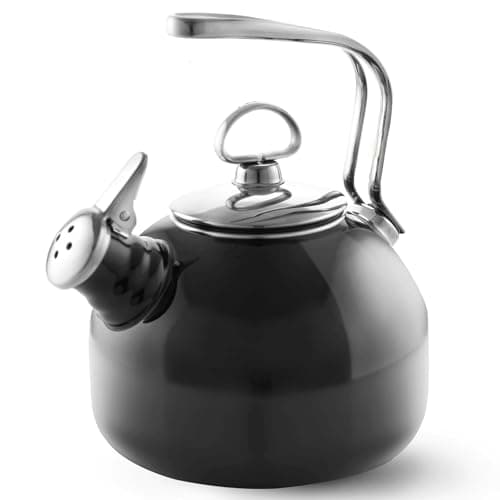 Chantal Enamel-on-Steel Classic Teakettle, 1.8 Qt.Top pickPorcelain enamel over carbon steel, a two-note harmonica whistle, and a published line saying it works on every cooktop including induction. The specification sheet is the reason to buy it. | A stovetop kettle that names every hob type | 1.8 Qt. | |
| 2 | 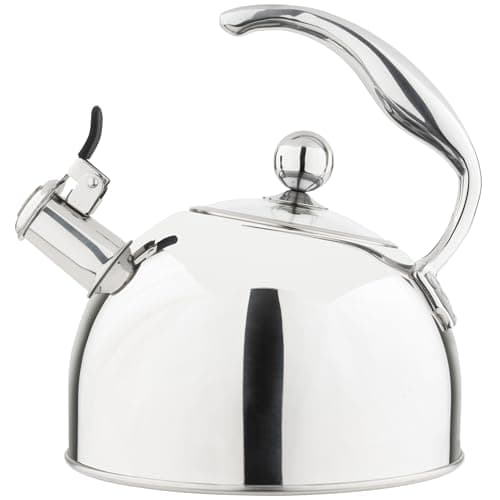 Viking 2.6-Quart Stainless Steel Whistling Kettle with 3-Ply BaseA clad-base stainless kettle that publishes more about itself than anything else in the category, including a Limited Lifetime Warranty nobody else on this site will commit to. | The only kettle here with a lifetime warranty | 2.6 quarts (2.5 liters) | |
| 3 | 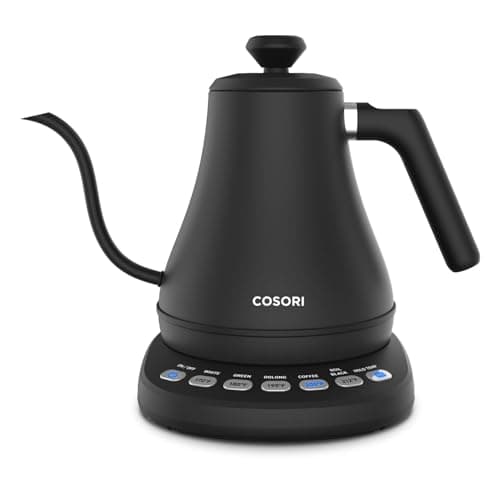 COSORI Original Electric Gooseneck Kettle (CO108-NK)Five presets that map to actual tea types, a 60-minute hold, and no plastic in the water path. This is the value pick and it is not close. | The sensible first variable-temperature kettle | 0.85 qt / 0.8 L | |
| 4 | 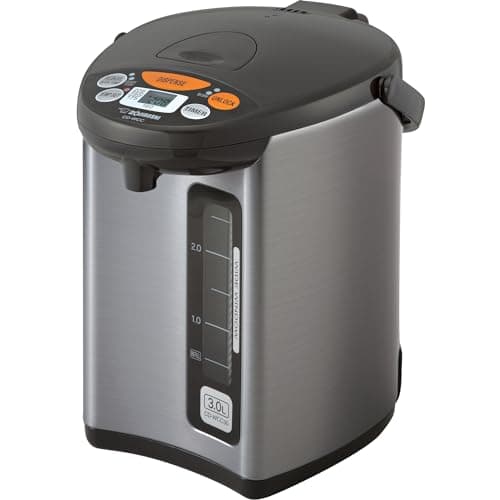 Zojirushi Micom Water Boiler & Warmer (CD-WCC30)Not a kettle. It boils three liters once and then parks the water at a tea temperature until you unplug it. | Drinking tea all day without boiling anything again | 101 oz / 3.0 liters |
Top pick · A stovetop kettle that names every hob type
Chantal Enamel-on-Steel Classic Teakettle, 1.8 Qt.
Porcelain enamel over carbon steel, a two-note harmonica whistle, and a published line saying it works on every cooktop including induction. The specification sheet is the reason to buy it.
#ad · how this is funded · price checked September 14, 2026
Published specifications
- Functional capacity
- 1.8 Qt.Source: Chantal — Enamel-on-Steel Classic Teakettle (1.8 Qt.) product page
- Construction
- Heavy-duty carbon steel with a US-formulated commercial-grade porcelain glass enamel interiorSource: Chantal — Enamel-on-Steel Classic Teakettle (1.8 Qt.) product page
- Cooktop compatibility
- Suitable for all stove types, including induction, gas and electricCarbon steel is magnetic, which is what makes the induction claim work.Source: Chantal — Enamel-on-Steel Classic Teakettle (1.8 Qt.) product page
- Whistle
- Two-note harmonica whistleSource: Chantal — Enamel-on-Steel Classic Teakettle (1.8 Qt.) product page
- In the box
- Includes a quilted mittSource: Chantal — Enamel-on-Steel Classic Teakettle (1.8 Qt.) product page
- Base diameter
- 6.5 in exteriorSource: Chantal B2B — Enamel-on-Steel Classic Teakettle (1.8 Qt.) spec sheet
- Warranty length
- Not verifiedChantal states a limited warranty but does not publish a duration on the product page.
What the numbers mean
The compatibility line is the whole point. Chantal writes out every cooktop type by name, including induction, rather than using a summary adjective. On a stovetop kettle that is the single specification most worth having in writing, because induction is binary.
Porcelain enamel over carbon steel is the same construction as the Le Creuset, and the properties follow: non-reactive, non-porous, holds no flavors, chips if you knock it hard against a tap.
At 1.8 quarts it is a touch larger than the 1.7-quart norm in this category, which is around seven to eight cups. That is a kettle for a household, and heating it for one mug is slow.
Good for
- Every cooktop type published by name, induction included
- Enamel interior specified as commercial-grade porcelain glass
- The harmonica whistle is genuinely distinctive rather than a marketing line
- A quilted mitt is included rather than sold separately
Against it
- Boiling only, like every stovetop kettle
- No published warranty duration
- Enamel chips, and it is hand-wash territory
- 1.8 quarts is a slow boil if you only want one mug
Skip it ifSkip it if you brew a single mug at a time. Heating nearly two quarts for 300 ml of tea is a habit that wastes both time and energy.
Pick 2 · The only kettle here with a lifetime warranty
Viking 2.6-Quart Stainless Steel Whistling Kettle with 3-Ply Base
A clad-base stainless kettle that publishes more about itself than anything else in the category, including a Limited Lifetime Warranty nobody else on this site will commit to.
Published specifications
- Capacity
- 2.6 quarts (2.5 liters)Source: Viking Culinary — 2.6-Quart Stainless Steel Whistling Kettle with 3-Ply Base
- Body and spout
- 304 stainless steel, with a surgical grade stainless interiorSource: Viking Culinary — 2.6-Quart Stainless Steel Whistling Kettle with 3-Ply Base
- Base
- 3-ply, with an aluminum core between two layers of stainlessAluminum conducts heat far better than steel, so a clad base spreads heat across the whole base instead of concentrating it over the burner.Source: Viking Culinary — 2.6-Quart Stainless Steel Whistling Kettle with 3-Ply Base
- Handle
- High-polished stainless steel, riveted to the pot, with a heat breakA heat break is a deliberate interruption in the metal path so less heat travels from body to handle.Source: Viking Culinary — 2.6-Quart Stainless Steel Whistling Kettle with 3-Ply Base
- Also included
- Removable quilted fabric heat sleeveSource: Viking Culinary — 2.6-Quart Stainless Steel Whistling Kettle with 3-Ply Base
- Lid
- Tempered glassSource: Viking Culinary — 2.6-Quart Stainless Steel Whistling Kettle with 3-Ply Base
- Whistle
- Melodic whistleSource: Viking Culinary — 2.6-Quart Stainless Steel Whistling Kettle with 3-Ply Base
- Cooktop compatibility
- Works on all stovetops, including inductionViking also lists gas, electric, halogen and ceramic.Source: Viking Culinary — 2.6-Quart Stainless Steel Whistling Kettle with 3-Ply Base
- Care
- Hand wash onlySource: Viking Culinary — 2.6-Quart Stainless Steel Whistling Kettle with 3-Ply Base
- Warranty
- Limited Lifetime WarrantySource: Viking Culinary — 2.6-Quart Stainless Steel Whistling Kettle with 3-Ply Base
- Dimensions and weight
- Not verifiedNot published on Viking's product page. At 2.6 quarts this is the largest kettle on the site, so check it against your hob and your cupboard.
What the numbers mean
The warranty is the specification that separates this from everything else we have written up. Caraway publishes no warranty at all and Chantal states a limited warranty without a duration. Viking publishes Limited Lifetime, which is a commitment rather than an adjective.
The 3-ply base is the real construction difference. Every other stovetop kettle on this site is a single layer of steel or enameled carbon steel, where heat enters wherever the burner touches. An aluminum core spreads it across the base first, which is the same reason clad pans exist.
At 2.6 quarts it is the largest kettle here by a clear margin, against 1.7 to 1.8 for the enameled ones. That is around ten cups from one boil and a genuinely slow way to make a single mug.
Good for
- Limited Lifetime Warranty, published - the only one on this site
- 3-ply clad base with an aluminum core, which no other kettle here has
- Handle heat break and a removable heat sleeve, both published
- Every cooktop named, induction included
- Tempered glass lid, so you can see the water
Against it
- Boiling only, like every stovetop kettle
- 2.6 quarts is a lot of water to heat for one mug
- Hand wash only, published
- A glass lid is a breakable part the all-metal kettles do not have
- No published dimensions or weight
Skip it ifSkip it if you brew a single mug at a time. Ten cups of capacity is the wrong shape for one person, and the enameled 1.7-quart kettles heat faster because there is less water in them.
Pick 3 · The sensible first variable-temperature kettle
COSORI Original Electric Gooseneck Kettle (CO108-NK)
Five presets that map to actual tea types, a 60-minute hold, and no plastic in the water path. This is the value pick and it is not close.
#ad · how this is funded · price checked September 14, 2026
Published specifications
- Capacity
- 0.85 qt / 0.8 LSource: COSORI — Original Electric Gooseneck Kettle (CO108-NK)
- Presets
- 170F white, 180F green, 195F oolong, 205F coffee, 212F blackSource: COSORI — Original Electric Gooseneck Kettle (CO108-NK)
- Hold
- Keeps water warm for up to 60 minutesSource: COSORI — Original Electric Gooseneck Kettle (CO108-NK)
- Power
- 1200 W (AC 120 V, 60 Hz)Source: COSORI — Original Electric Gooseneck Kettle (CO108-NK)
- Water contact
- 304 food-grade stainless steel kettle, lid and spoutSource: COSORI — Original Electric Gooseneck Kettle (CO108-NK)
- Warranty
- 2-year limitedSource: COSORI — Original Electric Gooseneck Kettle (CO108-NK)
What the numbers mean
The presets are the reason to recommend this to someone new. You do not have to know that sencha wants roughly 180F; you press the button that says green. That is one fewer thing to learn on week one.
Presets are also its limit. If you later want 165F for a delicate gyokuro, the button for it does not exist. Most people never get there, and the ones who do have already stopped being beginners.
It publishes 304 stainless for everything the water touches. That is the single spec worth checking on any cheap kettle, and plenty of them will not tell you.
Good for
- Presets named after teas, not temperatures
- 60-minute hold, longer than several kettles that cost more
- Stainless kettle, lid and spout published, not implied
Against it
- Preset steps only — no arbitrary target temperature
- 0.8 L is the smallest capacity here
- The gooseneck is slower to fill under a tap than a wide-mouth kettle
Skip it ifSkip it if you want to dial an exact number. Buy the OXO or the Stagg for that; this one gives you five good answers instead of infinite ones.
Pick 4 · Drinking tea all day without boiling anything again
Zojirushi Micom Water Boiler & Warmer (CD-WCC30)
Not a kettle. It boils three liters once and then parks the water at a tea temperature until you unplug it.
#ad · how this is funded · price checked September 14, 2026
Published specifications
- Capacity
- 101 oz / 3.0 litersSource: Zojirushi — Micom Water Boiler & Warmer CD-WCC30/40
- Keep-warm settings
- 160F, 175F, 195F and 208FSource: Zojirushi — Micom Water Boiler & Warmer CD-WCC30/40
- Quick Temp mode
- Reaches 160F, 175F or 195F without boiling firstSource: Zojirushi — Micom Water Boiler & Warmer CD-WCC30/40
- Power
- 120 V / 700 WSource: Zojirushi — Micom Water Boiler & Warmer CD-WCC30/40
- Dimensions
- 8.25 x 11.25 x 11.5 inSource: Zojirushi — Micom Water Boiler & Warmer CD-WCC30/40
What the numbers mean
The four keep-warm settings are the tea argument for this machine. 175F is green tea, 195F is oolong, 208F is black tea and everything herbal. You choose once in the morning.
Quick Temp is quietly the best feature: reaching 175F without going to a boil first saves both the wait and the energy of heating water 37 degrees past where you needed it.
Three liters is a lot of standing water and a permanent counter tenant. This is a household appliance, not a gear purchase, and it should be judged that way.
Good for
- Water at a tea temperature on demand, all day, no waiting
- Keep-warm settings that map to real tea types
- 700 W holding is far cheaper than re-boiling a kettle six times
Against it
- Large, heavy and always plugged in
- Refilling and descaling three liters is a chore
- No use at all if you drink one cup a day
Skip it ifSkip it unless you genuinely drink four or more cups a day. Below that it is a large appliance keeping water warm for nobody.
How we judged these
We ignored every marketing claim about scale resistance, because no maker on this site publishes a scale-resistance figure and we will not repeat a claim nobody supports with a number. What we judged instead is the three published properties that actually govern living with hard water.
- Visibility. Can you see the inside? Glass shows scale immediately, so you descale when it needs it. Stainless hides it, so you descale on a schedule or not at all.
- Access. How wide is the opening, and is there a spout you cannot get a brush into? This is the single most underrated specification in a hard-water area.
- Surface. Enamel and polished stainless are easier to wipe than a textured or matte interior. This is a difference in effort, not in how much scale forms.
Why a gooseneck is the wrong shape for hard water
This is the finding that surprises people, and it applies to two of the most-recommended kettles on this site. A gooseneck spout is a long, narrow, curved tube. Scale forms inside it exactly as it does everywhere else, and there is no brush geometry that reaches the bend.
You can still descale a gooseneck - a descaling solution will dissolve what a brush cannot reach - but the routine is chemical rather than mechanical, and you cannot inspect the result. If you live somewhere with genuinely hard water and you are choosing between a gooseneck and a wide-mouth kettle for general use, that is a real argument for the wide mouth.
We still list the COSORI here, because the pour control is worth the maintenance cost for a lot of people and because its water path is published as 304 stainless throughout. But it is ranked third on this page for exactly this reason, and the reason is stated rather than buried.
Enamel is the easiest surface to maintain
Chantal publishes a US-formulated commercial-grade porcelain glass enamel interior over heavy-duty carbon steel, and a 6.5 inch exterior base diameter. Porcelain enamel is a glass surface: scale sits on it rather than keying into it, and a wide kettle body means you can get a cloth or a hand inside.
Chantal also publishes that it works on all stove types including induction and gas, which is the other constraint that quietly disqualifies kettles. Between the enamel surface and the named hob compatibility, it is the kettle on this site we would choose first for a hard-water kitchen.
The honest cost is price and the fact that enamel chips if it is knocked against a tap. A chipped enamel interior exposes carbon steel, which is the one material on this page that will rust.
Stainless hides scale, which cuts both ways
Viking publishes 304 stainless with a surgical-grade stainless interior, a 3-ply base with an aluminum core, and a tempered glass lid. The glass lid is quietly the best hard-water feature on this page: you can see the water line and the interior surface without opening anything.
A polished stainless interior wipes clean easily and shows scale as a dull film rather than a white crust, which is less alarming and therefore easier to ignore. In a hard-water area that is a genuine behavioral risk: the kettle looks fine for months and is not.
Viking also publishes hand wash only, and at 2.6 quarts this is the largest kettle we cover. More water boiled means more scale deposited, which is a real consideration if you are heating a full kettle for one mug.
The all-day boiler problem
Zojirushi's Micom water boiler is included as the honest warning case rather than as a recommendation for hard water. It holds three liters at a set temperature all day, which is a wonderful way to drink tea and the highest-scale-throughput appliance on this site.
Zojirushi publishes the capacity, four keep-warm settings, a Quick Temp mode and 120 V / 700 W. It does not publish a descaling procedure on the product page we cite, so we do not describe one. If you are in a hard-water area and considering this category, find the descaling instructions in the manual before you buy, not after.
| Kettle | Interior surface | Can you see inside | Access for descaling |
|---|---|---|---|
| Chantal Classic | Porcelain enamel (published) | No - opaque body | Wide body, lid off |
| Viking 2.6 qt | Surgical-grade stainless (published) | Yes - tempered glass lid | Wide mouth |
| COSORI gooseneck | 304 stainless (published) | No | Poor - the spout is unreachable |
| Zojirushi boiler | Not published | No | Not published on the product page |
How to tell whether you actually have hard water
Plenty of people buy a kettle for a hard-water problem they do not have, so it is worth establishing this before spending anything. There are three checks and none of them costs much.
- Look inside the kettle you own. A white or gray crust on the element or the base is limescale, and its rate of return after a descale tells you more than any number would.
- Look at soap. Hard water is the reason soap lathers poorly and leaves a film on glassware and shower screens. If your glasses come out of the dishwasher cloudy, that is the same minerals.
- Ask your water supplier. In the United States most utilities publish an annual water quality report, and hardness is usually in it, stated in grains per gallon or parts per million. It is free and it is the only one of these three that gives you a number.
We do not publish a hardness threshold for buying a particular kettle, because no maker on this site publishes scale behavior against water hardness and we will not invent the relationship. What the checks above give you is whether this is a real constraint on your purchase or a hypothetical one.
Descaling, and why the method matters less than the frequency
The two household descalers are acids: white vinegar and citric acid. Both dissolve calcium carbonate, which is what limescale is. Citric acid is less pungent and rinses away with less residual smell, which matters more than it sounds when the vessel is one you drink from.
The important variable is not which acid you use. It is that you do it on a schedule rather than when the kettle looks alarming, because by the time scale is visible on stainless it is well established, and a thick deposit takes several cycles to shift rather than one.
Follow the descaling instructions in your own kettle's manual, and check that it has some before you buy. Of the four kettles on this page, none publishes a descaling procedure on the product page we cite - which is a real gap in a category where every buyer in a hard-water area will need one.
What actually reduces scale
None of it is the kettle. The three things that measurably change how much scale you deal with are boiling only the water you need, emptying the kettle rather than leaving standing water in it, and descaling on a fixed schedule instead of waiting until it looks bad.
A filter jug changes the water going in, which is the only intervention that addresses the cause rather than the symptom. We do not sell one and have not tested any, so we make no recommendation there beyond naming it as the option that exists.
Does limescale affect the taste of tea
Loose flakes of scale in the cup are unpleasant and obvious. The subtler effect is that hard water itself mutes tea, particularly green and white tea, because the dissolved minerals interact with the compounds you are trying to extract. That is a property of your water supply, not of your kettle, and no kettle purchase fixes it.
What we did not do
We ran no scaling tests, measured no water hardness and compared no descaling products. Every specification on this page is read from the maker's own published page and linked from the product card. Where a maker does not publish something - Zojirushi's interior material, its descaling procedure - we say that rather than filling the gap.
Questions
What kettle is best for hard water?
One you can see into and get your hand inside. We would choose an enamel-lined wide-body kettle like the Chantal Classic, or a stainless kettle with a glass lid like the Viking. No kettle resists scale - these are simply the easiest to inspect and clean.
Do glass kettles get more limescale?
No. They get the same amount and show all of it. That visibility is an advantage, because it means you descale when the kettle needs it instead of on a guess.
Are gooseneck kettles bad for hard water?
They are harder to maintain. Scale forms inside the long curved spout and no brush reaches the bend, so descaling becomes a chemical routine you cannot visually verify. The pour control may still be worth it - just know the trade before you buy.
Does limescale in a kettle affect tea?
Loose flakes do, obviously. More subtly, hard water mutes the flavor of green and white tea because dissolved minerals interfere with extraction - and that is a property of your water, not your kettle.
How often should I descale a kettle in a hard-water area?
On a schedule rather than on appearance, because stainless hides the buildup until it is substantial. Follow the interval in your kettle's own manual - the makers we cite do not all publish one, which is a gap worth checking before you buy.
Sources
Every figure on this page came from one of these, retrieved during the research pass for this article. Where a maker publishes nothing we could verify, the page says so instead of substituting a number.
- Chantal — Enamel-on-Steel Classic Teakettle (1.8 Qt.) product page
- Chantal B2B — Enamel-on-Steel Classic Teakettle (1.8 Qt.) spec sheet
- Viking Culinary — 2.6-Quart Stainless Steel Whistling Kettle with 3-Ply Base
- COSORI — Original Electric Gooseneck Kettle (CO108-NK)
- Zojirushi — Micom Water Boiler & Warmer CD-WCC30/40
Read next
- The safest tea kettle materialsStainless, glass and enamel are all inert. What separates kettles is whether the maker publishes what the water touches.
- The best stovetop tea kettlesThree stovetop kettles with published hob compatibility, and the one spec that decides whether any of them will work in your kitchen.
- Types of tea kettles, explainedThe five kettle categories in plain English, with the specific job each one does better than the rest.
- The best tea kettles for loose-leaf teaFive kettles across every price band, chosen by what you actually drink rather than by feature count.
- Tea kettles for induction and gas stovesWhich stovetop kettles publish induction compatibility by name, which only imply it, and how to check before you buy.