Tea Kettles
Copper tea kettles
One question decides this purchase — what the water actually touches — and it is the question these listings answer least clearly.
We earn a commission if you buy through the links on this page, at no extra cost to you. It does not change which products we name or what we say about them — how this is funded.
If you want the look, buy a copper-finish stainless kettle: the copper is on the outside and the water sits against steel, and the listing will say so. If you want a solid copper kettle, the thing to establish before you pay is what lines the inside — and across every solid copper kettle we looked at, that was the one specification nobody documented properly. We are not recommending one on this page, and the reason is that we could not verify what any of them is lined with.
| # | Product | Best for | What touches the water | Price |
|---|---|---|---|---|
| 1 | 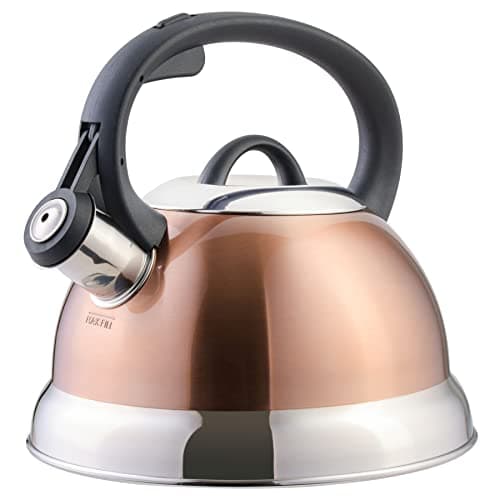 Mr. Coffee Flintshire Whistling Tea Kettle, 1.75 Qt., Copper FinishTop pickA stainless kettle with a copper finish on the outside. The listing states both, which is more than the solid-copper kettles alongside it manage. | The copper look with stainless where the water goes | Stainless steel with a copper finish | |
| 2 | 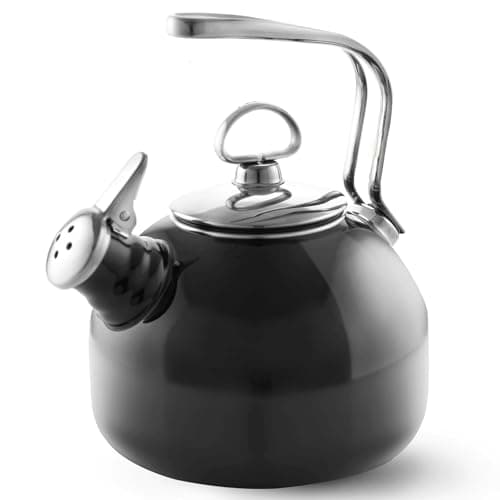 Chantal Enamel-on-Steel Classic Teakettle, 1.8 Qt.Porcelain enamel over carbon steel, a two-note harmonica whistle, and a published line saying it works on every cooktop including induction. The specification sheet is the reason to buy it. | A stovetop kettle that names every hob type | 1.8 Qt. | |
| 3 | 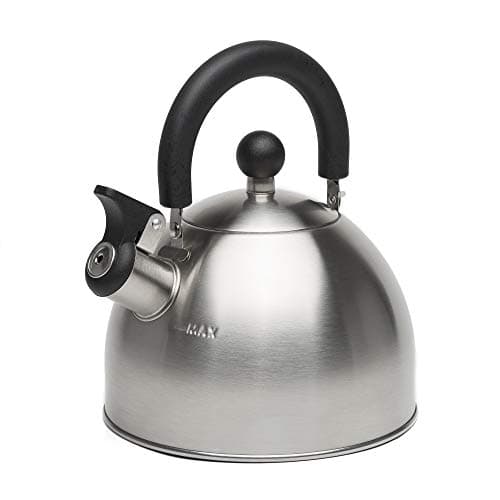 Primula Stewart Whistling Kettle with Folding Handle, 1.5 Qt.A 1.5-quart food-grade stainless whistler with a flip-up spout and a handle that folds flat. It boils water and stores in a drawer, which is the entire brief. | The cheapest kettle on this site that we would actually own | 1.5 qt |
Top pick · The copper look with stainless where the water goes
Mr. Coffee Flintshire Whistling Tea Kettle, 1.75 Qt., Copper Finish
A stainless kettle with a copper finish on the outside. The listing states both, which is more than the solid-copper kettles alongside it manage.
#ad · how this is funded · price checked September 21, 2026
Published specifications
- Body
- Stainless steel with a copper finishThe distinction that matters: the copper is the exterior, and the water sits against stainless.Source: Amazon — Mr. Coffee Flintshire 1.75-Quart Whistling Tea Kettle, Copper Finish listing
- Capacity
- 1.75 quartsSource: Amazon — Mr. Coffee Flintshire 1.75-Quart Whistling Tea Kettle, Copper Finish listing
- Whistle
- Whistling spoutSource: Amazon — Mr. Coffee Flintshire 1.75-Quart Whistling Tea Kettle, Copper Finish listing
- Handle
- Nylon handleSource: Amazon — Mr. Coffee Flintshire 1.75-Quart Whistling Tea Kettle, Copper Finish listing
- Heat source
- Stove-topSource: Amazon — Mr. Coffee Flintshire 1.75-Quart Whistling Tea Kettle, Copper Finish listing
- Maker documentation
- Not verifiedMr. Coffee's own site returns a 403 to us, so every figure here is read from the retail listing rather than a manufacturer spec sheet. Steel grade, gauge, hob compatibility and warranty are all unpublished as far as we could check.
- Induction compatibility
- Not verifiedNot stated. Copper-finished stainless may or may not have a magnetic base — test with a magnet or ask the seller before buying for an induction hob.
What the numbers mean
This is on the site for one reason: it is the honest answer to wanting a copper-looking kettle without buying an unlined vessel whose interior nobody documents. The listing says stainless steel with a copper finish, which tells you what the water touches.
A finish is a finish. It will mark, and on a stove-top kettle it will discolor with heat over time in a way a solid copper kettle does too — the difference is that this one is cosmetic rather than structural.
At 1.75 quarts it is a household size, roughly seven cups. That is the same class as the Chantal and the Le Creuset, at a small fraction of the price and with a small fraction of the published detail.
Good for
- The water path is stainless, and the listing says so
- Capacity, whistle and handle material all stated
- Costs a fraction of a solid copper kettle
- Gives the copper look without an undocumented lining
Against it
- Mr. Coffee's own site is inaccessible to us, so nothing here comes from a manufacturer spec sheet
- No published steel grade, gauge, warranty or hob compatibility
- A nylon handle is a lower-grade part than the riveted steel or phenolic handles on pricier kettles
- The copper finish is decorative and will mark with use
Skip it ifSkip it if you want a documented kettle. Chantal and Viking publish real spec sheets including hob compatibility; this one is bought on a retail listing and a photograph.
Pick 2 · A stovetop kettle that names every hob type
Chantal Enamel-on-Steel Classic Teakettle, 1.8 Qt.
Porcelain enamel over carbon steel, a two-note harmonica whistle, and a published line saying it works on every cooktop including induction. The specification sheet is the reason to buy it.
#ad · how this is funded · price checked September 21, 2026
Published specifications
- Functional capacity
- 1.8 Qt.Source: Chantal — Enamel-on-Steel Classic Teakettle (1.8 Qt.) product page
- Construction
- Heavy-duty carbon steel with a US-formulated commercial-grade porcelain glass enamel interiorSource: Chantal — Enamel-on-Steel Classic Teakettle (1.8 Qt.) product page
- Cooktop compatibility
- Suitable for all stove types, including induction, gas and electricCarbon steel is magnetic, which is what makes the induction claim work.Source: Chantal — Enamel-on-Steel Classic Teakettle (1.8 Qt.) product page
- Whistle
- Two-note harmonica whistleSource: Chantal — Enamel-on-Steel Classic Teakettle (1.8 Qt.) product page
- In the box
- Includes a quilted mittSource: Chantal — Enamel-on-Steel Classic Teakettle (1.8 Qt.) product page
- Base diameter
- 6.5 in exteriorSource: Chantal B2B — Enamel-on-Steel Classic Teakettle (1.8 Qt.) spec sheet
- Warranty length
- Not verifiedChantal states a limited warranty but does not publish a duration on the product page.
What the numbers mean
The compatibility line is the whole point. Chantal writes out every cooktop type by name, including induction, rather than using a summary adjective. On a stovetop kettle that is the single specification most worth having in writing, because induction is binary.
Porcelain enamel over carbon steel is the same construction as the Le Creuset, and the properties follow: non-reactive, non-porous, holds no flavors, chips if you knock it hard against a tap.
At 1.8 quarts it is a touch larger than the 1.7-quart norm in this category, which is around seven to eight cups. That is a kettle for a household, and heating it for one mug is slow.
Good for
- Every cooktop type published by name, induction included
- Enamel interior specified as commercial-grade porcelain glass
- The harmonica whistle is genuinely distinctive rather than a marketing line
- A quilted mitt is included rather than sold separately
Against it
- Boiling only, like every stovetop kettle
- No published warranty duration
- Enamel chips, and it is hand-wash territory
- 1.8 quarts is a slow boil if you only want one mug
Skip it ifSkip it if you brew a single mug at a time. Heating nearly two quarts for 300 ml of tea is a habit that wastes both time and energy.
Pick 3 · The cheapest kettle on this site that we would actually own
Primula Stewart Whistling Kettle with Folding Handle, 1.5 Qt.
A 1.5-quart food-grade stainless whistler with a flip-up spout and a handle that folds flat. It boils water and stores in a drawer, which is the entire brief.
#ad · how this is funded · price checked September 21, 2026
Published specifications
- Material
- Food-grade stainless steelSource: Primula — Stewart Whistling Kettle with Folding Handle, 1.5 Qt.
- Spout
- Flip-up whistling spoutThe flip is one-handed, which matters when the other hand is holding a mug.Source: Primula — Stewart Whistling Kettle with Folding Handle, 1.5 Qt.
- Handle
- Stay-cool coating; folds down for storageThe folding handle is the reason this fits in a drawer rather than living on the hob.Source: Primula — Stewart Whistling Kettle with Folding Handle, 1.5 Qt.
- Lid
- Wide-mouth lid for cleaning and dryingSource: Primula — Stewart Whistling Kettle with Folding Handle, 1.5 Qt.
- Finishes
- Brushed stainless (PTK-6215-B) and chromeSource: Primula — Stewart Whistling Kettle with Folding Handle, 1.5 Qt.
- Cooktop compatibility
- Not verifiedPrimula does not name hob types on this page. Stainless is induction-compatible only when the base is magnetic, so hold a magnet to it or check the listing before buying for an induction hob.
- Warranty
- Not verifiedNo warranty length is published on the product page.
What the numbers mean
The honest case for a kettle at this price is that boiling water is a solved problem. A stovetop whistler has no electronics to fail, no temperature board to drift and nothing that stops working in year three. What you give up is the ability to set a temperature, and for black and herbal tea there is nothing to set.
1.5 quarts is about six mugs. That is a genuinely useful size: enough for a pot on the table, not so much that you are heating a liter of water you will pour down the sink.
The folding handle sounds like packaging copy and is the most practical thing here. A kettle that folds flat goes in a cupboard between uses, which is the difference between owning one and living with one permanently occupying a burner.
Good for
- Costs less than most infusers
- Nothing electronic to fail
- Folds flat, so it does not have to live on the hob
- Food-grade stainless is published, which is more than most kettles at this price say
Against it
- Boiling only — no temperature setting of any kind
- Thin stainless heats fast and cools fast
- No published hob compatibility, so induction buyers have to check
- No published warranty
Skip it ifSkip it if green tea is the reason you are here. Boiling water scorches it, and no whistling kettle will tell you when the water has dropped to 175F.
Two completely different products, one search term
Search for a copper tea kettle and the results interleave two things that have almost nothing in common beyond their color.
- Copper-finish stainless steel. A stainless kettle with a copper-colored exterior. The water touches steel. These are the cheap ones, they are made by brands you have heard of, and their listings generally state both materials.
- Solid copper. A kettle formed from copper sheet, usually hammered, usually handmade, often from a seller you have not heard of. Whether the inside is bare copper or lined with something else is the entire question, and it is the question these listings handle worst.
Price is not a reliable signal either. Solid copper kettles in these results ran from around sixty dollars to well over ninety, and a copper-finish stainless kettle from a national brand was under thirty. You cannot tell them apart by cost, only by reading.
How we judged these
This page ranks on documentation rather than on looks, because looks are the one thing you can already judge from the photograph and documentation is the thing you cannot.
- Does the listing or the maker state what the interior surface is? On a vessel that holds hot water, this is the first question and it should not be hard to answer.
- Is there a manufacturer page to check the listing against? A retail listing is written to sell. A spec sheet is written to be accurate, and the two are not the same document.
- Are the ordinary specifications published — capacity, hob compatibility, warranty? Their absence tells you how much of the product was designed and how much was sourced.
- Does the material claim actually change the tea? Almost never, and we say so below rather than letting the metal do the arguing.
The lining question, and why the listings fail it
Copper cookware has traditionally been lined, and the lining is what the food or water actually contacts. So on a solid copper kettle, the interior surface is the specification that matters most. Here is what the solid copper kettles in our results actually said about theirs.
| What the listing says | What that tells you |
|---|---|
| "Nickel Lining" | A named lining material. The most specific claim we found, and still unsupported by a spec sheet. |
| "Coating-Free" | Reads as a selling point and describes the opposite of a lining. Unclear whether it means bare copper inside. |
| "Non-Toxic Coating" | Asserts a conclusion rather than naming a material. Non-toxic is not a specification. |
| Nothing at all | Several listings simply do not mention the interior. |
Three different answers and one silence, for the same product category, on the one point a buyer needs. None of these sellers publishes a manufacturer page we could check the claim against — we looked.
Does copper make better tea?
No, and the reason is the same one this site gives about expensive kettles generally. Copper conducts heat better than steel, which is a real and measurable property of the metal. What it buys you on a kettle is reaching a boil somewhat faster.
Boiling water is boiling water. There is no mechanism by which water brought to 212F in copper is different from water brought to 212F in stainless, and any page implying otherwise is selling you a finish. Copper's conductivity genuinely matters in a saute pan, where you are controlling a temperature moment to moment. In a vessel whose only job is to reach one fixed temperature and stop, it is close to irrelevant.
The honest case for copper is that it is beautiful. That is a real reason to buy something, and it is a better reason than a performance claim that does not survive contact with what a kettle does.
If you want the look: copper-finish stainless
Mr. Coffee's Flintshire is listed as a 1.75-quart stainless steel whistling kettle with a nylon handle and a copper finish. That sentence contains the thing you are buying and the thing you are not: copper on the outside, steel against the water.
It is the cheapest pick on this page by a wide margin and it delivers exactly what most people searching this term actually want, which is a kettle that looks like copper on a stove.
Against it, stated plainly: Mr. Coffee's own website returns a 403 to us, so every figure on its product card comes from the retail listing rather than a manufacturer spec sheet. There is no published steel grade, no published hob compatibility, no published warranty. A nylon handle is a cheaper part than the riveted steel handles on the kettles below it. And a decorative finish marks with use.
If you want a kettle that documents itself
Chantal publishes 1.8 quarts of functional capacity, heavy-duty carbon steel with a US-formulated commercial-grade porcelain glass enamel interior, a two-note harmonica whistle, a 6.5 inch base diameter, a 5 lb weight, and compatibility with all stove types including induction and gas.
Set that list beside "non-toxic coating" and the difference in what you know before paying is the entire argument of this page. Porcelain enamel over steel is also a glassy interior surface, which is the property people are often reaching for when they ask about linings.
Against it: it costs several times the copper-finish option, it is 5 lb empty, it boils and nothing else, and Chantal states a limited warranty without publishing a duration. Enamel chips if it is knocked, and a chip exposes carbon steel that can rust.
If you want cheap and still documented
Primula publishes food-grade stainless steel, 1.5 quarts, a flip-up whistling spout, a stay-cool handle that folds flat for storage, and a wide-mouth lid, at a price below the copper-finish kettle.
It is here to make a point as much as to be bought: a maker publishing what its kettle is made of at under twenty dollars demonstrates that documentation is not a premium feature. It is a choice, and the solid copper sellers are choosing not to.
Against it: Primula publishes no hob compatibility, so induction buyers have to test with a magnet, and no warranty length. Thin stainless heats fast and cools fast.
| What touches the water | Maker spec sheet | Hob types published | |
|---|---|---|---|
| Mr. Coffee Flintshire | Stainless (per the listing) | No - site inaccessible | No |
| Chantal Classic | Porcelain enamel (published) | Yes | Yes, including induction |
| Primula Stewart | Food-grade stainless (published) | Yes | No |
| A typical solid copper kettle | Unclear - claims conflict | No | No |
If you are buying solid copper anyway
Plenty of people will, and the object genuinely is lovely. Four things to establish with the seller before you pay, in order.
- What is the interior lining, named as a material? Tin and stainless are the traditional answers. "Non-toxic", "food-safe" and "coating-free" are not materials and do not answer the question.
- Is it a kettle or a serving pot? Many decorative copper teapots in these results are Turkish or Moroccan serving vessels, not designed to sit on a burner. Check for a hob rating before putting one on heat.
- Can it be relined, and by whom? Traditional tin linings wear and are periodically renewed. That is normal ownership for copper cookware and a cost worth knowing about in advance.
- Is it induction compatible? Copper is not magnetic, so a solid copper kettle will not work on an induction hob unless it has been given a magnetic base. Very few listings mention this.
If a seller cannot answer the first question in writing, that is your answer. We applied the same rule ourselves, which is why there is no solid copper kettle among the picks above.
What we did not do
We tested nothing. There are no boil times on this page, no measurements of any lining, and no laboratory claims, because we have run none. We also could not reach a manufacturer page for either Mr. Coffee or any solid copper seller in these results — Mr. Coffee's site returns a 403 and the solid copper sellers have no maker site we could find — so the copper-finish product card cites the retail listing and says so. The Chantal and Primula figures come from those makers' own pages and link back to them.
Questions
Are copper tea kettles safe?
We cannot tell you, and that is the finding. Copper cookware is traditionally lined, so what matters is the interior surface — and across the solid copper kettles we looked at, listings claimed a nickel lining, described themselves as coating-free, asserted a non-toxic coating, or said nothing. None had a manufacturer spec sheet to check. If a seller will not name the lining material in writing, that is reason enough to buy something else.
Is a copper tea kettle better than stainless steel?
Not for making tea. Copper conducts heat better, so it may reach a boil somewhat faster, but boiling water is boiling water — water at 212F is identical whichever metal heated it. Copper's conductivity matters in a pan where you control temperature moment to moment, not in a vessel that reaches one fixed temperature and stops.
What is the difference between a copper kettle and a copper-finish kettle?
A copper-finish kettle is stainless steel with a copper-colored exterior, so the water touches steel. A solid copper kettle is formed from copper, and what the water touches depends on the lining. The listing for a good copper-finish kettle will state both materials; that clarity is the reason we recommend one.
Do copper tea kettles work on induction?
Copper is not magnetic, so a solid copper kettle will not work on an induction hob unless it has been built with a magnetic base — and almost no listing mentions this. Copper-finish stainless may or may not be magnetic either. Test with a magnet or ask before buying for induction.
Do copper kettles need to be relined?
Traditional tin linings on copper cookware wear over time and are periodically renewed by a specialist. That is normal for lined copper and a real ownership cost. Whether it applies to a given kettle depends on what it is lined with, which is exactly what these listings do not tell you.
Why is my copper kettle turning dark?
Copper tarnishes in air and discolors with heat, which is ordinary rather than a defect. It is also why a copper kettle is a maintenance object in a way a stainless one is not. A copper finish over stainless will mark in the same way, since the outside is still a copper-colored surface.
Sources
Every figure on this page came from one of these, retrieved during the research pass for this article. Where a maker publishes nothing we could verify, the page says so instead of substituting a number.
Read next
- The safest tea kettle materialsStainless, glass and enamel are all inert. What separates kettles is whether the maker publishes what the water touches.
- The best stovetop tea kettlesThree stovetop kettles with published hob compatibility, and the one spec that decides whether any of them will work in your kitchen.
- Types of tea kettles, explainedThe five kettle categories in plain English, with the specific job each one does better than the rest.
- Tea kettles for induction and gas stovesWhich stovetop kettles publish induction compatibility by name, which only imply it, and how to check before you buy.
- The best budget tea kettlesWhat a cheap kettle actually removes, what it only makes cheaper, and where the value line genuinely sits.
- The best tea kettles for glass top stovesGlass tops are decided by base flatness and weight. Almost nobody publishes either number, and we name the one maker who publishes both.