Tea Kettles
Tea kettle vs water boiler
One question settles this, and it is not about tea. It is how many separate times a day you need hot water.
We earn a commission if you buy through the links on this page, at no extra cost to you. It does not change which products we name or what we say about them — how this is funded.
If you make hot drinks four or more separate times a day, a water boiler is a genuine quality-of-life change and a kettle is not. If you make one or two, a boiler is a large appliance holding three liters of water at temperature so you can have two cups, and a kettle is the correct purchase. That is the whole decision, and almost everything else written about this comparison is a proxy for it.
| # | Product | Best for | Capacity | Price |
|---|---|---|---|---|
| 1 | 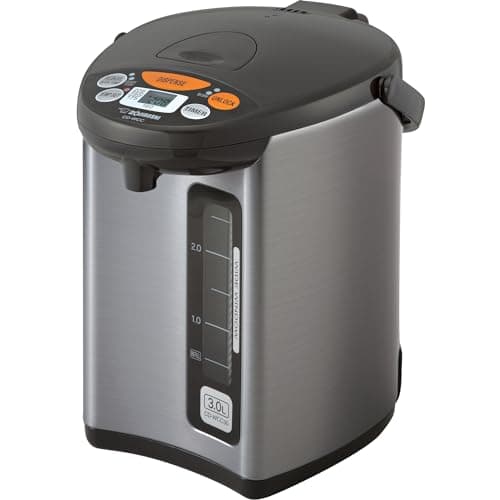 Zojirushi Micom Water Boiler & Warmer (CD-WCC30)Top pickNot a kettle. It boils three liters once and then parks the water at a tea temperature until you unplug it. | Drinking tea all day without boiling anything again | 101 oz / 3.0 liters | |
| 2 | 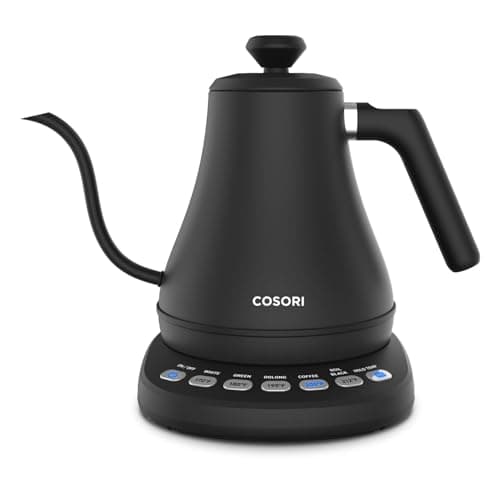 COSORI Original Electric Gooseneck Kettle (CO108-NK)Five presets that map to actual tea types, a 60-minute hold, and no plastic in the water path. This is the value pick and it is not close. | The sensible first variable-temperature kettle | 0.85 qt / 0.8 L | |
| 3 | 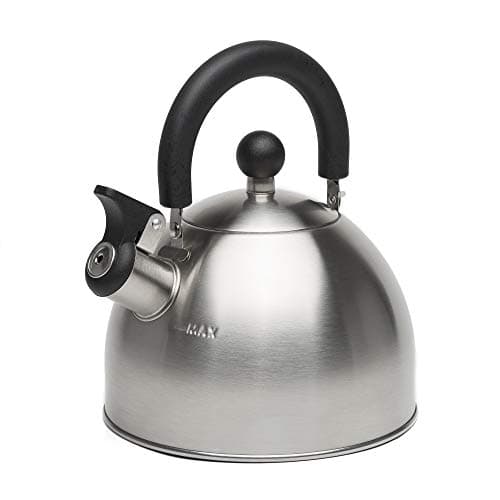 Primula Stewart Whistling Kettle with Folding Handle, 1.5 Qt.A 1.5-quart food-grade stainless whistler with a flip-up spout and a handle that folds flat. It boils water and stores in a drawer, which is the entire brief. | The cheapest kettle on this site that we would actually own | 1.5 qt |
Top pick · Drinking tea all day without boiling anything again
Zojirushi Micom Water Boiler & Warmer (CD-WCC30)
Not a kettle. It boils three liters once and then parks the water at a tea temperature until you unplug it.
#ad · how this is funded · price checked September 14, 2026
Published specifications
- Capacity
- 101 oz / 3.0 litersSource: Zojirushi — Micom Water Boiler & Warmer CD-WCC30/40
- Keep-warm settings
- 160F, 175F, 195F and 208FSource: Zojirushi — Micom Water Boiler & Warmer CD-WCC30/40
- Quick Temp mode
- Reaches 160F, 175F or 195F without boiling firstSource: Zojirushi — Micom Water Boiler & Warmer CD-WCC30/40
- Power
- 120 V / 700 WSource: Zojirushi — Micom Water Boiler & Warmer CD-WCC30/40
- Dimensions
- 8.25 x 11.25 x 11.5 inSource: Zojirushi — Micom Water Boiler & Warmer CD-WCC30/40
What the numbers mean
The four keep-warm settings are the tea argument for this machine. 175F is green tea, 195F is oolong, 208F is black tea and everything herbal. You choose once in the morning.
Quick Temp is quietly the best feature: reaching 175F without going to a boil first saves both the wait and the energy of heating water 37 degrees past where you needed it.
Three liters is a lot of standing water and a permanent counter tenant. This is a household appliance, not a gear purchase, and it should be judged that way.
Good for
- Water at a tea temperature on demand, all day, no waiting
- Keep-warm settings that map to real tea types
- 700 W holding is far cheaper than re-boiling a kettle six times
Against it
- Large, heavy and always plugged in
- Refilling and descaling three liters is a chore
- No use at all if you drink one cup a day
Skip it ifSkip it unless you genuinely drink four or more cups a day. Below that it is a large appliance keeping water warm for nobody.
Pick 2 · The sensible first variable-temperature kettle
COSORI Original Electric Gooseneck Kettle (CO108-NK)
Five presets that map to actual tea types, a 60-minute hold, and no plastic in the water path. This is the value pick and it is not close.
#ad · how this is funded · price checked September 14, 2026
Published specifications
- Capacity
- 0.85 qt / 0.8 LSource: COSORI — Original Electric Gooseneck Kettle (CO108-NK)
- Presets
- 170F white, 180F green, 195F oolong, 205F coffee, 212F blackSource: COSORI — Original Electric Gooseneck Kettle (CO108-NK)
- Hold
- Keeps water warm for up to 60 minutesSource: COSORI — Original Electric Gooseneck Kettle (CO108-NK)
- Power
- 1200 W (AC 120 V, 60 Hz)Source: COSORI — Original Electric Gooseneck Kettle (CO108-NK)
- Water contact
- 304 food-grade stainless steel kettle, lid and spoutSource: COSORI — Original Electric Gooseneck Kettle (CO108-NK)
- Warranty
- 2-year limitedSource: COSORI — Original Electric Gooseneck Kettle (CO108-NK)
What the numbers mean
The presets are the reason to recommend this to someone new. You do not have to know that sencha wants roughly 180F; you press the button that says green. That is one fewer thing to learn on week one.
Presets are also its limit. If you later want 165F for a delicate gyokuro, the button for it does not exist. Most people never get there, and the ones who do have already stopped being beginners.
It publishes 304 stainless for everything the water touches. That is the single spec worth checking on any cheap kettle, and plenty of them will not tell you.
Good for
- Presets named after teas, not temperatures
- 60-minute hold, longer than several kettles that cost more
- Stainless kettle, lid and spout published, not implied
Against it
- Preset steps only — no arbitrary target temperature
- 0.8 L is the smallest capacity here
- The gooseneck is slower to fill under a tap than a wide-mouth kettle
Skip it ifSkip it if you want to dial an exact number. Buy the OXO or the Stagg for that; this one gives you five good answers instead of infinite ones.
Pick 3 · The cheapest kettle on this site that we would actually own
Primula Stewart Whistling Kettle with Folding Handle, 1.5 Qt.
A 1.5-quart food-grade stainless whistler with a flip-up spout and a handle that folds flat. It boils water and stores in a drawer, which is the entire brief.
#ad · how this is funded · price checked September 14, 2026
Published specifications
- Material
- Food-grade stainless steelSource: Primula — Stewart Whistling Kettle with Folding Handle, 1.5 Qt.
- Spout
- Flip-up whistling spoutThe flip is one-handed, which matters when the other hand is holding a mug.Source: Primula — Stewart Whistling Kettle with Folding Handle, 1.5 Qt.
- Handle
- Stay-cool coating; folds down for storageThe folding handle is the reason this fits in a drawer rather than living on the hob.Source: Primula — Stewart Whistling Kettle with Folding Handle, 1.5 Qt.
- Lid
- Wide-mouth lid for cleaning and dryingSource: Primula — Stewart Whistling Kettle with Folding Handle, 1.5 Qt.
- Finishes
- Brushed stainless (PTK-6215-B) and chromeSource: Primula — Stewart Whistling Kettle with Folding Handle, 1.5 Qt.
- Cooktop compatibility
- Not verifiedPrimula does not name hob types on this page. Stainless is induction-compatible only when the base is magnetic, so hold a magnet to it or check the listing before buying for an induction hob.
- Warranty
- Not verifiedNo warranty length is published on the product page.
What the numbers mean
The honest case for a kettle at this price is that boiling water is a solved problem. A stovetop whistler has no electronics to fail, no temperature board to drift and nothing that stops working in year three. What you give up is the ability to set a temperature, and for black and herbal tea there is nothing to set.
1.5 quarts is about six mugs. That is a genuinely useful size: enough for a pot on the table, not so much that you are heating a liter of water you will pour down the sink.
The folding handle sounds like packaging copy and is the most practical thing here. A kettle that folds flat goes in a cupboard between uses, which is the difference between owning one and living with one permanently occupying a burner.
Good for
- Costs less than most infusers
- Nothing electronic to fail
- Folds flat, so it does not have to live on the hob
- Food-grade stainless is published, which is more than most kettles at this price say
Against it
- Boiling only — no temperature setting of any kind
- Thin stainless heats fast and cools fast
- No published hob compatibility, so induction buyers have to check
- No published warranty
Skip it ifSkip it if green tea is the reason you are here. Boiling water scorches it, and no whistling kettle will tell you when the water has dropped to 175F.
What a water boiler actually is
A water boiler and warmer is an insulated vessel that boils a large volume once and then holds it at a temperature you choose, indefinitely, until you unplug it. You do not pour it — you dispense from it, usually with a button and a spout, into a cup held underneath.
Zojirushi publishes the numbers for the model we cover: 101 oz / 3.0 liters, keep-warm settings at 160F, 175F, 195F and 208F, a Quick Temp mode that reaches 160F, 175F or 195F without boiling first, 120 V / 700 W, and a footprint of 8.25 x 11.25 x 11.5 inches.
Read that keep-warm list again, because it is the part most comparisons miss. Those four temperatures are not arbitrary. 175F is green tea, 195F is oolong, 208F is effectively black tea, and 160F is below everything — which means a boiler is not just a hot water tank. It is a variable-temperature appliance that happens to hold three liters.
The difference in one table
| Tea kettle | Water boiler and warmer | |
|---|---|---|
| Wait for hot water | One to five minutes, every time | None, after the first fill |
| Typical capacity | 0.8-1.8 quarts | 3 liters and up |
| Temperature control | On better models, set per boil | Held continuously at a chosen setting |
| Pour control | You aim the spout | You dispense into a cup held underneath |
| Counter space | Kettle plus base, or a cupboard | Permanent, and it is a large object |
| Fills a teapot | Yes | Slowly, and awkwardly under a dispenser |
| Goes on the table | A stovetop kettle can | No |
| Runs when you are not using it | No | Yes, all day, by design |
The question that decides it
Count the separate occasions in a day when you want hot water. Not cups — occasions. Two cups poured from one boil is one occasion. A cup at eight, another at eleven, a pot at three and a herbal at nine is four.
At one or two occasions a day, a kettle wins easily. The wait is two minutes, twice, and you are not paying an appliance to stand at temperature for the other twenty-three hours.
At four or more, the arithmetic inverts. Every one of those occasions currently costs you a boil, a wait, and a decision about whether you can be bothered. A boiler removes all three, and what people report as the real change is not the time saved — it is that they stop rationing the decision.
What it costs to run, calculated honestly
This is the most searched sub-question and the one most commonly answered with an invented number. We are not going to invent one, because the two figures you would need are not published.
What we can say without a meter is the shape of the answer. A kettle draws a lot of power for a very short time; a boiler draws less, intermittently, for a long time. Which totals more depends entirely on how many boils the boiler is replacing, which puts you back at the occasions-per-day question above.
One thing is not in doubt: boiling three liters to drink 300 ml is wasteful whichever appliance does it. If you drink one cup a day, the boiler is the more expensive option to run and it is not close.
Capacity is the hidden argument, in both directions
Three liters sounds like an unambiguous advantage and it is not. It is an advantage if you have people in the house, make tea for a table, or refill a flask. It is a liability if you live alone, because water that sits at 195F all day is water you are keeping hot for nobody.
The kettles on this page sit at the other end. COSORI publishes 0.8 liters, which is two large mugs — the right size for one person brewing repeatedly and the wrong size for hosting. Primula publishes 1.5 quarts for the Stewart, about six mugs, which is the useful middle for a stovetop kettle.
The mismatch to watch for is a household of one buying three liters because the reviews are good. The reviews are good because the people writing them drink tea all day.
What a water boiler is worse at
Every comparison of these two leads with the convenience and stops there. The honest list of drawbacks is longer than the convenience argument and it is rarely written down.
- Pour control. You dispense into a cup held under a spout. You cannot aim it, you cannot slow it, and you cannot fill a gaiwan or wet a bed of leaves evenly. For anyone brewing gongfu style or making pour-over coffee, this alone disqualifies it.
- Filling a teapot. A 700 ml pot under a dispenser is slow and awkward, and on some designs it will not fit under the spout at all without tilting.
- The footprint. Zojirushi publishes 8.25 x 11.25 x 11.5 inches for this model. That is permanent counter, near an outlet, and it does not go in a cupboard between uses.
- First water. The one moment a boiler is slower than a kettle is the moment you plug it in, because it is heating three liters rather than two cups.
- Descaling. More water boiled means more scale deposited, and a large sealed vessel is harder to inspect and reach inside than a wide-mouth kettle.
- It does not travel to the table. A stovetop kettle can sit on a trivet while you serve. A boiler stays plugged in on the counter.
What a kettle is worse at
Fairness demands the same list in the other direction, and it is shorter but heavier.
- The wait, every single time. Two minutes does not sound like a cost until it is the reason you did not make the third cup.
- Reheating. A kettle that boiled twenty minutes ago is a kettle full of water at the wrong temperature, and reboiling is the usual answer.
- Holding a temperature. Better electric kettles hold — COSORI publishes 60 minutes — but an hour is not a day, and a stovetop kettle holds nothing at all.
- Serving several people over an afternoon. This is where capacity and hold combine against a kettle, and it is the scenario the boiler was designed for.
The middle option most comparisons skip
These are not the only two choices, and treating them as a binary is how people end up with the wrong appliance. A variable-temperature electric kettle with a long hold sits between them and covers more of the boiler's use cases than its price suggests.
COSORI publishes five presets — 170F white, 180F green, 195F oolong, 205F coffee, 212F black — a 60-minute keep-warm, 1200 W, and 304 food-grade stainless steel for the kettle, lid and spout. Set it at the start of a working morning and every cup for the next hour is at temperature without touching anything.
For a lot of people that is the actual requirement. The hour of hold covers a working session; the boiler covers a whole day. If your four occasions cluster into a morning, the kettle is enough, and it also pours properly and lives in a quarter of the space.
Is it safe to leave a water boiler on all day
It is the intended operating mode — keep-warm is the feature, not a workaround. Zojirushi publishes four keep-warm settings for exactly this purpose, and the appliance is designed to sit at one of them continuously.
We make no safety claim beyond that, because we have tested nothing. What we would say to anyone weighing it is that the honest questions are the ordinary ones for any always-on countertop appliance: a dedicated outlet rather than an extension lead, clearance above it for the steam, and out of reach of anyone small, because a dispenser button is easier for a child to operate than a kettle is to lift.
Which one, by how you actually drink
| How you drink | Buy | Why |
|---|---|---|
| One or two cups a day | A kettle, and a cheap one | A boiler holds three liters so you can drink 600 ml |
| Four or more occasions a day | A water boiler | It removes the wait and the decision, every time |
| Green and white tea, one person | A variable-temperature kettle | Presets plus an hour of hold cover a working session |
| A household, all afternoon | A water boiler | Capacity and continuous hold are what it is for |
| Gongfu, gaiwan, small pots | A gooseneck kettle | A dispenser cannot aim, and aiming is the technique |
| Pour-over coffee as well | A gooseneck kettle | Flow control is the entire point of the spout |
| Black and herbal tea only | Any kettle at all | Both want boiling water, so the extra control is unused |
If you buy the boiler, buy a kettle too
This sounds like a dodge and it is the pattern most boiler owners end up in. The boiler handles volume and standing temperature; a small kettle handles the two things it cannot do, which are pouring accurately and being carried somewhere.
That second kettle does not need to be expensive. Primula publishes 1.5 quarts of food-grade stainless for the Stewart, with a flip-up whistling spout and a handle that folds flat so it stores in a drawer rather than competing for the counter the boiler is already occupying.
What we did not do
We did not test either appliance. There are no measured boil times on this page, no metered energy figures, no thermal readings and no tastings, because we have run none. Every specification quoted is read from the maker's own published page and links back to it from the product card, and the one number people most want — a keep-warm duty cycle — is missing here because the maker does not publish it and we will not estimate it.
Questions
What is the difference between a tea kettle and a water boiler?
A kettle heats a small amount of water quickly and then stops. A water boiler heats a large amount - Zojirushi publishes 3.0 liters for the model we cover - and then holds it at a temperature you choose, all day, until you unplug it. You pour from a kettle and dispense from a boiler.
Is a water boiler worth it for tea?
If you want hot water four or more separate times a day, yes - it removes the wait every single time. At one or two cups a day it is a large appliance holding three liters at temperature so you can drink 600 ml, and a kettle is the better buy.
Does a water boiler use more electricity than a kettle?
It depends on how many boils it replaces, and nobody can give you an honest number without measuring. Zojirushi publishes 700 W, but that is the heating draw rather than the keep-warm draw, and no keep-warm duty cycle is published on the product page we cite. A plug-in energy meter will tell you what your own unit does.
Can you use a water boiler for green tea?
Yes, and it is one of the better arguments for one. Zojirushi publishes keep-warm settings at 160F, 175F, 195F and 208F, and 175F sits inside Art of Tea's published 160-180F window for green tea. The water is already at the right temperature rather than needing to cool.
Is it safe to leave a water boiler on all the time?
Continuous keep-warm is the intended operating mode rather than a workaround - it is what the four keep-warm settings exist for. We have tested nothing and make no safety claim beyond that. Treat it like any always-on countertop appliance: its own outlet, clearance above it for steam, and out of reach of small children.
Can a water boiler replace a kettle completely?
Not if you brew in a gaiwan or a small teapot, or make pour-over coffee. You dispense from a boiler rather than pouring, so you cannot aim or slow the stream. Most boiler owners keep a small kettle for exactly that, and for carrying hot water away from the counter.
Sources
Every figure on this page came from one of these, retrieved during the research pass for this article. Where a maker publishes nothing we could verify, the page says so instead of substituting a number.
Read next
- Types of tea kettles, explainedThe five kettle categories in plain English, with the specific job each one does better than the rest.
- The best electric tea kettlesElectric kettles ranked on the specification that actually matters: how long they hold the temperature they reached.
- Tea kettle vs Keurig for teaKeurig publishes 192F internal and 180-185F in cup. Set against the published tea bands, that decides most of this comparison.
- Is a variable-temperature kettle worth it?Worth it if you drink green tea daily and value the removed step. Not worth it as a first purchase, and here is why.
- Electric vs stovetop kettle for teaThe decision comes down to whether you drink green tea and whether you want an object with electronics in it.
- The best tea kettles for hard waterLimescale is decided by your water, not your kettle. What a kettle can change is visibility and access - and a gooseneck makes both worse.