Teapots & Brewing Vessels
How to clean a teapot
The brown film is polyphenol residue, not dirt. What removes it, what damages the pot, and the one material you must never use soap on.
We earn a commission if you buy through the links on this page, at no extra cost to you. It does not change which products we name or what we say about them — how this is funded.
Empty it and rinse with warm water after every use, and that is the whole routine for most pots. For the brown film that builds up anyway, a soak in dilute bicarbonate of soda lifts it. What you must not do is take an abrasive to glass, put soap anywhere near unglazed clay, or leave water standing in bare cast iron.
| # | Product | Best for | Material | Price |
|---|---|---|---|---|
| 1 | 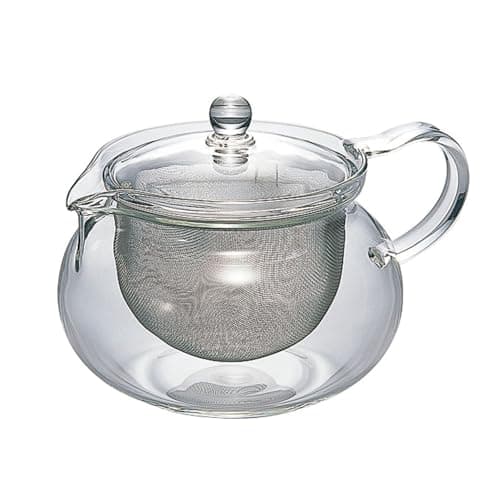 HARIO ChaCha Kyusu Maru Tea PotTop pickBorosilicate glass with a full-width stainless basket, in three sizes. The clearest published spec sheet of any teapot here. | Watching the leaves, which is most of the appeal | 300 ml, 450 ml and 700 ml (practical capacity) | |
| 2 | No image Primula Cast Iron Teapot with Enameled InteriorEnameled inside, so it does not rust and does not season. Holds heat for about an hour, which no glass pot approaches. | Keeping a pot hot through a long afternoon | 34 oz | Check price#ad |
| 3 | 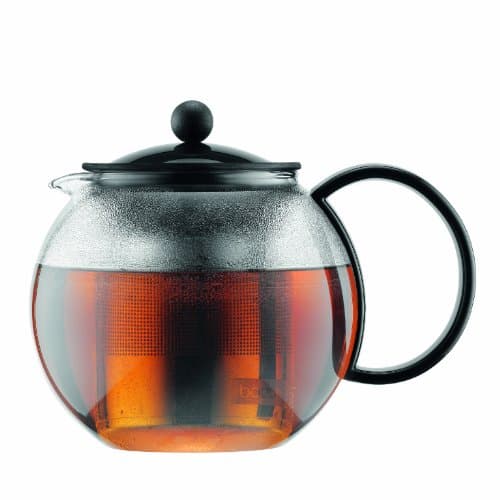 Bodum Assam Glass Tea PressA press, not just a pot. Plunging drops the leaves below the filter and ends the extraction, which is the problem every teapot has. | Stopping the brew at the right moment | 34 oz |
Top pick · Watching the leaves, which is most of the appeal
HARIO ChaCha Kyusu Maru Tea Pot
Borosilicate glass with a full-width stainless basket, in three sizes. The clearest published spec sheet of any teapot here.
Published specifications
- Capacities
- 300 ml, 450 ml and 700 ml (practical capacity)Source: HARIO USA — ChaCha Kyusu Maru Tea Pot
- Materials
- Heatproof borosilicate glass pot and lid; stainless steel strainerSource: HARIO USA — ChaCha Kyusu Maru Tea Pot
- Care
- Safe for hot water, microwave and dishwasher; remove the strainer before microwavingSource: HARIO USA — ChaCha Kyusu Maru Tea Pot
- Not safe for
- Oven, induction hob or open flameSource: HARIO USA — ChaCha Kyusu Maru Tea Pot
- Made in
- Japan (glass and lid); strainer made in ChinaSource: HARIO USA — ChaCha Kyusu Maru Tea Pot
What the numbers mean
The large strainer is the functional argument. A wide basket lets the leaves open across the whole pot rather than packing into a tube, which is the single biggest difference between teapots at this price.
The explicit not-for-stovetop line is the reason we point at this one. Glass teapots get put on hobs and crack, and Hario states plainly that this is not a stovetop object.
Three capacities matter more than they sound. 300 ml is one generous mug; 700 ml is a pot for two or three people. Buying the wrong one is the most common teapot regret.
Good for
- Wide strainer that lets leaves expand
- Microwave and dishwasher safe, both published
- Three sizes, so you can match your actual household
Against it
- Glass loses heat faster than ceramic or cast iron
- Not for the hob, the oven or a flame
- Glass shows tea staining if you leave it wet
Skip it ifSkip it if you want the pot to stay hot for a second and third cup. Glass is the worst insulator here; cast iron is the best.
image
Pick 2 · Keeping a pot hot through a long afternoon
Primula Cast Iron Teapot with Enameled Interior
Enameled inside, so it does not rust and does not season. Holds heat for about an hour, which no glass pot approaches.
#ad · how this is funded · price checked October 20, 2026
Published specifications
- Capacity
- 34 ozSource: Primula — Floral 34 oz. Cast Iron Teapot
- Interior
- Fully enameledEnamel is why it needs no seasoning and will not rust — but also why it never develops the patina a bare tetsubin does.Source: Primula — Floral 34 oz. Cast Iron Teapot
- Infuser
- Removable mesh infuser includedSource: Primula — Floral 34 oz. Cast Iron Teapot
- Heat retention
- Keeps tea hot for up to an hourSource: Primula — Floral 34 oz. Cast Iron Teapot
- Stovetop use
- Not verifiedEnameled cast iron teapots are generally not stovetop vessels; Primula states this explicitly on some models. Boil water separately and check your own model's insert.
What the numbers mean
The enamel lining is the spec that decides everything about ownership. Bare cast iron tetsubin must be dried immediately and seasoned or it rusts. Enameled ones are just pots.
An hour of heat retention is the practical case for cast iron and it is real. If your tea habit is a pot on a table over an afternoon, nothing else here comes close.
It is a brewing vessel, not a kettle. Boil water in something else. Putting an enameled teapot on a hob is the classic way to destroy one.
Good for
- Holds heat for around an hour
- Enameled, so no seasoning and no rust
- Infuser included rather than sold separately
Against it
- Heavy, and heavier still when full
- Not a stovetop vessel
- The enamel chips if it is knocked
Skip it ifSkip it if you want to watch the leaves. Cast iron is opaque, and half the appeal of loose leaf for a beginner is seeing it open.
Pick 3 · Stopping the brew at the right moment
Bodum Assam Glass Tea Press
A press, not just a pot. Plunging drops the leaves below the filter and ends the extraction, which is the problem every teapot has.
Published specifications
- Capacity
- 34 ozSource: Target — Bodum 34oz Assam Tea Press listing
- Body
- Borosilicate glassSource: Target — Bodum 34oz Assam Tea Press listing
- Filter
- Stainless steel basketSource: Target — Bodum 34oz Assam Tea Press listing
- Care
- Dishwasher safeSource: Target — Bodum 34oz Assam Tea Press listing
What the numbers mean
The plunger is the design answer to over-steeping. In an ordinary teapot the leaves keep working while the pot sits on the table, and cup three is bitter. Here you plunge at three minutes and cup three tastes like cup one.
It is a tea press, not a coffee press, and the filter reflects that — but the same object will make coffee badly if you ask it to, which is worth knowing if counter space is tight.
34 oz is a table pot. For one person it is oversized, and a half-full press cools quickly.
Good for
- Extraction stops when you decide it does
- Genuinely dishwasher safe, unusual at this price
- Serves three or four without a refill
Against it
- Glass, so it cools fast and breaks if dropped
- Plunger mechanism is another thing to clean
- Too big for a single drinker
Skip it ifSkip it if you brew one mug at a time. A 34 oz press half-filled is a worse cup than a 300 ml pot filled.
What the brown film actually is
Tea polyphenols. They are the same compounds responsible for the color and much of the flavor of the tea, and they deposit as a thin film on any surface they sit against for long enough.
That matters for two reasons. It is not dirt, so it is not a hygiene problem, and it does not need bleach or aggressive detergent. And it is cosmetic on a smooth surface: a stained glass pot that pours freely is a working pot.
Where it stops being cosmetic is in a mesh filter. Residue plus mineral scale narrows the holes, water stops moving through the leaf properly, and every cup afterwards under-extracts. A pot that drains slowly needs attention; a pot that is merely brown does not.
The daily routine, which is most of the answer
- Tip the wet leaves out as soon as you have finished the pot. They lift out cleanly while wet and weld themselves on when dry.
- Rinse with warm water, including the filter or basket, inside and out.
- Leave it somewhere air can reach it, with the lid off.
Two things to avoid in that routine. Do not leave wet leaves sitting in a closed pot overnight, which is how a clean pot develops a musty smell. And do not store any pot with the lid sealed on while it is still damp, for the same reason.
By material, because the rules genuinely differ
| Material | Soap? | Dishwasher? | For staining |
|---|---|---|---|
| Borosilicate glass | Yes | Often - Hario publishes dishwasher safe for the ChaCha | Bicarbonate of soda soak; never abrasives |
| Porcelain / glazed ceramic | Yes | Usually | Bicarbonate of soda soak |
| Enameled cast iron | Yes | No | Bicarbonate soak; dry normally |
| Bare cast iron (tetsubin) | No | Never | Do not remove it - the interior layer is wanted |
| Unglazed clay (yixing) | Never | Never | Water only - the clay absorbs whatever you use |
| Stainless steel | Yes | Usually | Bicarbonate soak, or dilute vinegar for scale |
The two rows that catch people are the bottom of the cast iron pair and the clay. Both are cases where cleaning the pot thoroughly is the mistake.
Glass, and why abrasives are permanent
Glass shows staining that ceramic hides, which makes glass owners the most likely to reach for something scratchy. Do not. A scratched glass pot stays scratched, and the scratches then hold residue better than the smooth surface did, so the problem gets worse rather than better.
Soak in warm water with bicarbonate of soda for twenty to thirty minutes and wipe with a soft cloth or sponge. Hario publishes that the ChaCha Kyusu is safe for hot water, microwave and dishwasher, with the strainer removed before microwaving - so for that pot the dishwasher is a legitimate route as well.
Cast iron, where the two versions diverge completely
Look inside first. A smooth pale coating is enamel. Dark, slightly textured raw metal is bare cast iron. That single observation changes everything about cleaning it.
Enameled cast iron has a glass lining, so it behaves like any glazed pot: wash it, dry it, no rust risk, no seasoning to protect. Primula publishes a fully enameled interior for its pots, and that is the version to own if you do not want a routine.
Bare cast iron is the opposite. Rinse with hot water only, no soap, and dry the inside completely and immediately - residual heat from the tea usually finishes the job if you leave the lid off. Store with the lid off. The interior discoloration is the mineral layer that develops with use and it is wanted, so scrubbing it out is undoing the pot.
Unglazed clay, and the reason soap is banned
Unglazed clay pots are porous. They absorb a small amount of whatever liquid sits in them and give some of it back to the next brew, which is the entire reason people buy them and the reason the convention is one pot per tea type.
Soap is exactly the sort of thing that porosity will hold onto and return to you, and it does not rinse out of clay the way it rinses off glass. Water only, and no dishwasher ever.
Clearing a clogged filter
This is the cleaning job that actually affects your tea. Two causes: fine leaf particles wedged in the weave, and mineral scale from hard water.
- For leaf residue, soak in hot water with a little dish soap for fifteen to twenty minutes, then work a soft brush over both sides of the mesh.
- Rinse from the inside outward, so particles go back the way they came instead of being driven deeper.
- For mineral scale, soak in dilute white vinegar or a citric acid solution for twenty to thirty minutes instead, then rinse very thoroughly - vinegar residue will taste like vinegar in the next pot.
- If your kettle furs up quickly too, that is the same hard water and both want descaling on the same schedule.
Never use steel wool or an abrasive pad on a fine mesh. It deforms the weave permanently, and a deformed weave lets leaf through - which is the one thing a filter exists to prevent.
Press pots have one extra part
A press like the Bodum Assam has a plunger assembly, and the seal around the filter plate is where residue collects out of sight. The Target listing publishes that all parts are dishwasher safe and the glass body will not cloud in a dishwasher.
Take the plunger apart occasionally rather than only rinsing it as one piece. It is the part people forget, and it is the part that starts smelling first.
What not to do, in one list
- No bleach. Tea residue does not require it and it is hard to rinse fully out of a fine mesh.
- No abrasive pads or steel wool, on any material. Scratches in glass are permanent and deformed mesh is unfixable.
- No soap on unglazed clay, and none on bare cast iron.
- No dishwasher for cast iron of either kind.
- No storing any pot damp with the lid sealed on.
When to stop cleaning and replace
When a filter basket is torn or visibly deformed, because both let leaf through and neither is repairable. Or when enamel is chipped through to the steel, which will then corrode.
Staining, on its own, is never a reason to replace a pot. It is the residue of every good cup you have made in it.
Questions
How do you remove tea stains from a teapot?
Soak in warm water with bicarbonate of soda for twenty to thirty minutes and wipe with a soft cloth. Never use an abrasive pad, especially on glass - scratches are permanent and then hold residue worse than the smooth surface did.
Can you put a teapot in the dishwasher?
It depends on the material. Hario publishes dishwasher safe for the ChaCha Kyusu glass pot, and the Bodum Assam listing publishes dishwasher safe. Never put cast iron of any kind, or unglazed clay, in a dishwasher.
Why can't you use soap on a clay teapot?
Unglazed clay is porous. It absorbs what sits in it and returns some to the next brew, so soap does not rinse out the way it does off glass and will end up in your tea. Water only.
Is the brown residue in my teapot harmful?
No. It is tea polyphenol residue, not dirt, and on a smooth surface it is purely cosmetic. It only matters when it builds up in a mesh filter and slows drainage, which then under-extracts every cup.
Sources
Every figure on this page came from one of these, retrieved during the research pass for this article. Where a maker publishes nothing we could verify, the page says so instead of substituting a number.
Read next
- The best glass teapotsThree glass teapots, and the single specification that separates a long-lived one from a cracked one.
- Teapot materials comparedFive teapot materials on heat retention, flavor neutrality and how much upkeep each one demands.
- How to use a cast iron teapotThe enameled-versus-bare distinction, the preheat that makes cast iron worth owning, and how to dry a tetsubin.
- How to clean a tea infuserFive-second daily cleaning, the soak that clears a clogged mesh, and what the brown stain actually is.
- The best teapots with infusersBuilt-in infusers ranked by basket geometry, which is the only thing that separates a good one from a bad one.