Teapots & Brewing Vessels
Teapot materials compared
Material decides two things: how long your tea stays hot, and how much maintenance you have signed up for.
We earn a commission if you buy through the links on this page, at no extra cost to you. It does not change which products we name or what we say about them — how this is funded.
Glass and porcelain are flavor-neutral and easy. Cast iron holds heat far longer than either. Unglazed clay does something the others do not — it retains flavor deliberately — and that is a commitment rather than a feature. Pick by how long your tea sits and how much maintenance you want.
The comparison
| Material | Heat retention | Flavor | Maintenance | See the leaves |
|---|---|---|---|---|
| Borosilicate glass | Lowest | Neutral | Rinse; shows staining | Yes |
| Porcelain | Low to medium | Neutral | Rinse; often dishwasher safe | No |
| Stoneware / ceramic | Medium | Neutral when glazed | Rinse; heavier and sturdier | No |
| Enameled cast iron | Highest — Primula publishes up to an hour | Neutral | Wash and dry normally | No |
| Bare cast iron (tetsubin) | Highest | Develops mineral character | Dry immediately, every time | No |
| Unglazed clay (yixing) | Medium to high | Absorbs and returns flavor | Water only, one tea type per pot | No |
Glass and porcelain: the neutral options
Both are inert. They add nothing to the tea and take nothing from it, which is exactly what you want while you are working out what different teas taste like.
Glass gives you the visual feedback and the worst insulation. Hario publishes heatproof borosilicate for the ChaCha, safe for hot water, microwave and dishwasher, and explicitly not for the oven, an induction hob or an open flame. Porcelain trades the view for a little more heat retention.
Cast iron, and the distinction that decides everything
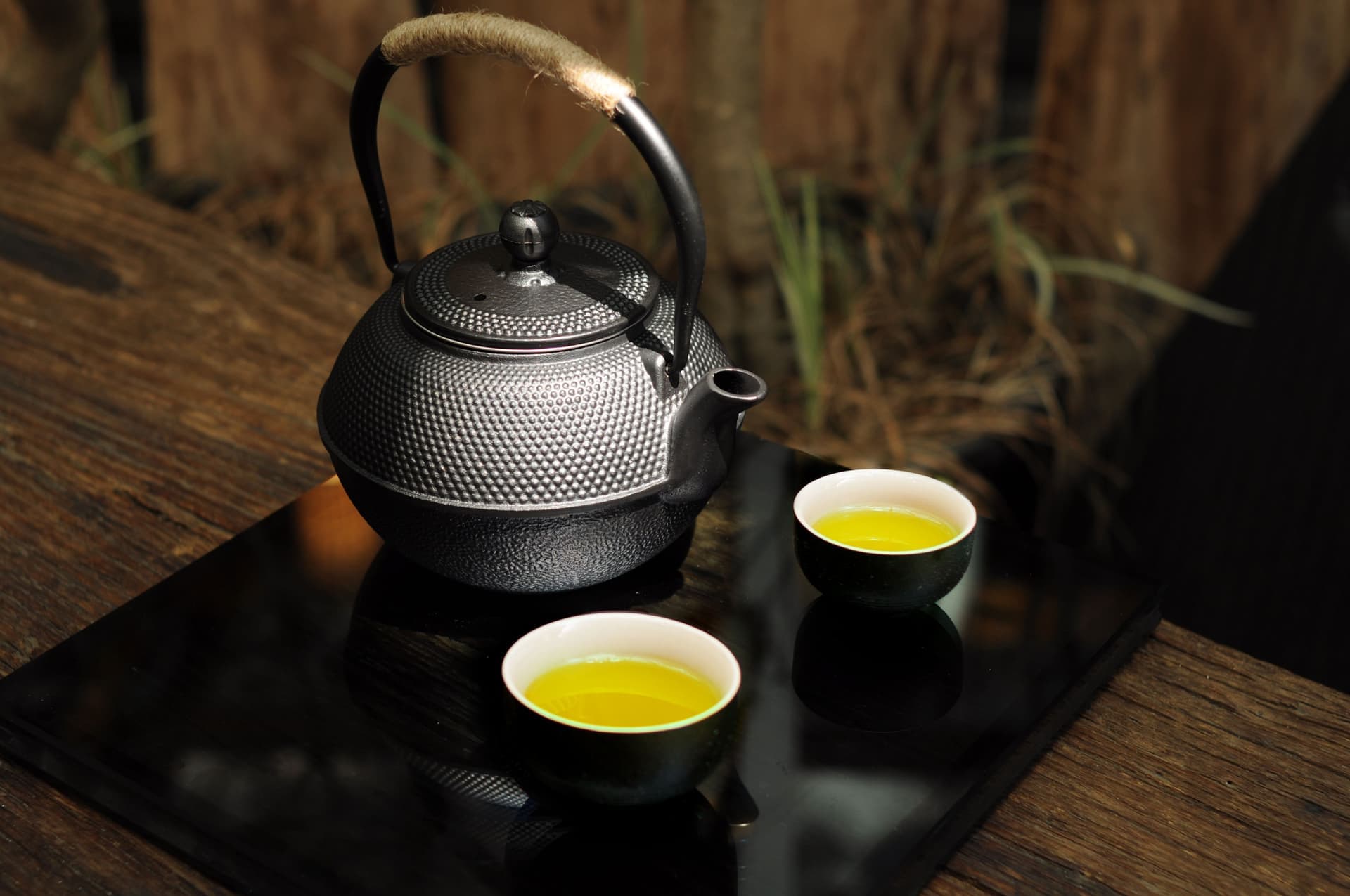
Enameled cast iron has a glass lining. It does not rust, it needs no seasoning, and it is flavor-neutral. Primula publishes a fully enameled interior and up to an hour of heat retention. This is the version to buy first.
Bare cast iron — a traditional tetsubin — has no lining. It must be dried immediately after every use or it rusts, and over time it develops a mineral interior that many people specifically want. It is a maintenance relationship, and it is a much better second pot than a first one.
Neither is a kettle. Cast iron teapots are brewing vessels and most are explicitly not for a hob. Boil water separately.
Unglazed clay: the one that changes your tea
Unglazed clay pots — yixing being the best known — are porous. They absorb a small amount of tea with every brew and give some of it back to the next one. That is why the convention is one pot per tea type: brew pu-erh in it for a year and it will make everything else taste faintly of pu-erh.
They are also washed with water only, never soap, because soap is exactly the sort of thing porous clay will hold onto and return to you.
This is a wonderful thing to own once you know that oolong is your tea. It is a bad first purchase, because a first pot should be neutral while you are still finding out.
What about metal that is not cast iron?
Stainless steel teapots exist, hold heat moderately, and are effectively unbreakable. They are more common as serving pots in cafes than as brewing pots at home, and there is nothing wrong with them.
Silver and other precious-metal pots are outside anything this site can usefully advise on, and the claimed flavor differences are not something we can verify.
So what should you buy?
- First pot, still learning: borosilicate glass. Neutral, and you can see what is happening.
- Tea that sits on a table for an afternoon: enameled cast iron.
- Tea for a household, dropped occasionally: stoneware or porcelain.
- You have settled on one tea type and want depth: unglazed clay, one pot per type.
- You want the traditional object and enjoy maintenance: bare cast iron tetsubin.
Questions
What is the best material for a teapot?
Borosilicate glass or porcelain for a first pot, because both are flavor-neutral and easy to live with. Enameled cast iron if heat retention matters most — Primula publishes up to an hour for its pots.
Do clay teapots really change the flavor of tea?
Unglazed clay is porous and absorbs a small amount of tea with each brew, returning some to later brews. That is why the convention is one pot per tea type and why they are washed with water only.
What is the difference between enameled and bare cast iron teapots?
Enameled has a glass lining: no seasoning, no rust, flavor-neutral. Bare cast iron must be dried immediately every time or it rusts, and it develops a mineral character over years.
Can cast iron teapots go on the stove?
Most cannot and are explicitly sold as brewing vessels rather than kettles. Boil water separately and check the specific model's instructions before putting it anywhere near heat.
Sources
Every figure on this page came from one of these, retrieved during the research pass for this article. Where a maker publishes nothing we could verify, the page says so instead of substituting a number.
Read next
- The best teapots for loose-leaf teaFour teapots covering glass, press and cast iron, chosen on published capacity, materials and safety limits.
- How to use a cast iron teapotThe enameled-versus-bare distinction, the preheat that makes cast iron worth owning, and how to dry a tetsubin.
- The best glass teapotsThree glass teapots, and the single specification that separates a long-lived one from a cracked one.
- The safest tea kettle materialsStainless, glass and enamel are all inert. What separates kettles is whether the maker publishes what the water touches.
- Stovetop-safe teapots: how to check before you crack oneMost teapots crack on a hob. How to read the safety statement, and why boiling separately is almost always the answer.
- How to clean a teapotMaterial by material: what safely removes tea staining, what damages the pot, and why unglazed clay is washed with water only.