Teapots & Brewing Vessels
Types of teapots, explained
Six shapes, and the single job each one does better than the rest. Most people should buy the third.
We earn a commission if you buy through the links on this page, at no extra cost to you. It does not change which products we name or what we say about them — how this is funded.
If you are buying your first teapot, buy a side-handled kyusu with a wide built-in strainer — the HARIO ChaCha Kyusu Maru is the one we would get, because HARIO publishes a practical capacity, a basket that spans the pot, and a plainly worded list of what it must not be put near. The other five shapes on this page each do one thing better than that pot, and this is a guide to whether you need that one thing.
| # | Product | Best for | Capacity | Price |
|---|---|---|---|---|
| 1 | 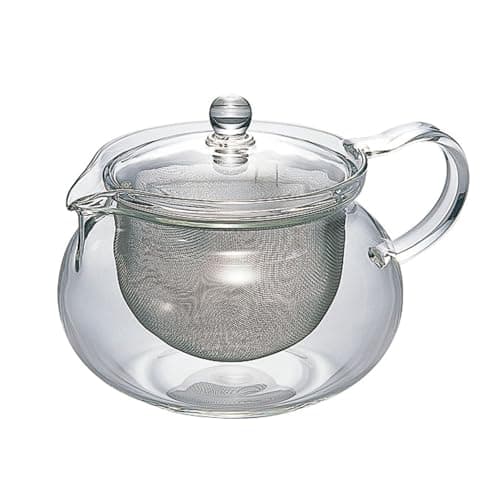 HARIO ChaCha Kyusu Maru Tea PotTop pickBorosilicate glass with a full-width stainless basket, in three sizes. The clearest published spec sheet of any teapot here. | Watching the leaves, which is most of the appeal | 300 ml, 450 ml and 700 ml (practical capacity) | |
| 2 | 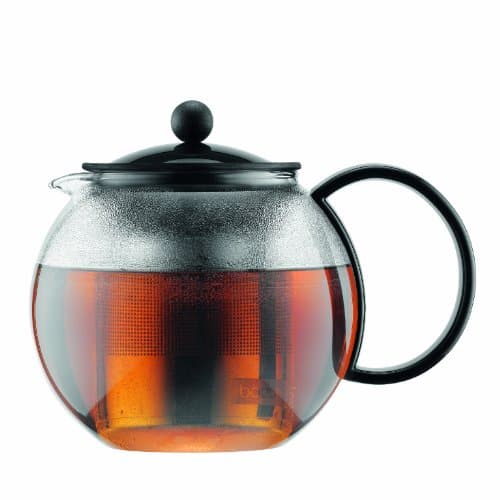 Bodum Assam Glass Tea PressA press, not just a pot. Plunging drops the leaves below the filter and ends the extraction, which is the problem every teapot has. | Stopping the brew at the right moment | 34 oz | |
| 3 | 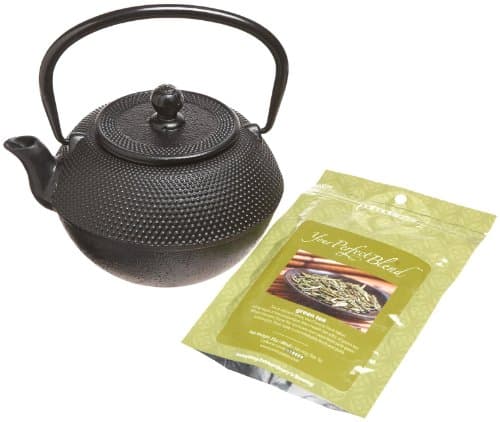 Primula Black Hammered Cast Iron Teapot, 36 oz.Enameled inside, hammered outside, mesh infuser in the box. It holds heat for about an hour, which is the only reason to carry something this heavy. | Cast iron you can actually buy today | 36 oz | |
| 4 | No image Various Porcelain GaiwanA lidded bowl you brew in and pour from. The cheapest object on this site and the one that teaches you the most. | Tasting a tea properly for the least money | not verified | Check price#ad |
Top pick · Watching the leaves, which is most of the appeal
HARIO ChaCha Kyusu Maru Tea Pot
Borosilicate glass with a full-width stainless basket, in three sizes. The clearest published spec sheet of any teapot here.
Published specifications
- Capacities
- 300 ml, 450 ml and 700 ml (practical capacity)Source: HARIO USA — ChaCha Kyusu Maru Tea Pot
- Materials
- Heatproof borosilicate glass pot and lid; stainless steel strainerSource: HARIO USA — ChaCha Kyusu Maru Tea Pot
- Care
- Safe for hot water, microwave and dishwasher; remove the strainer before microwavingSource: HARIO USA — ChaCha Kyusu Maru Tea Pot
- Not safe for
- Oven, induction hob or open flameSource: HARIO USA — ChaCha Kyusu Maru Tea Pot
- Made in
- Japan (glass and lid); strainer made in ChinaSource: HARIO USA — ChaCha Kyusu Maru Tea Pot
What the numbers mean
The large strainer is the functional argument. A wide basket lets the leaves open across the whole pot rather than packing into a tube, which is the single biggest difference between teapots at this price.
The explicit not-for-stovetop line is the reason we point at this one. Glass teapots get put on hobs and crack, and Hario states plainly that this is not a stovetop object.
Three capacities matter more than they sound. 300 ml is one generous mug; 700 ml is a pot for two or three people. Buying the wrong one is the most common teapot regret.
Good for
- Wide strainer that lets leaves expand
- Microwave and dishwasher safe, both published
- Three sizes, so you can match your actual household
Against it
- Glass loses heat faster than ceramic or cast iron
- Not for the hob, the oven or a flame
- Glass shows tea staining if you leave it wet
Skip it ifSkip it if you want the pot to stay hot for a second and third cup. Glass is the worst insulator here; cast iron is the best.
Pick 2 · Stopping the brew at the right moment
Bodum Assam Glass Tea Press
A press, not just a pot. Plunging drops the leaves below the filter and ends the extraction, which is the problem every teapot has.
Published specifications
- Capacity
- 34 ozSource: Target — Bodum 34oz Assam Tea Press listing
- Body
- Borosilicate glassSource: Target — Bodum 34oz Assam Tea Press listing
- Filter
- Stainless steel basketSource: Target — Bodum 34oz Assam Tea Press listing
- Care
- Dishwasher safeSource: Target — Bodum 34oz Assam Tea Press listing
What the numbers mean
The plunger is the design answer to over-steeping. In an ordinary teapot the leaves keep working while the pot sits on the table, and cup three is bitter. Here you plunge at three minutes and cup three tastes like cup one.
It is a tea press, not a coffee press, and the filter reflects that — but the same object will make coffee badly if you ask it to, which is worth knowing if counter space is tight.
34 oz is a table pot. For one person it is oversized, and a half-full press cools quickly.
Good for
- Extraction stops when you decide it does
- Genuinely dishwasher safe, unusual at this price
- Serves three or four without a refill
Against it
- Glass, so it cools fast and breaks if dropped
- Plunger mechanism is another thing to clean
- Too big for a single drinker
Skip it ifSkip it if you brew one mug at a time. A 34 oz press half-filled is a worse cup than a 300 ml pot filled.
Pick 3 · Cast iron you can actually buy today
Primula Black Hammered Cast Iron Teapot, 36 oz.
Enameled inside, hammered outside, mesh infuser in the box. It holds heat for about an hour, which is the only reason to carry something this heavy.
#ad · how this is funded · price checked October 23, 2026
Published specifications
- Capacity
- 36 ozPrimula's own page says 36 oz. The Amazon listing title says 40 oz. We cite the maker's figure; treat the difference as brim-versus-practical and do not plan a table around the last four ounces.Source: Primula — Hammered Cast Iron Teapot with Enameled Interior, 36 oz.
- Interior
- Fully enameledPrimula states this is why it does not require seasoning like other cast iron teapots. It is also why it will never build the patina a bare tetsubin does.Source: Primula — Hammered Cast Iron Teapot with Enameled Interior, 36 oz.
- Infuser
- Removable stainless steel fine-mesh infuser includedSource: Primula — Hammered Cast Iron Teapot with Enameled Interior, 36 oz.
- Heat retention
- Keeps tea hot for up to an hourSource: Primula — Hammered Cast Iron Teapot with Enameled Interior, 36 oz.
- Exterior
- Hammered hobnail pattern, fold-down looped handle, removable lid, short curved spoutSource: Primula — Hammered Cast Iron Teapot with Enameled Interior, 36 oz.
- Stovetop use
- Not verifiedPrimula does not state a hob rating for this model. Enameled cast iron teapots are generally brewing vessels rather than kettles — boil water separately and read the insert that ships in the box.
What the numbers mean
An hour of heat retention is the whole argument for cast iron and it is a real, published number rather than a feeling. If your tea habit is a pot on a table over an afternoon, nothing else on this site comes close.
The enamel lining decides what ownership is like. Bare cast iron tetsubin must be dried immediately and seasoned or it rusts. An enameled one is just a pot: rinse it, dry it, put it away.
36 ounces is roughly four mugs, so this is a pot for a table rather than a desk. The weight is the cost of the heat retention — a full cast iron teapot is heavier than most people expect the first time they lift one.
Good for
- Published hour of heat retention, which glass cannot approach
- Enameled, so no seasoning and no rust
- Infuser included rather than sold separately
- Currently purchasable, which is not true of every cast iron teapot we looked at
Against it
- Heavy empty and heavier full
- Opaque, so you cannot watch the leaves
- Enamel chips if it is knocked against a tap
- The maker and the retail listing disagree about the capacity
Skip it ifSkip it if you brew one mug at a time. Heating a cast iron pot for 300 ml of tea wastes most of the heat you are paying for, and a glass pot shows you the leaves.
image
Pick 4 · Tasting a tea properly for the least money
Various Porcelain Gaiwan
A lidded bowl you brew in and pour from. The cheapest object on this site and the one that teaches you the most.
#ad · how this is funded · price checked October 23, 2026
Published specifications
- Typical capacity
- Not verifiedGaiwan are made by hundreds of small producers with no common spec sheet. 100-150 ml is the usual range for the ones sold for tasting.
- Material
- Not verifiedPorcelain is standard and is what we would buy; glass and clay versions exist. No single maker to cite.
What the numbers mean
A gaiwan is three pieces: a bowl, a lid and a saucer. You put leaves in, add water, and use the lid as a gate to pour the liquor off. There is no mechanism to fail and nothing to clean but a bowl.
The reason to own one as a beginner is that short repeated infusions show you what a tea actually tastes like at each stage. A three-minute mug steep averages all of that into one flavor.
There is no manufacturer to cite because there is no single manufacturer. That is honest to state rather than paper over with a spec sheet borrowed from a listing.
Good for
- Costs less than most infusers
- No mechanism, no filter, nothing to replace
- Short infusions teach you more about a tea than a long one
Against it
- The rim gets hot until you learn the grip
- Small volume, so you pour often
- No published specifications anywhere in the category
Skip it ifSkip it if you want to walk away mid-steep. A gaiwan needs you present; that is the point and also the drawback.
Why shape, and not material
Teapot guides nearly always sort by material, which answers a different question: how long the tea stays hot and how much maintenance you have signed up for. That matters and we cover it separately. It does not tell you which object to buy, because two pots in the same material can work completely differently.
Shape decides the things you will actually notice: whether the leaves have room to open, whether you can stop the steep, how hot the handle gets, how many infusions you get out of one measure of leaf, and whether you can pour a small cup without dribbling. So this page sorts by format, and names the material only where it changes what the shape can do.
1. The kyusu, or side-handled pot
A pot with the handle at ninety degrees to the spout rather than opposite it. It is the Japanese household shape and it is the one we point most beginners at, because the good ones pair the side handle with a strainer basket as wide as the pot.
The side handle is not decoration. It puts your wrist in a natural position for a controlled pour and keeps your hand away from the rising steam, which is where a traditional loop handle puts it. The width of the basket is the more important half: a strainer that spans the body lets the leaves spread out and the water move through the whole mass, which is the entire mechanical argument for loose leaf over a bag.
Best for: one or two people who want a pot that works properly out of the box and do not want to buy a separate strainer.
2. The Western loop-handled pot
The familiar shape — round body, loop handle opposite the spout, often in porcelain or glazed earthenware. It is what most people picture, it is what most heirloom pots are, and it is the format most likely to disappoint a loose-leaf drinker for one specific reason.
Most of them have either no filter or a narrow perforated hole at the base of the spout. Neither holds the leaves during the steep, which means either leaf in your cup or a separate strainer in your other hand. Some newer ones ship with a narrow tube infuser dropped into the middle, and a narrow tube is worse than no filter at all — it packs the leaf into a column water cannot get through.
Best for: serving several people from a pot you already own or inherited, with a separate strainer on the way out.
3. The press pot
A glass cylinder with a plunger and a mesh disc, built like a French press but intended for tea. It does one thing nothing else on this page can do: it stops the steep without you lifting anything out.
That is the real problem with teapots and it is worth stating plainly. In almost every other format the tea keeps extracting until the pot is empty, so the last cup is stewed. A press lets you push the leaves down at three minutes and pour evenly after that. The honest limit is that plunging reduces contact rather than ending it — the leaves are still in the water, just compressed under the disc.
Best for: anyone whose tea sits on the table for twenty minutes, and anyone who drinks a pot across a whole morning.
4. Cast iron: tetsubin and enameled
Two very different objects sold under one name, and the distinction decides the whole ownership experience. A true tetsubin is bare iron inside. An enameled cast iron teapot has a glass coating over the iron.
Buy enameled. The enamel is inert, it will not rust, and it does not require the drying ritual that bare iron does. Bare tetsubin is a maintenance relationship: dry it every single time, never leave water standing, never use soap, and accept that neglect means rust. It is a rewarding second pot and a poor first one.
What cast iron buys in either version is heat retention, which no other material matches. What it costs is weight, a handle that gets hot, and — on almost every model — the fact that it is not a kettle and must never go on a burner.
Best for: a pot that sits on the table and stays hot for an hour without a warmer under it.
5. The gaiwan
Not a teapot at all, strictly — a lidded bowl with a saucer, and the lid does the straining as you pour. It belongs on this page because it is what a great many people should buy instead of a teapot and never consider.
A gaiwan is a tasting instrument. It is small, usually 100 to 150 ml, and it is built for many short infusions from one measure of leaf rather than one long one. For an oolong or a pu-erh that re-steeps six or eight times, that is not a quirk, it is how the tea is supposed to be drunk, and a 700 ml pot cannot do it.
The drawbacks are real: there is a grip to learn, it takes a few sessions, and the rim gets hot. It also serves one person and no more.
Best for: someone who wants to taste a tea properly and re-steep it, rather than produce four cups at once.
6. Unglazed clay, including yixing
Porous, unglazed stoneware. It absorbs a little of every tea brewed in it, which over years seasons the pot toward one tea type — and which is why the rule is one pot, one tea, and never any soap.
This is the only format on this page that changes your tea rather than just holding it. That is the attraction and it is also the commitment. It is a poor first purchase and a genuinely special fourth one. The category is also full of mass-produced pots sold as yixing that are not, and we have no way to verify clay origin, so we do not name models.
Best for: someone already drinking one tea type seriously and ready to dedicate a vessel to it.
The one thing none of these is
A teapot is not a kettle, and the confusion is expensive because it usually ends with a cracked pot. A kettle is built to sit on a heat source and bring cold water to the boil. A teapot is built to receive water that is already hot. The overlap between the two sets is nearly empty.
The exception people reach for is cast iron, which looks like the most heat-proof object in the kitchen. A bare tetsubin genuinely is a kettle and was used as one. An enameled cast iron teapot is not: the enamel is a glass coating, and direct heat crazes it. Since nearly everything sold today as a cast iron teapot is enameled, the safe default is that it stays off the burner.
Where a maker has thought about this, it says so explicitly, and that line is worth more than any other sentence on a teapot listing. HARIO publishes a plain not safe for oven, induction hob or open flame statement for the ChaCha Kyusu. Almost nobody else prints the equivalent, which means for most pots you are reasoning from the material rather than reading an answer.
The six formats, side by side
| Format | Strainer | Can you stop the steep? | Heat retention | Best for |
|---|---|---|---|---|
| Kyusu (side handle) | Usually wide and built in | Lift the basket out | Moderate | A first pot that works out of the box |
| Western loop handle | Often none, or a narrow tube | Not without decanting | Moderate | Serving a group from a pot you own |
| Press pot | Full-width mesh disc | Yes — the only format that does | Low, it is glass | Tea that sits on the table |
| Cast iron, enameled | Usually a basket | Lift the basket out | Highest here | Staying hot without a warmer |
| Gaiwan | The lid is the strainer | Yes — you decant every infusion | Low by design | Many short infusions, one drinker |
| Unglazed clay | Usually none | Not without decanting | Good | One tea, seasoned over years |
Which one do you need?
- Brewing for yourself and want to taste the tea properly? A gaiwan, and it costs less than any pot here.
- Brewing for yourself or one other, and want one object? A kyusu with a wide basket.
- Tea sits on the table while you work? A press pot, for the only mechanism that stops a steep.
- Serving three or more, and the pot sits out? Enameled cast iron.
- Already own a Western pot? Buy a strainer, not a teapot.
- Drinking one tea type seriously for years? Then, and only then, unglazed clay.
How we picked the four below
One pot per format where a maker publishes something we can cite, and no pot at all for the two formats where none does. The Western loop-handled pot and the unglazed clay pot have no pick here deliberately: the first is usually something you already own rather than something to buy, and the second is a category where we cannot verify a single claim about the clay.
Where a maker publishes a figure, the card quotes it and names the page it came from. Where nobody does, the card says so rather than estimating. Our full method is on the how we pick page.
What we did not do
We have not brewed in any of these pots, compared their heat retention, or timed how long tea stays drinkable in each. There is no test kitchen here. Everything above is published specification plus reasoning about what each shape can and cannot mechanically do, and the sources are listed below.
Questions
What are the different types of teapots?
Six formats account for almost everything sold: the side-handled kyusu, the Western loop-handled pot, the press pot, cast iron in bare tetsubin or enameled form, the gaiwan, and unglazed clay such as yixing. They differ in how the leaves are strained, whether you can stop the steep, and how long the tea stays hot.
What kind of teapot should I buy first?
A kyusu with a strainer basket as wide as the pot. It needs no separate strainer, the side handle keeps your hand out of the steam, and the wide basket gives the leaves room to open — which is the whole mechanical reason loose leaf beats a bag.
What is the difference between a kyusu and a regular teapot?
The handle. A kyusu's handle sits at ninety degrees to the spout rather than opposite it, which gives a more controlled pour and keeps your hand away from the steam. In practice the more useful difference is that kyusu are far more likely to have a wide built-in strainer.
Is a gaiwan better than a teapot?
For tasting a tea across many short infusions, yes, and it is cheaper. For serving three people one cup each, no — it holds about 100 to 150 ml and is built for one drinker. They are not competing for the same job.
Which type of teapot keeps tea hottest?
Cast iron, by a clear margin, and enameled cast iron gets the same retention without the maintenance of bare iron. Glass is the worst for this, which is the trade you make for watching the leaves.
Sources
Every figure on this page came from one of these, retrieved during the research pass for this article. Where a maker publishes nothing we could verify, the page says so instead of substituting a number.
Read next
- Teapot materials comparedFive teapot materials on heat retention, flavor neutrality and how much upkeep each one demands.
- The best teapots for loose-leaf teaFour teapots covering glass, press and cast iron, chosen on published capacity, materials and safety limits.
- What size teapot do you need?Teapot capacity matched to the number of people who will actually drink, and why the biggest pot is rarely the safest choice.
- Gaiwan vs teapotA gaiwan is for tasting a tea properly; a teapot is for serving one. Buying the wrong one is a mismatch of purpose, not quality.
- The best teapots with infusersBuilt-in infusers ranked by basket geometry, which is the only thing that separates a good one from a bad one.
- Types of tea kettles, explainedThe five kettle categories in plain English, with the specific job each one does better than the rest.